Title: Cyber Politics – Social Media, Social Demography and Voting Behaviour in Nigeria
Author: Dr. Omoniyi P. Ibietan
Publisher: Premium Times Books
Year: 2023
Pages: 460
Reviewer: Azu Ishiekwene
Date: July 25, 2023, Abuja, Nigeria
My job today is to review the book, and not the man. But since the man made the book, I would, to slightly paraphrase Oscar Wilde, overcome by yielding to the temptation of reviewing the man.
In case you didn’t know the meaning of the “P” as it appears in the middle of the author’s name on the cover of the book for review, “P” is for “Paul”, the famous cousin of “Peter” in many nursery rhymes.
Another quick disclosure, perhaps a not-so-secret one. Whatever his current bourgeoise pretensions, the author was a former student’s union leader first at the Kwara State College of Technology, Ilorin, and later, at the University of Abuja, where he was rusticated in the famous case of Niyi Ibietan & 45 others v. University of Abuja & 2 Others.
The author, whose parents are from the old Kwara State, later re-enrolled at the University of Uyo. As a result of the disruption caused by his activism, it took him 10 years to obtain his First degree; but when he did, he did so in style. He finished top of his class. A great relief, as you can imagine, for his long-suffering parents who had during his childhood, also endured the scare of rashes that nearly claimed his life within the first six months of birth in Kaduna.
Enough said about him for now, though later, you might see the link.
To the subject matter: Cyber Politics – Social Media, Social Demography and Voting Behaviour in Nigeria. When I first voted in an election in Nigeria in 1983, the Internet was just newly born. It had not even been properly named.
Forty years later when I voted for the fifth time, my daughter who attained voting age only 13 years ago and has since voted only once, as far as I know, was telling me from thousands of miles away, where she now lives with her family, how she thought I should have voted and for who.
This was by no means a unique experience. A very close friend and managing director of one of Nigeria’s leading media houses told me at the height of the 2023 elections that the politics of who to vote for and why so polarised his home that he had to convene a family meeting where it was decided that all political talk was off limits until after the elections.
But Cyber Politics is not about the last general election and filial squabbles. It’s a deeper phase in the exploratory journey of Niyi P. Ibietan whose interest in political communication and its sociology go back to his early student days.
What started, perhaps as mere curiosity in his undergraduate days and in his early working life about the role of the media in enhancing freedom, soon found expression in his journalism and monographs. This passion, which later deepened in his Master’s dissertation, has crystalised in the formidable academic work that is the subject of this review.
In 12 chapters of 460 pages including the bibliography set against the background of Nigeria’s 2015 general elections, Cyber Politics examines the theme of cyber culture, social demographics and political communication. It is a subject that evokes decades of research, but which nonetheless retains its fascination as scholars continue to explore the fraught question of why voters behave the way they do, especially during elections.
Seventy-five years ago, or so, when another Paul, Paul Lazarsfeld (Berelson, Lazarsfeld, & McPhee) took this question to the streets of North Carolina after the US Presidential election to ascertain what influences voter behaviour in what is now famously called the Columbian studies, the researchers concluded that media and campaigns have minimal effects on voters.
Or to adapt Bernard Cohen’s famous phrase, the press was increasingly vital in awareness and relevance, but not necessarily in voter behaviour and attitude.
Keep in mind that before Lazarsfeld and others conducted the Columbian studies, contributions from social psychology in the 1930s, especially following the impact of Hollywood which was then on the rise, and Hitler’s exceptional propaganda in the War, had created the impression that people were like “sitting ducks” for information.
In technical jargon, this view of knee-jerk reaction to information consumption was called the “Hypodermic Needle” theory. The social context for it in Europe at the time was that it was unlikely for Hitler, especially, to have succeeded, if individuals had not become isolated, atomised and left completely vulnerable to the “bullet” of propaganda.
By the time Marshall McLuhan wrote the Gutenberg Galaxy (1962), expressing the view that instantaneous communication would undermine geographically based power imbalances, the world had almost gone full circle from Laswell to Lazarsfeld, Melvin DeFleur and other scholars whose studies showed that social factors also play a role in mediating information.
So, what is the point of Cyber Politics? By the way, except we want to commit the grammatical blunder of people who say things have gone 360 degrees, when they actually mean to say 180 (the correct mathematical expression of about-turn), how can a world in which President Donald Trump still believes he can rile up voters on Twitterverse, be said to have moved significantly from the hypodermic needle? And wasn’t it also widely believed that social media played perhaps a direct consequential role the Arab Spring?
In parts of Cyber Politics, but in far greater detail in Chapters One, Five and Six, the author not only examines earlier studies on the impact of social factors, including peer, opinion leader and family influences on voter behaviour, he also sets out the broad objectives of the book, raising issues that are both specific and contemporaneous in value.
In other words, instead of leaving the reader wondering what happened on the streets of North Carolina in Lazarsfeld’s studies decades ago and how that affects him in Gwagwalada, Abuja, Cyber Politics uses Nigeria’s 2015 general elections as anchor.
It explores, among other things, the question of whether political conversations amongst Nigeria’s estimated 33 million active social media users, especially the influencers as of 2021 had any significant impact on the outcome of the 2015 election.
Interestingly, at Page 89 of the book, you would find that the winner of that election, President Muhammadu Buhari, thought social media helped him win. Did it, really? And could it mean that President Goodluck Jonathan who in 2011 actually announced his intention to run for president on Facebook, lost momentum four years later in that space? Or were there other factors for Buhari’s victory? You’ll have to read the book for possible answers.
Cyber Politics, was of course, not the first to venture into the theme of the 2015 elections, voter behaviour and social media in Nigeria. In Chapters One and Four, for example, the author cites other studies which had touched on the subject, too.
What commends Cyber Politics, however, as we see in Chapter Three, is its laser-beam focus on the role of three pre-selected social media platforms – Facebook, Twitter and WhatsApp – on voter behaviour especially in the election under reference.
Whatever anyone says, I suspect politicians believe that social media works. Whether it counts at the ballot is another matter – and of course, the subject of this book.
What do I mean? When it became obvious during the 2023 general elections that political ads were not coming to LEADERSHIP as projected, for example, I called folks in the campaign of one of the major parties to ask why. “Well, sorry,” one of the seasoned media guys on the campaign told me. “We’re doing more on social media now.”
I was scandalised that folks who had built their careers in the mainstream and whom we were banking on would leave us high and dry! But I understood, even if I did so with a heavy heart! Why? A BBC online report www.bbc.co.uk/bitesize/guides/zd9bd6f/revision/7 said, “Politicians are investing heavily in the use of websites, blogs, podcasts and social networking websites like Facebook and Twitter as a way of reaching voters.”
“During the 2019 election campaign,” the BBC report continued, “the Conservatives spent one million pounds on Facebook alone, at a point, running 2,500 adverts.”
After explaining the meaning of such frequently used words in the text as “cyber politics,” “social media networks,” “voting behaviour,” and “public servants” in the opening chapter, the author explains at Page 63, that the three social media networks were chosen largely because of their capacity for sociality, specifically, “cognition, communication and community,” the soul of social media.
Chapters Four, Five, Nine and Ten, of Cyber Politics, deal in extenso with research questions, theory and models, including the “Channel-Factor Model”, which brings intrinsic perspective to political communication in Africa. These chapters are complete with bar and pie charts, pyramids and grids, analysing data collected from the sample population. The text would be of significant interest to academics and communication scholars.
For example, the author argues at Page 326, that “poly-mediation” or the interaction of multiple social factors, including opinions of persons that respondents’ respected, “books, historical and global events” and even predictors from the mainstream media, tended to influence their voting decision.
As of the time of writing this review, my anecdotal research in the mass communication curriculum of the University of Lagos; Ahmadu Bello University; and the University of Nigeria, turned up virtually no current locally authored full-length texts in cyber politics.
In light of the exponential growth in social media adoption and use in the last few years, two election cycles after 2015, COVID-19 and #Endsars, students, researchers and scholars would find Cyber Politics a valuable resource material.
I suspect, however, that non-eggheads might find the book a bit tedious, in spite of its high edit quality, clean pages and great production. It’s not their fault. I guess in some way, the book is like the author – serious, bookish and polemical. It is mainly the fruit of his three-year doctoral research at North West University, South Africa, which not only deepened his interest in communication scholarship and its nexus with freedom, but also left him grayer as you can see.
But that’s not to say that softball lovers like me have little or nothing to look forward to in the book. Far from it. As a journalist, for example, shouldn’t I be concerned about the emergence of social media as the “Fifth Estate of the Realm”, a prospect that the author raised in Chapter Two?
Would this new estate, in which users are both producers and consumers of information, displace the Fourth Estate, especially if as Time Magazine said in its February 5, 2009 edition, journalism was already in its death throes?
Well, it’s nearly a decade and a half since, and we have seen that the death of journalism was perhaps slightly exaggerated. Convergence has also taught us that it is possible for the Fourth – and perhaps the Fifth – Estates not only to coexist, but also to be mutually reinforcing.
Cyber Politics helps me as a voter to ponder if the social networks I belong to or the influencers I follow have any potential effects on my political behaviour either in terms of mobilisation or my actual voting decisions. Sometimes we think we’re our own man, until we realise like Pavlov’s dog, that someone somewhere might be pulling the strings.
But is it true as the author said at Page 317, that social media influencers are “motivated to undertake organised campaigns during the election using their platforms, largely due to the need to bring about a better social order?” It does appear to me (and perhaps this was unique to the 2023 elections) that social media influencers were just a force for good as they were a force for mayhem.
The sludge of fake news sometimes unleashed by so-called influencers, not to mention toxicity of the avatars in that space who often insisted it was either their way or the highway, left people like me bereft and alienated.
What about the adverse role of Big Tech in privacy breaches and data manipulation – I’m speaking of course about Meta’s $725 million settlement over the Cambridge Analytica scandal and Elon Musk’s $44 billion Twitter adventure! Were these also motivated by a desire to do good? It would be interesting to see how Cyber Politics 2.0 or any other research into the 2023 election explores these episodes.
Finally, there’s also something in the book for politicians, but I hope I’m not committing business suicide by saying this. In Chapter Nine, Cyber Politics not only explores the role of Facebook, Twitter and WhatsApp in voter behaviour among various social demographics in 2015, it also examines the elements and utility of these social networks and their resonance with voters.
Yet, whatever Cyber Politics or any other text on voter behaviour may say to politicians, our politicians, while they may keep one eye on social media they will, as Joseph Stalin famously said, keep the other eye on “the people who count the vote!”
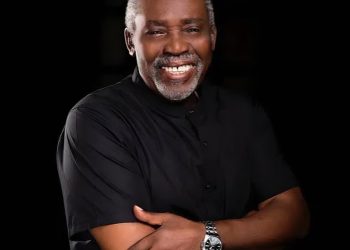
So, you can see that in spite of his serious approach to life and literature, Dr. Niyi P. Ibietan still manages to produce a book that offers something of interest, to a significant collection of groups!
We have in our hands today, a token of the exertions of the infant who survived the afflictions of rashes in childhood, and the Paul who endured the persecutions of “constituted authority.”
The author is a scholar who is living the cosmology of his name, Omoniyi; not only by bringing honour and pride to his work, but also by expanding meaning of his surname, Ibietan, beyond the denotative, geospatial sense of immediate family or relations, to the global community where a simple device and its uses, is fundamentally affecting our shared values and perhaps, shaping our interests.
Now you understand why it is not possible to review the book, without reviewing the man! As the conversation continues, I commend the book to you without hesitation.
Ishiekwene is a journalist, syndicated columnist and Editor-In-Chief of LEADERSHIP.