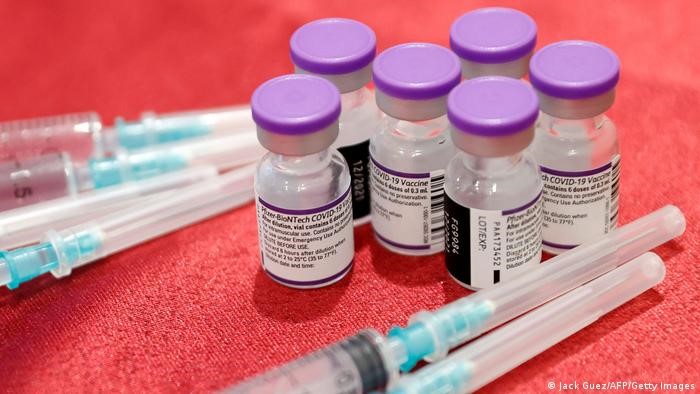
An Israeli study found that a fourth shot of the COVID-19 vaccine was able to boost antibodies to higher levels than the third shot, but researchers found that it is still not enough to prevent omicron-variant infections, researchers at Israel’s Sheba Medical Center said on Monday.
This is the first trial worldwide studying a fourth vaccination with combined vaccines, the Israeli hospital said, adding that the findings were preliminary and have not yet been published.
Some 150 participants in the study received a fourth dose of the BioNTech-Pfizer vaccine, while another 120 participants received a fourth vaccination with Moderna. All had received a third BioNTech-Pfizer booster. They were then compared to a control group that did not receive the fourth shot.
“The rise in antibody levels that we saw with both Moderna and Pfizer are slightly higher than what we saw after the third booster vaccine,” said lead-researcher and director of the infectious disease unit, Gili Regev-Yochay.
However, “despite increased antibody levels, the fourth vaccine only offers a partial defense against the virus,” she added.
Meanwhile, US drugmaker Moderna said its vaccine candidate against the omicron coronavirus variant will enter clinical development in the next few weeks. The company expects to be able to share data with regulators around March, CEO Stephane Bancel said.
The company also aims to roll out a combined COVID-flu-RSV booster vaccine in late 2023, hoping a joint jab would encourage people to get an annual shot.
RSV (respiratory syncytial virus) is a common virus that causes the cold that can be more serious for infants and elderly people.
The European Union said it would tighten COVID-19 travel rules for unvaccinated arrivals from Australia, Argentina and Canada.
The bloc reached an agreement to remove those three nations from a list of countries where easier travel restrictions apply regardless of vaccination status, which include countries like Bahrain, Chile, Colombia, Indonesia, Kuwait, New Zealand, Peru, Qatar, Rwanda, Saudi Arabia, South Korea, among others.
EU citizens arriving from Australia, Argentina and Canada are exempt from the new rule, along with their family members, as well as long-term residents of the bloc. Health care and transport personnel are also exempt.
In Germany state health ministers met on Tuesday evening to mull relaxing PCR testing requirements to ease the burden on laboratories when caseloads are high.
The ministers have reduced the period that counts as COVID-recovered from 6 months to 3, citing the omicron variant. Dw.