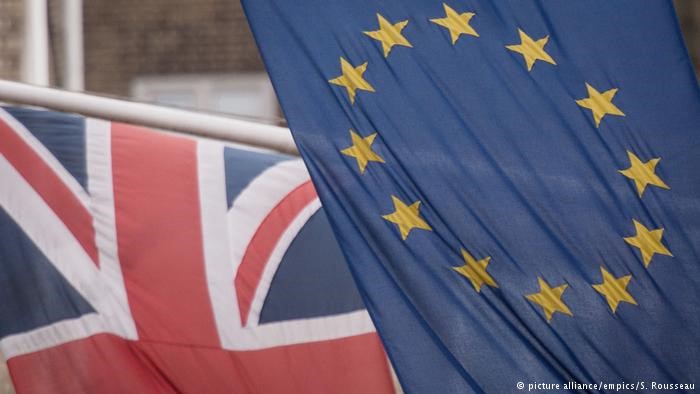
The European Union agreed to start internal preparations for the possibility of Brexit negotiations failing to reach a breakthrough at a crunch December summit.
At a meeting in Brussels on Wednesday, the EU’s 27 governments without Britain approved work to start on their response to the prospect of the U.K. and the EU not making enough progress over the next two months to allow trade talks to begin at the end of the year, four people familiar with the discussions said. At the same time, preparations will begin in case of a more positive outcome.
The next seven weeks are critical to the entire Brexit process as time ticks down to the U.K.’s departure in March 2019. The EU needs to agree there has been “sufficient progress” on the main issues of the U.K.’s departure before negotiations can begin on a transition period and a future trading arrangement.
A gathering of EU leaders last week was initially scheduled to be the moment when talks would advance. Instead the heads of state and government told Prime Minister Theresa May that she first must specify exactly what the U.K. sees as its financial commitments. The EU wants a divorce settlement of about 60 billion euros ($71 billion), and the U.K.’s offer so far is about a third of that.
The EU’s priority is still to have plans in place so that negotiations with the U.K. on the future can begin immediately in December as long as agreement has been reached on the separation issues of the financial settlement, the protection of citizens’ rights and the Northern Ireland border, one of the people said.
Wednesday’s go-ahead is for preparations on a response only for a lack of progress by December rather than for contingencies in case of a wider breakdown in the talks, the people said, asking not to be named because the discussions were private.
In London, U.K. Brexit Secretary David Davis was forced to backtrack on Wednesday after suggesting that lawmakers may not be able to vote on the final terms of the country’s divorce from the EU before the split happens.
Just a few hours after Davis raised the possibility in a parliamentary hearing, his office issued a statement saying the government is still working hard to get a deal with the EU “in good time” so lawmakers in London can vote on it before the U.K. leaves the bloc in March 2019. The move came after a succession of lawmakers raised concerns that ministers could sideline Parliament after promising both houses a say on the final deal.
On Wednesday morning, Davis predicted negotiations will go to the wire in a high-pressure game of brinkmanship that could deny Parliament the chance to vote on a final deal before it is too late. In the clarification issued in the afternoon, Davis’s office said he had been asked about “hypothetical scenarios.”
During a busy day in Parliament, Ivan Rogers, the man who quit May’s negotiating team over her strategy, outlined a pessimistic scenario for the December summit, saying that the outcome isn’t a foregone conclusion. He envisaged a situation in which talks collapse at the end of 2017, or early in the new year, if May refuses to pay the amount of money the EU demands in return for an offer of a transition period.
An acrimonious collapse in the negotiations could, in the worst-case scenario, “be so bloody by then that both sides are looking to knock chunks out of each other and start a trade war,” said Rogers, Britain’s former envoy to the EU.
He also offered a reality check to British lawmakers expecting to have far better access to EU markets after Brexit than Canada does. – Bloomberg.