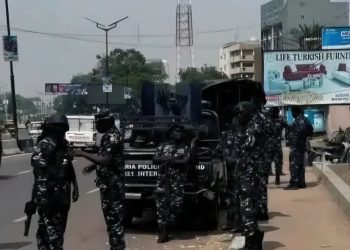
Nigeria’s worsening security challenges are putting fresh pressure on the country’s policing system.
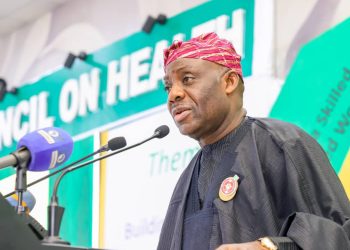
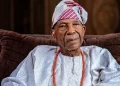
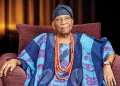
This came as the Federal Government yesterday announced the appointment of Professor Emmanuel Olukemi Rotimi of Obafemi Awolowo University (OAU), Ile-Ife, to the Policy Advisory Committee of the Presidential Working Group on the National Policing Bill.
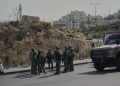
Insecurity in parts of the country has continued to disrupt the lives of residents, with communities facing attacks by bandits, kidnappers and other armed groups.
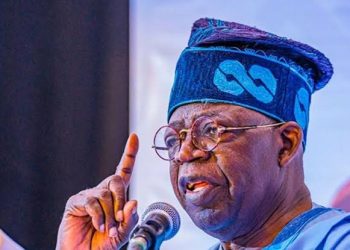
While President Bola Tinubu has ordered the Armed Forces, Nigeria Police Force, Department of State Services (DSS) and other security and intelligence agencies to intensify efforts to rescue victims of the Niger mosque abduction, there are concerns about the vulnerability of many other communities.
Last week Friday, the attackers stormed Kpenya Mosque in the Dekara district of the Borgu local government area at around 2 p.m. after first attacking Gidan-Zana and Kpenya villages, police spokesperson Wasiu Abiodun said.
Borgu council chairman Abdullahi Mohammed Nasir said at least 60 people were abducted and an unspecified number of people sustained gunshot injuries while attempting to escape.
The situation has also heightened concerns over the ability of residents to protect themselves as armed attacks persist.
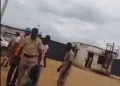
In Sokoto State, a video showed an Islamic cleric carrying what appeared to be a pump-action firearm while moving with members of his congregation.
The video, shared on X by D English Alhaji Media, showed the cleric, dressed in Islamic attire, carrying the firearm as he walked alongside members of his congregation.
The identity of the cleric, the circumstances surrounding the incident and the exact location where the video was recorded could not be independently verified.
The development came amid renewed attacks on communities in parts of Sokoto State, where residents have continued to face threats from armed bandits and kidnappers.
At least five people were killed and several others abducted after armed bandits simultaneously attacked three communities in Wurno Local Government Area of the state.
The incidents have raised concerns about the extent to which persistent insecurity is forcing residents to flee their communities or resort to carrying firearms for protection.
VDM alleges security agencies know kidnappers’ whereabouts, calls for citizens’ access to firearms
SOCIAL media activist, Martins Vincent Otse, popularly known as VeryDarkMan (VDM), has accused Nigeria’s security agencies of knowing the identities and whereabouts of perpetrators of kidnappings and violent attacks but failing to apprehend them.
Otse made the allegation while speaking as a panellist at the 2026 Annual General Conference of the Nigerian Bar Association (NBA) in Port Harcourt, Rivers State, where he appeared alongside the Inspector-General of Police and other security chiefs.
Speaking on the topic, ‘Known Gun Men’, the activist said security agencies knew the identities and locations of those behind violent attacks.
“You people know where these people are. You people know these ‘unknown gunmen’. But nothing is happening,” he said.
Otse also challenged the description of attackers as “unknown gunmen”, alleging that some personnel of security agencies, including the military, Immigration and Customs, were involved in insecurity.
“There are no unknown gunmen anywhere. The military men are the unknown gunmen, the Immigration, the Customs they are the unknown gunmen. Nobody else,” he said.
He questioned the effectiveness of police checkpoints on major highways, particularly the Lagos-Abuja route, amid persistent kidnappings.
Otse alleged that some security personnel at checkpoints could identify potential victims based on their vehicles and pass information to kidnappers.
“When you pass with a car, you will meet a checkpoint, the policeman tells you to wind down the car glass, open your boot you open it. Believe me, everybody knows who is rich, who is poor, and everybody knows the people that belong to the middle class,” he said.
According to him, such information could subsequently be used to identify motorists who might be capable of paying ransom.
The activist also called on the government to make provisions for citizens to protect themselves, including making it easier for them to access firearms, arguing that the police and military were insufficient to protect a population of over 200 million people.
“They need to make provisions for citizens to protect themselves. Make it easy for us to get guns because right now they are understaffed. They can’t protect everybody,” he said.
“How many are there? The police and the military are not up to a million protecting over 200 million people.”
He, however, acknowledged the importance of security agencies in tackling insecurity and called for improved welfare for personnel.
“Until we take care of them properly, they will keep on turning on us,” he said.
Otse said insecurity had also extended to the judiciary, citing the reported abduction of a judge travelling from Sokoto who was kidnapped in Kebbi State on July 26 and held for about a week before his release.
“This is not the topic of ‘if I may, my Lord’, because a lot of your lords are being kidnapped,” he told the lawyers.
He said his views on insecurity were informed by firsthand experiences at scenes of violence, claiming he was among the first responders at Yelwata and other attack locations.
“I have seen blood and seen people burnt alive,” he said, recalling the aftermath of attacks, including a Sallah Day bombing in Borno and incidents linked to the University of Maiduguri Teaching Hospital.
Otse described the Yelwata killings as retaliation following the killing of a Fulani man, saying the subsequent attack was carried out in response.
He also criticised the Nigerian media for what he described as inadequate coverage of violent attacks and their consequences.
Otse said he attended the session to share his experiences of insecurity rather than teach lawyers the law. – Guardian.