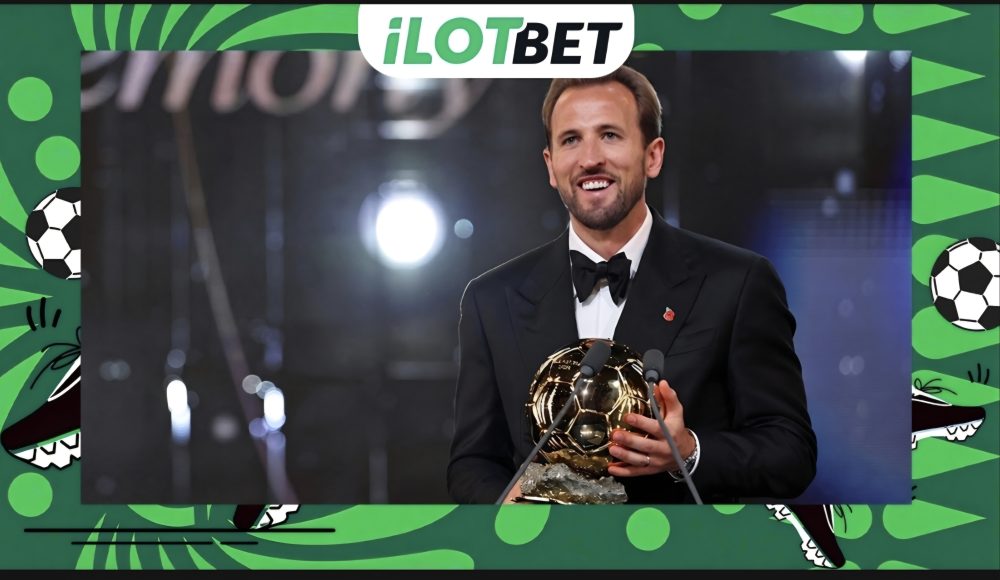
The England captain’s long-awaited coronation challenges football’s obsession with spectacle, but his award also raises questions about how the game defines greatness.
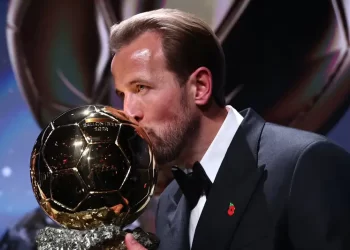
For years, Harry Kane has occupied an uncomfortable place in football’s hierarchy. His goals demanded recognition, his consistency invited admiration, yet the conversation about the world’s best players often seemed to happen around him rather than include him. On Monday night in London, that changed. Kane won the 2026 Ballon d’Or, ending England’s 25-year wait for a winner and forcing football to reconsider what greatness looks like.
The numbers make a formidable argument. Kane scored 73 goals in 65 appearances for Bayern Munich and England during the 2025–26 campaign, helping the German champions secure domestic honours while leading his country to the World Cup semi-finals. At 33, he has reached a career summit that once appeared beyond his grasp.
Yet the significance of this award extends beyond the statistics. Kane’s triumph represents a challenge to football’s increasingly celebrity-driven culture, in which brilliance is often judged through spectacular dribbles, moments of improvisation and the capacity to dominate social media.
Kane offers a different proposition. His excellence is built on movement, anticipation, positional intelligence and an extraordinary understanding of space. He can finish attacks with the economy of a traditional centre-forward, then drop into midfield to create the opportunities others convert. His game is not short of artistry; it simply does not always announce itself.
That distinction matters in an era when the debate about the world’s best player can become a contest between personal brands as much as footballing achievements.
Kane’s victory over Kylian Mbappé and Lamine Yamal will inevitably provoke disagreement. Mbappé remains a devastating attacker whose pace and individual threat can decide the biggest matches. Yamal, meanwhile, represents the exhilarating possibility of a generation-defining talent still approaching his peak. Neither would have been an indefensible winner.
But the Ballon d’Or is not a lifetime achievement award, nor should it be a referendum on who possesses the greatest natural talent. It is a recognition of performance over a defined period. Kane’s combination of goals, influence and team success made his case exceptionally difficult to dismiss.
His journey also gives the award an emotional dimension. After establishing himself among the Premier League’s most prolific forwards at Tottenham, Kane moved to Bayern in search of the major honours that had eluded him. The transfer brought scrutiny as well as opportunity. Now, his individual recognition sits alongside the team success that once appeared to be the missing piece of his career.
Still, there is a danger in turning Kane’s story into a simplistic morality tale in which patience defeats glamour. Football needs the audacity of Mbappé and the imagination of Yamal just as much as it needs Kane’s efficiency. The award does not prove that one style is superior to another.
What it does demonstrate is that greatness need not be theatrical to be compelling. Kane has built his reputation through sustained excellence rather than reinvention, proving that intelligence and consistency can be as decisive as raw speed or dazzling technique.
His Ballon d’Or is therefore both a personal vindication and a useful corrective to football’s instincts. The sport should celebrate its entertainers, but it should not overlook the players who make excellence look routine.
Kane has finally received its highest individual honour. The more interesting question is whether football will now recognise his kind of greatness without needing a trophy to remind it.