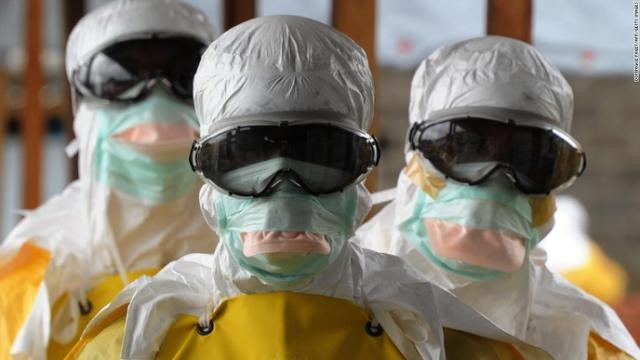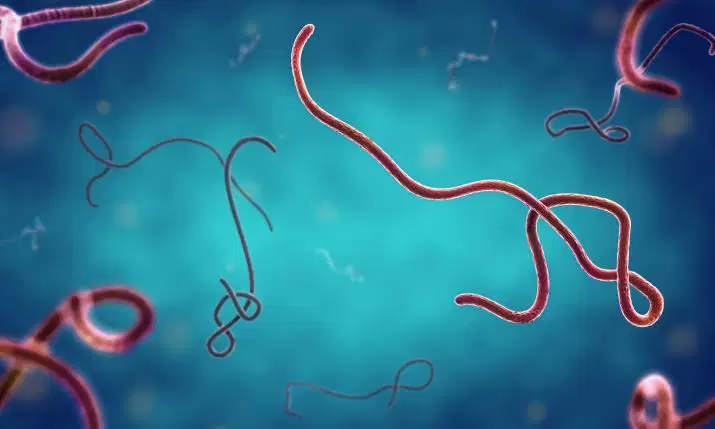
The first Ebola case detected in Nigeria is the Bundibugyo strain, which is behind a major DR Congo outbreak, and the patient is a diplomat, an emergency meeting heard on Wednesday.
The case in Nigeria, Africa’s most populous country, was detected in a woman who had travelled from Uganda to the capital, Abuja, on October 3, the Nigeria Centre for Disease Control and Prevention (NCDC) said.
The Coordinating Minister of Health and Social Welfare, Prof. Muhammad Ali Pate, was quoted as disclosing this in a statement signed by the ministry’s Assistant Director of Information and Public Relations, Ado Bako, following the reported laboratory confirmation on Tuesday, October 20, 2026.
According to the statement, the patient was a woman who recently arrived in Nigeria on an international flight from Uganda.
The woman was reportedly admitted to a private hospital in the FCT, where she received treatment for several days before the diagnosis was confirmed. She is said to be in isolation and receiving medical care.
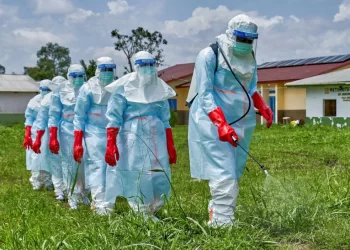
Pate said the Federal Ministry of Health and Social Welfare, the Nigeria Centre for Disease Control and Prevention (NCDC), the FCT Health Services Secretariat and other relevant authorities were working together to contain the reported infection.
He said contact tracing had commenced, with public health teams identifying and monitoring people who might have been exposed to the virus.
Since the Ebola outbreak was declared in the Democratic Republic of Congo in mid-May, the deadly viral haemorrhagic fever has spread to several countries across the continent, including to neighbouring Uganda.
“We did three levels of tests, but all molecular. The strain was Bundibugyo,” Olajumoke Babatunde, director of the public health laboratory service at the NCDC said.
The World Health Organization (WHO) also confirmed that it was the Bundibugyo strain, for which there is still neither a vaccine nor a specific treatment.
“This person is actually a diplomat,” another official said, adding the patient has deteriorated into “multi-organ failure”. The official did not disclose the nationality of the diplomat.
In August, Uganda was declared officially Ebola-free by the WHO after recording 20 cases — almost all people who had travelled from the DRC.
Africa Centres for Disease Control and Prevention Director General Jean Kaseya warned on Tuesday of “an extremely serious threat” as Kenya also declared its ninth Ebola case and fatality rates fast edging towards 50 percent in the DRC.
In several months, the DRC’s Ebola epidemic has become the deadliest in the country’s history, killing 4,381 people out of more than 9,000 confirmed cases, according to the health authorities.
“My appeal to the international community is urgent: ACT NOW,” said Africa CDC’s Kaseya.
The outbreak has now spread from central Africa to the continent’s east and west.
“This Ebola Bundibugyo outbreak has already become the most geographically widespread Ebola outbreak in history, affecting multiple countries across three regions of Africa,” Kaseya said.
Nigeria has identified 44 contacts that are being monitored, while intensifying efforts to find other people who may have been exposed.
The WHO said in a statement that infection prevention and control was being “ramped up” at the private hospital where the patient sought care.
Nigeria’s last Ebola outbreak was in 2014.