The capacity of many households to purchase daily and essential needs are becoming tougher, going by the erosion in the value of incomes due to high inflation and stagnated earnings, especially among low and middle-income earners. This development is forcing many to depend on loans, families and friends for sustenance.
With about 50 per cent rise in the inflation rate from 9.01 per cent when the Buhari administration took over in 2015 to 17.93 per cent recorded in May 2021, compared with a 40 per cent rise in the minimum wage from N18,000 in 2015 to N30,000, which many states are finding difficult to pay, many Nigerians today are struggling with hunger.
They lamented that their monthly take-home pay could no longer take them home considering the high cost of commodities in the country. Presently, many Nigerians with limited access to loans, due to lack of collateral are becoming dependent on the fast-growing collateral-free digital lending or loan apps to access emergency funds and cater for personal expenses within a short period.
However, a requisite to accessing loans via these platforms come with the provision of personal information such as BVN, house address, and debit card details including its PIN. Most often, the loan apps, if granted permission, have access to the applicant’s phone contacts and other sensitive information on the applicant’s mobile device.
Consequent to fulfilling the requirements, one is only able to request an instant loan ranging from as low as N2,000 and as high as N500,000 within minutes depending on the financial capacity of the company, interest rate and applicant’s creditworthiness calculated by the company.
With defaults on the rise, it is becoming common practice for contacts of the loan beneficiary to receive terse messages from such firms reporting cases of defaults.
Meanwhile, the number of people who did not have enough food to eat rose steeply during the pandemic to include almost a third of the world, according to a new United Nations (UN) report published yesterday. Five UN agencies said the number of people without access to healthy diets grew by 320 million last year to nearly 2.37 billion people– more than the increases in the previous five years combined. The number of people who went hungry grew by about 161 million last year to 811 million.
The report by five UN agencies – the Food and Agriculture Organisation (FAO), the International Fund for Agricultural Development (IFAD), the UN Children’s Fund (UNICEF), World Food Programme (WFP) and the World Health Organisation (WHO) – said the effects of the pandemic on nutrition were still being counted, but levels of impaired growth and development among children are expected to increase because of the pandemic. An estimated 22 per cent of children under five are considered to be stunted.
Gilbert Houngbo, President of IFAD, said enough food was being produced to feed everyone and the crisis was a failure in the food system. “It is clear that, unfortunately, the pandemic continues to expose weaknesses in our food system, which threaten the lives and livelihoods of people around the world, particularly the most vulnerable and those living in countries affected by conflict, climate change and inequality,” he said.
Houngbo said that even when enough food was produced, crises such as the pandemic could affect regional and international trade, which is especially damaging for countries reliant on imports.
According to the Nigerian Living Standards Survey (NLSS) report by the NBS in 2020, the number of Nigerians that are poor have been estimated to be 82.9 million, meaning 40.1 per cent of Nigerians are classified as poor by national standards.
The NLSS report also recorded a poverty line of N137,430 for each person per year, translating to an average of N376 per day. The situation is worse considering that more Nigerians now live on less than one dollar a day, which translates to about N500 per day.
In its COVID-19 National Longitudinal Phone Survey (NLPS) for January 2021, the NBS reported that when households were asked to indicate their income sources between August 2020 and January 2021, and how the income they received from each applicable source compared to the same period a year ago (August 2019 to January 2020), 38 per cent of the households reported income loss (decrease).
Looking across different income sources, income losses were most widespread for remittances from family members within the country (46 per cent of households that had such income); followed by assistance from non-relatives within the country (42 per cent) and non-farm family business (41 per cent).
Though the minimum wage was adjusted to N30,000, many governors have failed to meet the obligation, while those in the private sector have not had it better, as incomes were revised lower due to the impact of the pandemic on many businesses.
Currently, many Nigerians are underemployed and unemployed, thus raising concerns about the country’s rising dependency ratio, as the situation has further mounted pressure on disposable incomes.
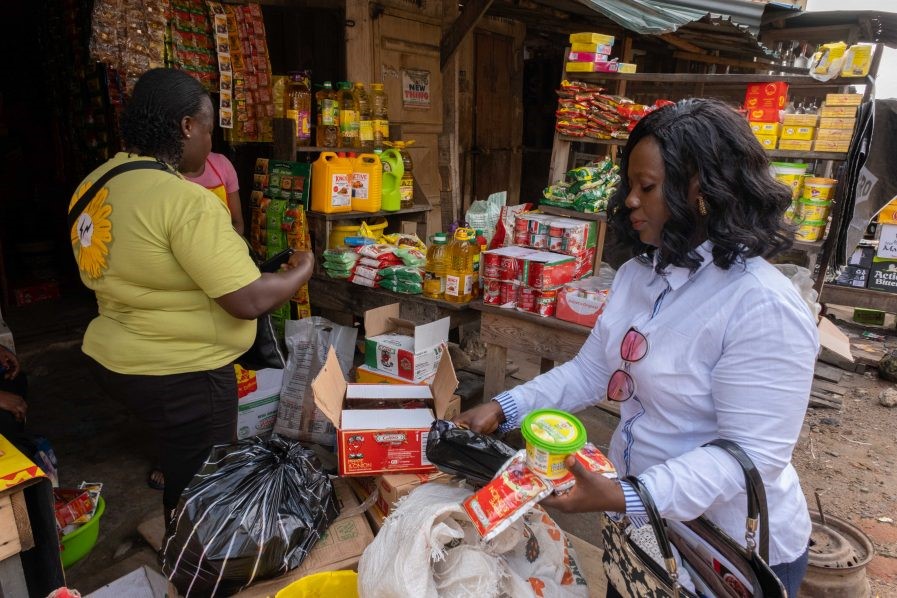
A comparison of the prices of some foodstuffs between 2015 and 2021 showed that a bag of rice (foreign) was N10,500, but now N30,000, while a bag of local rice that was N6,000, now sells for N22,000.
A basin of garri in 2015 was N3,000, but now N11,000; cup of beans in 2015 was N30 now N120; an average tuber of yam in 2015 was N200 now N1,000; sizeable frozen fish in 2015 was N100, now N800. Across the board, the prices of foodstuffs in this present administration have drastically increased.
For instance, a worker, whose monthly income was N50,000 in 2015 could comfortably purchase some commodities and still have little savings, but the reverse is the reality presently, especially now with dwindling incomes. At between N18,000 and N30,000, many workers can barely spend on feeding, transportation, energy consumption, and other amenities, with little savings.
The Guardian findings showed that most employers have not done salary appraisals for many years, while some are not ready or willing to increase salaries any time soon, despite quantum efforts put in by the employees to keep the organisations running at optimal capacity.
Those who spoke noted that they have not had it good since the past five years when this administration came on board, expressing regrets that the change mantra promised by Muhammadu Buhari during his campaign period is not commensurate with current realities. They argued that with the rise in inflation and even devaluation of the Naira, their salaries could no longer sustain them.
For instance, Nigeria’s inflation rate since 2013 to date had grown from 8.48 per cent to 17.93 per cent in May 2021. In 2013, the inflation rate stood at 8.48 per cent while it dropped to 8.06 per cent 2014. In 2015, when this administration took over, it shot up to 9.01 per cent with a yearly change of 0.95 per cent and had continued to rise exponentially.
Giving a breakdown, in 2016, inflation rate rose sporadically to 15.68 per cent with about a 6.67 per cent increase from 2015. In 2017, it stood at 16.52 per cent with about a 0.85 per cent increase from 2016, while in 2018, the inflation rate significantly dropped to 12.09 per cent with about -4.43 per cent from 2017.
In 2019, it stood at 11.40 per cent with a yearly change of -0.70 per cent when compared to 2018, while in 2020 and 2021 as at May, the inflation rate stood at 13.2 per cent and 17.93 per cent respectively, which analysts believed may drop to an average of 17.0 per cent in 2021, with increases on both core and non-core levels over 2020.
Using the Central Bank of Nigeria (CBN) Inter-bank Foreign Exchange Market (IFEM), $1 as of June 2021 was about N404.19 but in June 2015, $1 was equivalent to N196.92.
Comparing the rate than at N196.92 and N404.19 to $1 now, with a minimum wage of N18,000 and N30,000, respectively, showed that Nigerian workers are at the receiving end, with low purchasing power and high cost of commodities.
A worker, who works in the factory department of one of the manufacturing firms in Lagos told The Guardian that their monthly take-home is not up to the minimum wage. The worker, who craved anonymity for fear of being sacked said they receive daily pay of N1,400 for a 12-hourly job, running from 7:00 a.m. to 7:00 p.m., which when summed up monthly stands at N28,000. On the job, he said they run two shifts, where many youths rushed in large numbers to be among those that would be selected for the day’s job.
Another female factory worker and a graduate, Nkechi Obi, from another organisation, said she earns N900 daily for a six-hour shift. She said due to the low wage, most of them are forced to work two shifts intermittently to make more money to meet up with family needs.
She said: “I am a graduate of Business Administration from one of the federal universities. I have not been able to get a good job offer since I graduated in 2019. I had to take the factory job to meet up with some financial needs. The work has not been easy because most of the time, I engage in two shifts as the wage is so poor and nothing to write home about. I pray I get a better offer because the factory job is already taking a huge toll on me.”
The Guardian investigation also showed that many private schools are underpaying their workers below the minimum wage. Already, the N30,000 minimum wage is supposed to be for Grade Level 1 Step 1 workers, which is meant for the unskilled workers like cleaners or gatekeepers, but such are paid to graduates and some with second degrees, where a Master’s degree worker earns about N25,000 as salary.
Not left out too are the banking sector and other financial institutions, where the majority of the personnel operate as casual workers. The workers are denied good pay, pension, gratuity and other allowances.
The United Nations (UN) reviewed the poverty line from $1.25 per day to $1.90 per day, and this is worsened by the rising cost of living and declining purchasing power in Nigeria. Standard of living, according to experts, is the quality of life being lived by a particular set of people — their level of wealth, comfort, material good and access to the basic necessities of life.
While living standards, according to the World Bank, are measured by income and expenditure, in Nigeria’s case, real income has dropped over the past 12 months with the massive fall in the value of the Naira and rising unemployment.
Already, the income and consumption of Nigerian households had remained unstable due to the impact of COVID-19. With prices of goods and services taking a flight, the standard of living for Nigerians has evidently dropped with the cost of living far-reaching.
Economists are of the view that the rapid decrease in the domestic value of the currency has put a severe strain on domestic households in 2021 as their real disposable incomes vapourised. They urged that the government needed to stimulate private consumption to encourage growth since the government’s spending has not translated into higher incomes for the average worker and, therefore, average private consumption remains depressed.
A labour expert and President of the Chemical and Non-Metallic Products Senior Staff Association of Nigeria (CANMPSSAN), Segun David, said the socio-economic situation in the country vis-a-vis COVID-19, workers’ welfare and N30,000 national minimum wage amid rising inflation, made some employers, especially during the peak of COVID-19 to do many things that were inimical to the growth of workers.
He said: “For instance, a lot of companies downsized arbitrarily and indiscriminately, while some even went ahead to reduce the salary of workers. Now that things have improved reasonably, those salaries were not reversed.
“Also, we saw where a majority of companies declare huge profits than they usually made in recent past. But most of them to date have not done salary appraisals and yet they are declaring huge profits. These profits, if I may say, part of it was got as a result of suppression of workers, because some of them did not increase salary, some employees were retired and there were no replacements, they froze promotions and in all these, they counted them as profits, not even considering the workers that worked for them to make these profits.”
In all these sufferings, there was an initial plan recently by the Federal Government to slash the salaries of workers in the country, which was immediately kicked against by organised labour. President of the Nigeria Labour Congress (NLC), Ayuba Wabba, said NLC was shocked at a statement credited to the Minister of Finance, Zainab Ahmed, on the plan to reduce the high cost of governance by cutting down on workers’ salaries.
He described Nigerian workers as miracles strutting on two legs, who are only surviving by hair’s breadth. According to him, it is in public knowledge that the multiple devaluations of the Naira in a short time, and the prevailing high inflation rate in Nigeria, has knocked out the salaries earned by Nigerian workers across the board.
He added: “It is most unthinkable that the government would be contemplating to unilaterally slash the salaries of Nigerian workers at this time. The question to ask is which salary is the government planning to slash? It certainly cannot be the meagre national minimum wage of N30,000, which right now cannot even buy a bag of rice.”
“We urge the government as a social partner to quickly respond to the demands by labour for an upward review of salaries of all Nigerian workers. Nigerian workers demand an increase in their remunerations and allowances.”
President of the Trade Union Congress of Nigeria (TUC), Quadri Olaleye, who noted that the Nigerian economy was challenged on many fronts, also said employers could conveniently pay and increase salaries if they could cut down on their ostentatious lifestyles.
Noting that before the N30,000 minimum wage was finally passed into law in 2018, the last time salary was negotiated was in 2011, meaning that for almost eight years there was no wage increase.
Director-General of the Nigeria Employers’ Consultative Association (NECA), Dr. Timothy Olawale, said the economy currently grappling with the worst economic growth, having experienced two recessions within the last five years in the country’s history, was currently affecting many employers with regards to salary payment capacity. He maintained that unless crucial economic reform and political will are demonstrated, the situation might continue to get worse. The Guardian