It’s time to plan towards conducting all elections in one day
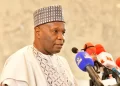
The Senate on Thursday confirmed Professor Mahmood Yakubu as the chairman of the Independent National Electoral Commission (INEC). Also confirmed were five national commissioners. Yakubu, a professor of history and international studies, from Bauchi State, succeeds Professor Attahiru Jega who concluded his five- year tenure on June 30.
“The success of any election depends on the ability of the commission to organise, arrange elections properly and in advance. But in this country, we have this culture of last minute rush”, said Yakubu at the Senate before lending his voice to the idea of e-voting which he described as both desirable and inevitable even while conceding it will have to be pursued with great caution.
While we congratulate Yakubu who comes to the job highly recommended, one of the issues that the new INEC has to take up is the idea of holding all elections in the country on the same day. His predecessor had noted that the existing arrangement of staggered elections is fraught with many drawbacks just as it is wasteful in terms of energy, time and money. Added to these is the fact that staggered elections do not necessarily guarantee free and fair polls as we have witnessed over the past 16 years of the current democratic dispensation.
Against the background that under the prevailing electoral system it could sometimes take between three and four weeks to conduct the various elections (Presidential, National Assembly, Governorship and House of Assembly) during which all economic–and sometimes even academic–activities are often grounded throughout the country, we consider this a worthwhile proposition that Yakubu should begin to work on.
As we have argued in the past, perhaps the single major complaint against holding all elections in one day is that the ballot paper could be too bulky in the case of Nigeria where there are many political parties taking part in any elections. The argument goes that the illiterate voters in the rural areas might be confused to the point that they would render their ballot papers invalid. Or that some may vote against their choices if given four different ballot papers at the same time. While there may be merit in this argument, we do not believe it is sufficient enough a reason not to try what has been perfected even in smaller West African countries where elections are usually held in one day with many parties competing.
There are also those who argue that since INEC still has difficulties in holding crisis-free elections under the existing staggered formula, there is no assurance that the electoral body would get it right if all elections are held in one day. That may be a legitimate concern. But in lending support to the single-day voting, we have weighed all the negatives that the extant staggered elections present against what the country stands to gain from the proposed one.
First and foremost, the current system is not cost effective as the country was almost always shut down for several days whenever elections were held with all the attendant economic implications. There is also the issue of voter-fatigue as turnout of electorate usually decline after the first major poll. Furthermore, and perhaps more fundamental, is the notorious fact that once the presidential or governorship elections were held first and results declared, subsequent elections tended to reflect the so-called bandwagon effect. We therefore endorse the single-day voting because, as has been evident in countries where it is practised, it would take care of the waste and allegations of manipulation usually associated with staggered polls.
It is therefore our hope that Yakubu and his new team at INEC will consider this proposal alongside other reforms so as to further the electoral development of the country. We wish him success in his new assignment.