Nigeria’s unfilled tertiary education spaces are an unsettling paradox. Although many candidates succeed in the annual matriculation examinations, universities, polytechnics, and colleges of education are unable to fill the vacant admission slots allocated to them by the education authorities. This leaves applicants stranded and delays their academic pursuits.
This debacle was laid bare in an August 2026 policy brief by the Executive Director, iRead To Live Initiative, Jacob Sule, titled “The Admissions Gap: Who Gets into Nigeria’s Tertiary Institutions, and Why It Matters.”
For instance, it concluded that in the 2025 stream, 1,009,736 of the 1,716,154 approved admission places were filled countrywide. This meant that 706,418 were left unfilled that year. These are destinies placed on hold.
According to the statistics, the overall fill rate stood at 58.8 per cent; more than 40 per cent of the approved admission capacity was unfilled.
Of the total figures, universities filled 785,180 of 1,060,919 or 74 per cent of approved slots, leaving 275,739 places unfilled. Worse, other higher institutions utilised only 34 per cent or one-third of the approved spaces.
Owing to the first degree-NCE disparity, universities enjoy high subscription rates at the expense of polytechnics and CoEs. The low value placed on middle-level manpower also creates disparity among degree, HND and NCE holders.
However, industrialised countries place a high premium on middle-level manpower as engines of productivity and development.
The iRead To Live Initiative concludes: “Nigeria’s tertiary institutions did not run out of room in 2025.” It added: “Hundreds of thousands of approved seats went unused even as public conversation focused on candidates who could not gain a place at all.”
The reasons for the debacle are not hidden, especially funding, staffing and poor infrastructure. Annual budgetary allocation to education, which includes the 74 universities, at the federal level oscillates between 5.0 and 8.0. This is far below the 15-20 per cent recommended by UNESCO.
Combined with the funding deficit and inadequate infrastructure in the country’s education system, the unfilled space saga in higher education is a grim indicator that Nigeria’s human capacity development is on shaky legs.
Many tertiary institutions lack accommodation spaces to admit more students; some lack teaching staff due to poor pay and brain drain. Others suffer from both.
The unfilled spaces and the teeming population that cannot “gain a place at all” are not just numbers; they are human development deficiencies with grave implications for Nigeria’s future.
This disparity between the unfilled and the filled spaces indicates that Nigeria does not plan to compete globally.
The causes of the unfilled spaces should be urgently addressed.
Admission placement is a science that requires planning. Synergy is therefore critical.
There is therefore a need for the Joint Admissions and Matriculation Board to approach admissions with adequate performance data, based on state, LGA, gender, subjects/courses and institutions to guide decisions. Such data should be shared with the government and the tertiary institutions they serve.
There are data gaps between JAMB, the National Universities Commission, the professional bodies and the institutions in the admission process. All concerned institutions should synergise to determine the capacities of institutions to reduce blind spots and achieve near-accurate space filling.
Admission is about candidates, and educational agencies exist to fulfil their purposes.
Admission is also about the country’s needs. As a developing country, Nigeria needs tertiary institutions that can enhance its development and make it productive and globally competitive.
However, the creation of so many universities, especially private establishments, has led some institutions to run courses merely to fill spaces. So, the NUC needs to monitor relevant courses run by universities.
Lack of facilities is also responsible for low subscription among universities. Private entrepreneurs, alumni, and corporate organisations should help alleviate the infrastructure deficit of universities and other tertiary institutions by building hostels, laboratories, and other infrastructure to make these institutions attractive.
Universities could launch endowment funds to provide a robust financial base and lift them out of infrastructure and economic deficits.
Valued as the largest academic endowment in the world and managed by the wholly owned Harvard Management Company, Harvard University held a $56.9 billion endowment fund as of 2025. This is higher than Nigeria’s 2026 federal budget of $49.4 billion.
Therefore, Nigeria’s tertiary institutions should rally critical stakeholders to institute endowment funds.
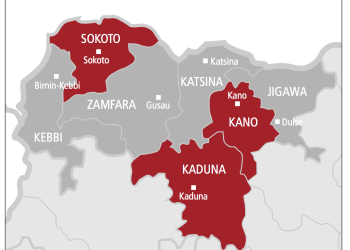
The country’s abysmal security profile is a factor in the choice of institutions. Besides the fact that universities in the North, for instance, are likely to suffer from unfilled-space challenges, it will be difficult for these schools to attract students from other regions. The NUC should note this before allocating spaces to tertiary institutions. Governments should prioritise security.
In a competitive world, Nigeria needs Science, Technology, Engineering and Mathematics. It is the key to the future, the path to innovation, productivity and development. The admissions process should relate to this.
Unfilled spaces also occur because many candidates who apply for UTME while awaiting results do not possess the course subject requirements. But where other critical factors are well taken care of, the effect of this unpredictable variable would be minimal.
The unfilled tertiary education debacle is a planning challenge. The relevant educational institutions should collaborate to resolve it. Admission spaces should be optimally utilised and merit-driven for a development-oriented Nigeria.