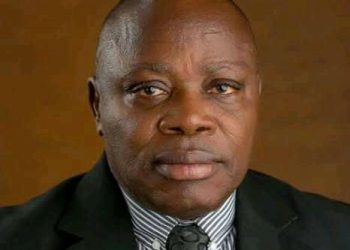
Professor Emeritus Umaru Shehu qualified as a medical doctor about 60 years ago.
He has been a professor for over 40 years.
He is now a consultant physician at the University of Maiduguri Teaching Hospital and a polio eradication ambassador.
Despite the provision of health facilities by the federal, state and local governments, the country still lacks adequate health care for the people. What has been the problem?
First of all, enough resources have not been provided for health care. The World Health Organisation (WHO) has recommended a percentage of budgets for health care, but that has not been observed in Nigeria. Number two, we don’t have enough manpower to take care of all the health problems in the country. Another problem is the quality of service. Again, the facilities to help the health sector perform optimally are lacking. Under the code of rural-urban disparity, most of the people living in rural areas are not adequately provided for. So the health sector is lacking many things, to the extent that we are not able to determine life expectancy for citizens of the country. In Nigeria, life expectancy is very low because of poor health facilities.
Another thing is the commitment of workers in the health sector and non-payment of salaries in some cases. Also, our health workers don’t want to go to rural areas, and you cannot blame them. I don’t have to tell you what the problems in the rural areas are. Of course Borno is a special case because of the insurgency that made things worse. Another problem is lack of coordination. As you know, in Nigeria, our health system is divided among the federal government (tertiary), state (secondary) and local government (primary). Each level has a certain function to perform. Normally, however, they do not work independently. If it goes beyond their resources, knowledge and expertise, the primary health care will refer such people to the secondary level, which is usually the responsibility of the state government. But this doesn’t really happen. If you go to the teaching hospital, for example, which should offer tertiary health care under normal circumstances, you find that most patients who go there were not referred by the lower level. So there is no coordination among the three levels of government. People just go anywhere they like. Basic principles of good health system are not adhered to.
In those days, drugs administered in Nigerian hospitals and other health facilities were genuine and very effective. Unfortunately, most of the drugs are no longer effective; what went wrong?
In the past, drugs were imported by the colonial masters, and much later, some of the simpler drugs were manufactured in Nigeria. However, what is of interest is not where they are manufactured but the quality. It doesn’t matter where they come from; we have the means of determining the quality of the drugs, as well as the resources to buy them. The out-of-stock syndrome is there because many things are being imported. In the 1960s, the quality of drugs was not determined by the Nigerian government until the advent of the National Agency for Food and Drugs Administration and Control (NAFDAC), an organisation entrusted with the responsibility of determining the quality of consumables in the country, including drugs. I was in the Ministry of Health for many years where drugs were imported by contractors. As a medical officer for a long time, I know that in the 1950s, the minister of health for the Northern Region purchased drugs abroad. But gradually, we started producing drugs, but I cannot tell you which ones were produced first.
However, I don’t think you should generalise. The drugs may not be effective but there are rooms for dishonesty. That’s why I mentioned the issue of quality control. If you can control the quality of drugs administered in the country they will become effective. It is unfortunate that people are manufacturing substandard drugs. That is why the NAFDAC usually go to some shops to destroy a lot of drugs.
I think you can say the drugs were better controlled in those days. And you had very effective results. Sometimes the quality of drugs deteriorates because of the dishonesty of manufacturers.
Was there any time the raw materials for the production of drugs were sourced locally?
Yes, some of them. But I cannot tell you the raw materials, only pharmacists can do that. But if the raw materials are available locally and they are tested and found to be equivalent to what you can find everywhere, and then the manufacturing process is under control quality, there will be no difference, really.
Do we have indigenous drug manufacturing firms in Nigeria?
When I was in practice there was Mayer Becker, a worldwide firm. There are so many drugs now. When I graduated at the end of the Second World War, only one anti-biotic was discovered. Between then and now we have so many anti-biotic drugs, to the extent that they are being rampantly misused.
Malaria is synonymous to Africa, particularly Nigeria, and we have not been able to produce anti-malaria drugs in the country; why?
First of all, you would have the knowledge and resources to purchase equipment. You see, he who produced anti-malaria drugs didn’t do it just for the purpose of production. There’s an economic aspect of it. They do that because they want to get money; they do not just set up a laboratory to produce drugs and give to people. It is capital-intensive and difficult to produce drugs.
Along the line, malaria parasites became resistant to the drugs and other things were produced. In 1960 or thereabouts, my very good friend, Tokumbo Lucas, who was the head of the tropical disease unit of the WHO in Nigeria, asked if we would have a vaccine against malaria. I said in about 10 years. And that was in 1970. One of the things he was doing was to have drugs against malaria, particularly vaccine. It is dynamic. You cannot predict anything, but the misuse of drugs is what prevents effectiveness. People just engage in buying any anti-malaria drug they think would cure them. Generally, drug production is not easy.
Despite the fact that Nigerian universities produce medical doctors and pharmacists, there are no consultants in many rural areas; what is the problem?
As I told you earlier, our problem is manpower. People are not being sent on training. For a long time in Nigeria, facilities for training are very good. And you find doctors everywhere. Some of my friends in Canada, United States, UK and other places received good training. The more people you recruit for training, the more likelihood that the standard will fall.
When we started medical school I was the minister of health. At that time, a class was made up of 20 to 25 students. When I went to Ibadan in 1948 when the University College was established, only about 22 students were reading Medicine. When I came to the Ahmadu Bello University (ABU), Zaria, about 20 people were the first graduates. That was 1970. In 1974, the number of graduates increased to 30. That’s how it has been progressing. In 1975 we had 40, in 1976 we also 40. ABU was the only medical school in northern Nigeria then. Now, do you know the number of students that were given admission to read Medicine in the University of Maiduguri? They are about 150 or so. All these are part of the training, and there are about 150 universities in Nigeria.
This morning I was discussing with one of the professors who told me that the university in Gombe had taken over a hospital and converted it to a teaching hospital, just to start a medical college. Bauchi has done that, Dutse has also done that. Now, the question is: Where are the teachers? It takes many years to train one teacher. About 20 years back, the federal government banned the training of resident doctors. Now, without residency there will be no teachers because they are people who learn under the consultants and take the examination to be able to practise. If you cannot have a resident doctor then you cannot have a consultant. Really, a lot of policy mistakes have been made since I left the Nigerian civil service in 1967 and joined the university system. I don’t know why some people in authority took such a decision without knowing why we trained resident doctors. Any department that does not train resident doctors is not worth its salt. This is because it is the foundation of building efficient and effective teachers. They are trainees, and eventually, when they pass examinations and fellowship, they come back as consultants.
Although there is an increase in population, with about 150 universities in the country and a good number of them producing medical doctors and pharmacists, why is Nigeria still experiencing shortage of medical personnel?
When I joined the civil service, specialisation was not taken into account. But gradually, it was realised that specialisation was necessary. Consultants were not trained in Nigeria. When the University of Ibadan started training consultants, condition of service became an issue. Suddenly, you find yourself captured into an institution. Few brave ones decided to quit, and very soon you found them building big clinics and employing people. That was how private practice came in. We could not foresee those developments. This is why you think there is shortage of doctors. Not only that they are not being trained, they also do not want to work under such conditions.
Look at the issue of polio eradication, for example. I used to go all over the settlements to find out how our people were doing. You hardly found doctors. Hardly can you find any local government that can employ a doctor and keep him. They cannot even get enough midwives. The midwives don’t want to live in the rural areas. These are some of the factors responsible for this. It also appears that the policy makers were never ahead of time or developments. They will wait until something happens before they would try to do something about it. But you see, the WHO and others have prescribed the minimum human resources required for communities. They said there should be such number of doctors for such population. You are expected to match your population growth with your manpower. Unfortunately, this has never been taken seriously.
How do you see the funding of the health sector?
The WHO prescribed the percentage of budget for the health sector. But it is not being adhered to in Nigeria.
Sadly, some medical doctors, including those trained with public fund, migrate to Europe, USA and other developed countries to take up appointments rather than stay back at home to work. What can be done to check this trend?
Recently, there were appointments into parastatals like the National Primary Health Care Development Agency (NPHCDA), National Agency for the Control of Aids (NACA) and so on. I don’t know how they were selected. I went to some of those places and asked to see them, but I was told they had not yet come. Later, I heard that some of them wondered what I went there to do.
Condition of service is put into consideration. There are things you won’t know until you get there. Sometimes the same condition of service you find in the United States does not exist in Saudi Arabia. Despite the huge salaries and other attractions in Saudi Arabia, some people come back when they go there. That is because money is not everything. What about the social structure and other issues?
The condition of service in other countries may not be the same with what we have in Nigeria. These were some of the things that made me come back when I finished my training as a doctor.
In those days being a medical doctor was extremely rewarding. It had a lot of respect. At the age of 10 or 15, I would tell you that I wanted to be a doctor if you asked me.
At one time in Nigeria, the director of medical service was an acting governor. Gradually, the number increased and politics came in. That is why it is better we write things down so that we do not make mistakes.
I qualified as a medical doctor about 60 years ago. Death toll was high and life expectancy was very low. Children were born but many of them would just die. Suddenly, life expectancy went high. European medicine came in, but it was restricted to the colonial masters, soldiers and missionaries. It was the missionaries who insisted that drugs should also be administered to the natives. Unfortunately, we bastardised the standard. – Daily Times.