Despite representing a watershed in the country’s chequered democratic annals, all was not well with the 2015 general election. The European Union Observer Team affirmed this recently in its report on the polls. Released into the public space at a time Mahmud Yakubu assumed office as the new chairman of the Independent National Electoral Commission, it is a coincidence that might rub off on how he plans to move the body a notch higher than he met it.
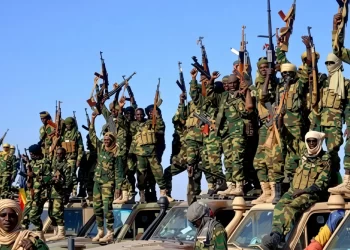
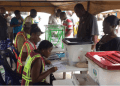
The EU, in its painstaking analysis, noted that 160 people were killed in election-related violence from January to the time of the polls in March and April. Systemic weaknesses left the electoral process vulnerable to abuses by political actors, just as abuse of incumbency power at both federal and state levels was rampant. Government-owned media left nobody in doubt about their partisanship in favour of their paymasters. The use of card readers and fingerprints verifications was problematic in most polling centres, while 2.3 million voters that turned up for accreditation did not return to cast their votes.
“Overall, the system of results collation and announcement lacks safeguard and transparency measures, with the speed of results declaration given more priority over the thoroughness and credibility of the process,” the EU said.
These incongruities informed its 30-point suggestion for improving Nigeria’s electoral system, 19 of which will require legislative action, while the rest will be handled administratively. Among its proposals are: a legislative mechanism for political parties to be involved in the selection of INEC’s chairman and National Commissioners; granting INEC the power to appoint and fire state Resident Electoral Commissioners; merger of accreditation of voters with voting; completion of pre-election cases on time before the elections; review of voter register aimed at improving it; and parties should take deliberate steps to give women more opportunities to participate in the electoral process.
The EU argued that giving INEC the power to hire and fire the RECs would help in entrenching its independence, which it badly needs to operate optimally. This recommendation should sit well with Nigerians, viewed against the backdrop of the 2007 election that was underpinned by the “do-or-die” martial philosophy. The outcome reflected just that. It was so because the INEC officials were tied to the apron strings of the Executive, which appointed them.
It was not, therefore, surprising that the election was declared as the worst in the world by local and international observers. Even its chief beneficiary, the late President, Umaru Yar’Adua, admitted at his inauguration that the election that brought him to office was flawed and pledged to initiate electoral reforms. This was how the Muhammadu Uwais Electoral Reforms Committee, of which Attahiru Jega was a member, was born. Unfortunately, the country could not go far in implementing the report. For this reason, some observers fear that the EU report might also not be accorded the attention it deserves.
Evidently, Nigeria has not been short of ideas to improve its democratic process. What is sorely lacking is the political will to implement them. Such echo came from Jega himself last week at the University of Abuja public lecture on electoral reforms. He called for the full implementation of the Uwais report. “We must put the next four years to even better use by ensuring the implementation of those outstanding and very good recommendations of ERC, which have not been acted upon….”
With Jega’s feat as INEC boss, which earned him global acclaim, the lapses in the last elections and the unfinished business of electoral reforms, it seems Yakubu has his job cut out for him. He should hit the ground running. INEC appears to always go to sleep at the end of every general election, only to wake up from its slumber a few months to the polls. This was evident in the late registration of voters, distribution of Permanent Voter Cards and human capacity shortcomings during the March/April elections.
This show of unpreparedness climaxed in the six weeks extension of the electoral timetable, from the original dates of February 14 and 28. Again, as the country unabashedly abandoned some voting materials for the 2007 elections in South Africa following time constraint, so were 100,000 PVCs not produced for the 2015 elections, thereby disenfranchising some voters. Our view is that an assignment effectively planned for four years, should not be overwhelmed by shambolic trail.
By not working hard to stick to the 2015 electoral timetable, election petitions could not be filed and concluded by the Election Petitions Tribunals, to foreclose the chance of those who rigged to win being sworn in at all levels. Where such elements use state resources to defray their litigation costs, it does not provide a level playing field for all the contestants. It is hoped that 2019 will be different.
Above all, election is not war, but a democratic contest that should not yield any ground to violence, bloodshed and rigging. Nigeria will never deepen its democratic ethos if the government and INEC continue to treat election riggers as petty criminals that should not be punished. Indeed, they are the worst set of bandits, whose ultimate target is the control of public treasury. But the sooner we start seeing them as dangerous felons and treating them accordingly the better for our electoral process.