By Ifeoma Chigbogwu
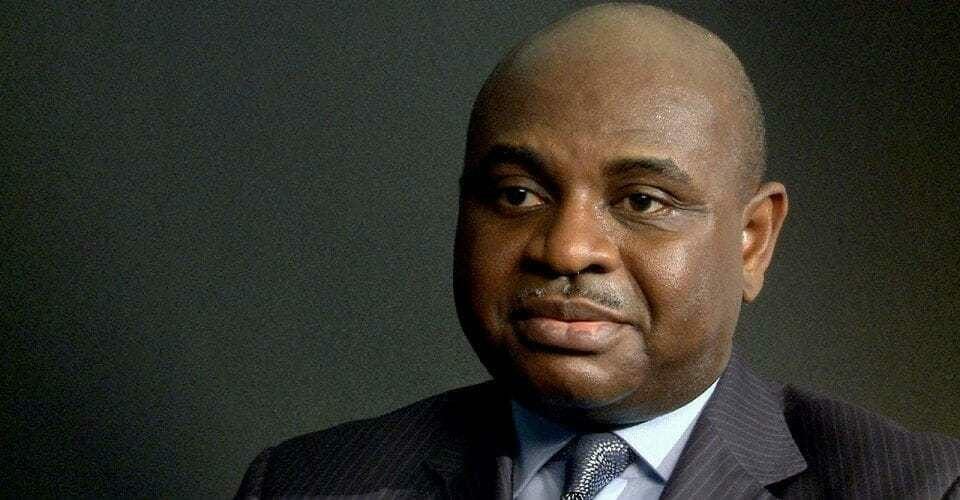
When Kingsley Moghalu, a former Deputy Governor of the Central Bank of Nigeria (CBN) announced his intention to run for the presidency in 2019, he used the opportunity to remind his audience that it was time for technocrats and intellectuals to take over the reins of power from career politicians.
The audience on that day was predominately journalists, but as the news broke on social and mainstream media, the positive response that followed the development underscored the yearning of Nigerians for a different approach to governance.
The current expectations are that a new age politics from 2019 will rise above ethnic, political and age considerations and underpin the need for modern, articulate or ‘digital’ leadership style. The approach will guarantee entry into politics for a greater number of youths who (it is given for granted) are progressive and adaptable with practical knowledge of technological advancement and other trappings of modernity.
These hopes are expected to overturn the political reality in Nigeria which is presently buoyed on a tripod of zoning arrangements, tribalism and exclusivity.
The zoning arrangements ensure that candidates are nominated for elections by a consensus of the political machineries that support parties. These agreements, in many cases, swap better-qualified aspirants for mediocre, ill-prepared and, in the long run, disappointing representatives.
Tribalism precludes prospective candidates from one or ethnic groups based on innate and misleading preconceptions and enthrones or consolidates poor governance.
On the other hand, the notion of exclusivity feeds on continuity in politics by career politicians with unenviable records in failure. Here, leadership is linked to age, experience as well as social and political connections. The irony is that these variables yield massive largess to the politicians and impoverish the electorates who live on unfulfilled promises and hopes of better fortunes at the next elections.
These are the realities and challenges Moghalu will surmount if he wants a shot at the presidency.
However, Moghalu, who is also the President, Institute for Governance and Economic Transformation, said he would not be dissuaded from joining the 2019 race despite speculations that Igbos will aspire to the presidency from 2023.
Moghalu insisted that politics in Nigeria should be detribalised to boost diversified growth and reposition Nigeria internationally and Nigerians should begin to think differently, beyond tribe in choosing political leaders.
““It is the turn of any competent Nigerian to aspire for the post of presidency because career politicians have failed Nigeria,” he explained.
Speaking on zoning, Moghalu said the arrangement has lost its relevance adding that competence should over-ride tribal considerations.
Asked if he would be concerned should President Muhammadu Buhari (from Northern Nigeria) decides to run for a second term, Moghalu said only Buhari could decide his political path but the ultimate “decision of who becomes Nigeria’s president in 2019 rests with Nigerians”.
Interestingly, Moghalu must convince Nigerians to consider him as an alternative. Many enabling factors are in his favour though
The economy went into recession on the watch of the Buhari-led government. There is the forex crisis with the Naira just achieving a near-stable rate after long periods of unpredictability. Currently, the economy remains in a delicate situation. Although, officially, Nigeria has exited recession, the masses are still groaning under double-digit inflation of 15.13%, fuel scarcity and erratic power supply.
Government strategies on security has been largely inadequate with the Boko Haram sect still active in parts of North-East Nigeria culminating in the recent kidnap of 110 school girls in Yobe State by the dreaded insurgents. Arising from this are the Internally Displaced Persons (IDPs) who wish and deserve better living conditions.
Added to these is the Nation-wide rampage of cattle herdsmen who leave destruction of lives, property and farmlands along the grazing paths.
Moghalu is offering the first course palliative by proposing an ideological shift in actors on the political stage.
He said that “the future of Nigeria rests in technocratic interventions. We need thinking people that will take Nigeria from the politics of stomach infrastructure to politics of mental infrastructure”.
The question is: How does Moghalu hope to meet the reawakened expectations of Nigerians?
First, aged just 54, he has the youthful robustness to grind through the rigours of governance and is better positioned to attract similar fresh minds to churn out popular policies and programmes.
Moreover, his corporate training and achievements put him on compensating pedestal for his limited exposure to mainstream politics.
As Deputy Governor of the Central Bank of Nigeria from 2009-2014, he led the execution of extensive reforms in the Nigerian banking system after the global financial crisis.
He was also a member of the bank’s Monetary Policy Committee that brought inflation down into single digits.
Moghalu served as the Chairman of the Boards of Directors of the Nigerian-Export-Import Bank (NEXIM) and the Financial Institutions Training Center.
He was Member of the Boards of Directors of the Central Bank of Nigeria, the Securities and Exchange Commission (SEC) of Nigeria, the Asset Management Corporation of Nigeria (AMCON), and the global Alliance for Financial Inclusion (AFI).
The international flavour to his corporate life records his time working for the United Nations for 17 years, leading successful work in national reconciliation and nation-building in fractured societies, risk management and management reform in the UN, and raising billions of dollars for social investments in developing countries by The Global Fund to Fight AIDS, TB and Malaria in Geneva.
As a philanthropist, Kingsley founded the Isaac Moghalu Foundation, a non-profit organization that provides support for literacy, educational institutions, and access to education for underprivileged children in rural communities in Nigeria.
Considering these credentials, Moghalu fits into the mould of new breed politicians, a new class untainted by political gerrymandering.
Former President Olusegun Obasanjo, in an open letter to President Muhammadu Buhari in January, suggested Nigerians embrace a new movement anchored by a new generation of youthful politicians who would generate and foster new thought processes.
According to Obasanjo, “our democracy, development and progress at this juncture require ordinary citizens of Nigeria to do the extra-ordinary things of changing the course and direction of our lackluster performance and development. If leadership fails, citizens must not fail and there lies the beauty and importance of democracy”.
Moghalu is fighting doggedly to achieve his ambition through the presidency to reposition Nigeria for greatness.
Already, his message is connecting with the youths. Among the audience at Moghalu’s book launch on February 26, would be youth thought leaders such as Yemi Adamolekun, Executive Director, Enough is Enough Nigeria; Kadaria Ahmed, Media Entrepreneur; Japheth Omojuwa, Founder and Chief Strategist, Alpha Reach, and Ndidi Edozien, President, Growing Businesses Foundation.
However, he would need more than youths to evict the current occupant of Aso Rock in 2019. His messages should gain traction in all demographic sectors of the country,
Former Vice President, Atiku Abubakar, suggested a focus on job creation. In a Facebook post announcing his return to the Peoples Democratic Party (PDP), Atiku stated that “without the security of a job we cannot have security in our country”.
Therefore, Moghalu must explore and exploit options to improve the unemployment rate in Nigeria which, according to the National Bureau of Statistics (NBS), stood at18.8% in 2017.
The report further stated that the number of people with the labour force who were in unemployment or underemployment increased from 13.6 million and 17.7 million respectively in the second quarter 2017, to 15.9 million and 18.0 million in the third quarter 2017.
The NBS report added that total unemployment and underemployment combined increased from 37.2 per cent in the previous quarter to 40.0 per cent in the third quarter.
Therefore, as he consults widely in the months leading to the elections next year, Moghalu is expected to decipher more of the needs and aspirations of the people and tailor his messages and strategies to activate a national consciousness to shift from political norms.
In the meantime, he, like Obasanjo believes in “courage, determination and commitment to say and do and to persist” in the political journey.
“Nothing ventured, nothing gained, and we believe that our venturing will not be in vain”, Obasanjo had added.
http://www.ifeomachigbogwu.com/leadership/2019-time-technocrats-intellectuals-govern-nigeria-moghalu/