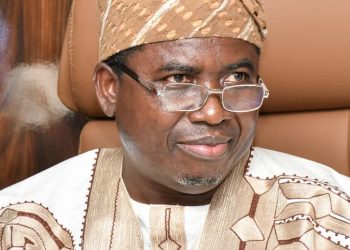
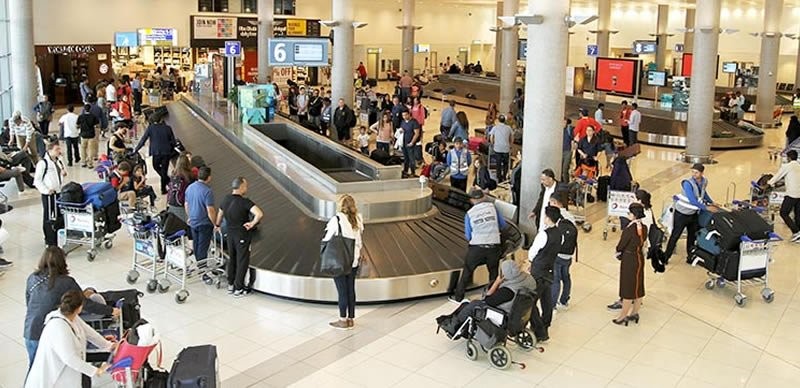
Not a few Nigerians were jolted by the Federal Government’s recent declaration that four frontline airports in the country were not designed as international facilities. The affected airports are those located in Lagos, Abuja, Kano and Port Harcourt. The Minister of Aviation, Hadi Sirika, at a stakeholders’ webinar during his presentation on Nigerian Airport Concession Strategy, pointedly declared: “The airports in Nigeria are currently operating in a suboptimal environment, most notably due to factors that will have to be improved as part of the public private partnership programme.” He added that “there is relatively low assets utilisation due to the limited opening hours of other smaller Nigerian airports, and lack of terminal capacity as the airports fall short of gates, stands and check-in desks. He also noted that “The airports have not been designed as international hubs but operate separate international and domestic terminals.”
According to the minister, these are the reasons the airports in question are being concessioned. The concessionaires are expected to provide the needed funds to upgrade the existing terminals, take over the new terminals, and maintain them over a period of time to be determined based on the financial assessment of each facility. To be sure, there is nothing wrong or unusual about Public Private Partnership (PPP). Indeed, that is the trend in infrastructure development financing in the advanced countries. However, it is imperative that the government enters into such private partnership agreements from a position of strength and that cannot be the case if the infrastructure to be upgraded needs disproportionately huge private sector financial injection. The volume of resources committed by the private partner in a PPP arrangement can significantly determine the length of time the economic infrastructure, upon completion, will be under the operation and management of the private partner. What that means is that if the four airports are in the state the minister described, then the private resource providers will be at the driver’s seat during the negotiation of the terms and condition of the concession.
The real issue, therefore, is whether the country should be concessioning any of its airport facilities in the state they allegedly are given the enormous volume of resources that have been committed to running and maintaining them over the years. Indeed, the claims by the Federal Government about the status of the facilities are astounding not only because the four airports carry the prefix “international” in their nomenclatures but more importantly because these facilities usually draw sizeable portions of the national budget yearly for their operations. In addition, there have been quite a few national intervention schemes by successive administrations in the country to upgrade airport facilities across the country, the most notable being the widely publicised remodelling programme executed by Senator Stella Oduah when she was the Aviation minister under the Goodluck Jonathan administration. In September 2012, the Federal Government approved the sum of N106 billion for the construction of 11 new international airport terminal buildings. According to the then minister, the new international terminal projects were different from the then ongoing remodeling and reconstruction of 11 airports in the country, and the 11 new projects would include five international terminals for commercial flights and six for perishable cargoes.
Questions may, therefore, be asked as to what happened to the remodeling exercise. Was it just a facade? What about the public resources committed to the remodelling; have they gone down the drain? Besides, what happened to the money made by the government over the years? The social content of airport operations and services, if any, is limited. Airports are essentially revenue-generating organisations. By the way, the Murtala Muhammed International Airport (MMIA) was designated an international airport before Nigeria’s independence. MMIA is only a renaming. So what is the minister talking about? And does that mean that the relatively young Nnamdi Azikiwe International Airport in Abuja, the new federal capital, was not designed as an international facility too? Or were the airports at any point in time downgraded by the international regulatory authorities?And why is the government only just realising that those four major airports were not designed for international operations?
There is palpable apprehension in some quarters about the government’s real motives, which many consider suspect. Some are even of the opinion that the talk about substandard facilities is the government’s surreptitious move to prepare the minds of citizens for the eventual sale of the airports. Thus, beyond the rather confusing explanations of the minister about the status of the airport facilities, citizens will need an independent confirmation of their status and the veracity or otherwise of the resources channeled to upgrading and remodelling them in recent years. The country cannot afford any suboptimal management of scarce national resources and assets at a time it is piling up both local and foreign debts in an unprecedented fashion.