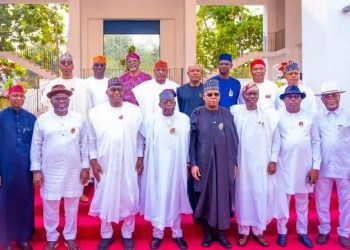
That former and serving Chief Justices of Nigeria (CJNs) have repeatedly drawn public attention to the pre-eminence in the Nigerian Bench of fraudulent and corrupt officers (like incumbent CJN, Mahmud Mohammed reiterated lately), suggests the endemic nature of unethical behaviour and misconduct among judges and other judicial officers on whom the nation entrusted its justice administration system. It calls more for a radical surgery in the entire garbled judicial system than the persistent references being made to the rot by those statutorily empowered to halt the pandemic.
In 2012, at a public function in Lagos, a former CJN, Justice Muhammadu Uwais, confessed that Nigeria inherited a strong judiciary from the colonial masters, but that corruption had incapacitated that arm of government. “When I was the CJN, I worked with the president to remove quite a number of the judges from office on the recommendation of the National Judicial Council (NJC). This is because they were found wanting. That was the standard we expect from the NJC. Unfortunately, judges who were corrupt were allowed to go scot-free”. Former President Olusegun Obasanjo also stated during that occasion: “We believe that the judiciary is the last to be affected by corruption. Now, the judiciary has been riddled with corruption and this has affected other sectors of the country. If the judiciary becomes corrupt, where is the hope for the nation?”
When the mantle of CJN later that year fell on her, Justice Aloma Mariam Mukhtar, reiterated that corruption existed in every facet of the nation’s life, adding that she could not pretend it wasn’t existent in the judiciary. “What I intend to do to curb this is to lead by example and to hope and pray that others will follow. As the chairman of the NJC, I will encourage internal cleansing based on petition…I will try to make sure that the confidence reposed in the judiciary as it was before will be restored”.
Indeed, Mukhtar, later at a National Judicial Institute (NJI) function few weeks before she left office, further opened up when she stated: “Now more than ever, the public has become more critical of the conduct of the judicial staff, perhaps buoyed by public outcry against unwholesome conduct of the judicial staff, like leakage of judgements before delivery, demanding bribes before the preparation of records of appeal, acting as go-between for some overzealous litigants and some corrupt judicial officers, ostentatious lifestyles beyond legitimate earnings, and a host of other activities”. In other words, it is not just judges and complicit senior lawyers that indulge in the judicial gammon, judicial assistants, court registrars, clerks and bailiffs constitute parts of the leprous syndicate.
True to her pledge, however, by the time Mukhtar handed over her seat to Justice Mohammed late last year, she, like Uwais, did her modest best to clean the Augean stables in the judiciary. A couple of indicted judges were sent on compulsory retirement, while others were either censured or suspended for a while. Mukhtar on account of her performance came across to her admirers as a high judicial officer of impeccable integrity before the nation’s Bench and Bar. Though soft in looks and speech, she was firm in her resolve to retrieve the judiciary from further value and confidence depreciation.
CJN Mohammed has since assuming expansively deposed to leave behind a judiciary that is committed to the rule of law; is financially autonomous; proactive and vibrant, with staff of proven integrity. He has manifested his commitment to having a dynamic judiciary manned disciplined, committed and competence officers; and has equally demonstrated his repulsion for bad eggs in the judiciary and their accomplices in the senior bar. The NJC he heads has probably not punished as much erring judicial officers like Mukhtar did. But the latest template released by his regime to ensure vacancies in the Bench are filled based on merit, hard work and integrity, instead of dubious or extraneous considerations, promises a plus for the job of cleansing the Bench if strictly put to work. Therefore, the Mohammed-led NJC should see to it that the process works.
However, beyond filling vacancies in the Bench, merely sending acclaimed corrupt judges on compulsory retirement is a slap on the wrist that is not commensurate with the havoc they wrought on the system. Judicial officers found wanting should equally be prosecuted and made to face the wrath of the law like ordinary citizens, having betrayed the nation and their calling. We expect less talk, but more action.