- Nigerians have cause to worry about the mounting debts
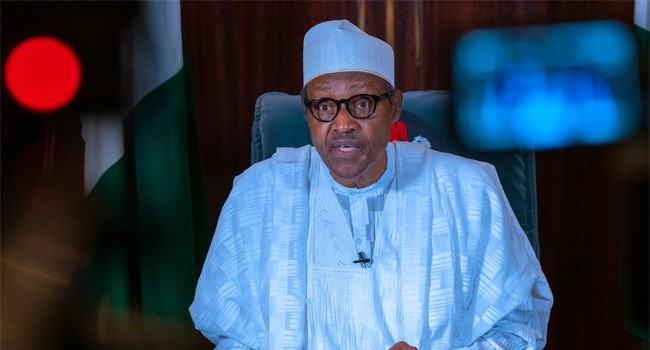
A flurry of letters to the National Assembly signals a renewed bid to increase the nation’s debt stock. Already, debt-weary citizens cannot but voice alarm at what appears to be the Buhari administration’s insatiable appetite for borrowing.
In April, President Muhammadu Buhari had sought and obtained approval for ¦ 850 billion facility, to be sourced from domestic markets “to fund critical capital projects in the 2020 budget”.
Last month, the president returned to the chambers to seek approval for an additional $5.513 billion loans to finance the 2020 budget deficit and some critical projects.
The package includes the $3.4 billion facility from the International Monetary Fund (IMF); the World Bank – $1.5 billion; $500 million from African Development Bank (AfDB) for COVID-19 crisis response budget support operation; and $113 million from Islamic Development Bank (IDB).
And this is the same administration that only late last year, also sought $22.7 billion in foreign loans under its borrowing plans, with the senate giving its nod in March, and the Lower House only last week.
And now, as a collateral, debt servicing has jumped from N2.4 trillion in the 2019 budget to N2.951 trillion in the 2020 revised budget proposed by President Buhari.
With COVID-19 pandemic putting virtually everything in the shutdown mode, and oil prices still reeling in its wake, Nigerians are under no illusions about the dire prospects facing the economy.
Here, most Nigerians, perhaps more than the government would admit, appreciate the very tough choices that would have to be made in the coming months to restore the country to normalcy.
We are talking here of a country, whose budgets, aside the huge deficit components are already burdened by the sheer weight of debt service, and this in an environment of virtual collapse of critical infrastructure.
They understand that a modest improvement in the global oil market would not necessarily translate to dramatic improvements in revenue in the immediate term, any more than the country can shore up its tax revenue overnight, without hurting the citizens more.
Most Nigerians certainly understand why the debt option, given its potential to catalyse the economy, might well be the lesser of the possible evils.
The crux of the matter is that the Buhari administration, for all its promises of change, has done little to address widespread concerns of the citizens about the wanton wastes in the bureaucracy and the public service in general.
Far less in this regard has he focused on the practical steps needed to convince citizens of its understanding of the burden required of the leadership at a difficult time such as the nation is currently going through. For instance, there is the matter of the humongous wages and emoluments of public officials, notably our parliamentarians said to be among the highest in the world, and which the administration continues to gloss over.
So is the much-talked-about Oronsaye Report on the reforms of the public service, which the administration is only now waking up to the need for its implementation, several years after the government published its White Paper.
If only to be seen to remove the log in its eye before going for the speck in others, Nigerians will be interested in knowing how many aircraft remain in the presidential fleet, four years after the president ordered the sale of two of the 10 jets in the fleet, in the bid to “cut down on waste”.
And now to imagine the contentions over the National Assembly complex rehabilitation, which although the government says it only voted N9.25bn for in the 2020 budget, but which not a few citizens are forced to wonder if this does not constitute a case of misplaced priorities at this time.
Yes, we need to catalyse the economy by every means necessary; but then those in charge must be seen to lead by the sheer force of their individual and collective examples – which unfortunately appears not to be the case at the moment.