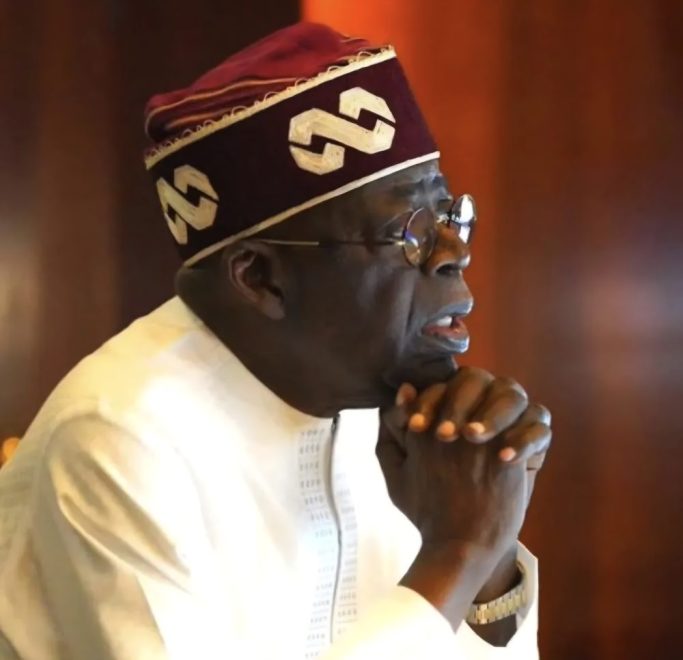
The National Assembly’s approval of President Bola Tinubu’s latest request for an additional N1.15 trillion loan to fund the 2025 budget deficit extends an unchecked borrowing spree that threatens the country’s economic stability.
Since taking office in May 2023, Tinubu’s government has overseen a surge in Nigeria’s public debt, which reached N152.4 trillion, equivalent to 52 per cent of GDP by June 2025, up from N87.38 trillion just two years earlier, despite the removal of fuel subsidies.
This surge echoes the excesses of the previous Muhammadu Buhari administration, which saw a more than 1,000 per cent increase in debt over eight years.
In just 10 months of 2025, the Federal Government borrowed N17.36 trillion, surpassing the approved budget target of N10.9 trillion by 55.6 per cent. This borrowing includes N15.8 trillion from domestic sources and N1.56 trillion from foreign loans, with plans to raise an additional $2.35 billion (N3.38 trillion) through Eurobond issuance.
This can potentially push the year’s total borrowing to nearly N23 trillion, about 80 per cent above the legal limit set by the Appropriation Act. Some estimates indicate that the total debt burden could exceed N190 trillion by the end of the year.
The current debt composition shows 53 per cent as domestic debt and 47 per cent as external debt, which has ballooned due to the naira’s steep depreciation from about N460 to the dollar in May 2023 to over N1,450 today.
Almost half of external debt is owed to multilateral lenders such as the World Bank, which accounts for $18.06 billion or 38 per cent and the African Development Bank, while substantial sums come from bilateral creditors like China’s Exim Bank.
Several interlinked factors drive Nigeria’s escalating debt. Persistent fiscal deficits continue despite fuel subsidy removal and increased tax collections. Revenue generation remains weak, largely due to overly optimistic oil production and price assumptions in the 2025 budget—2.06 million barrels per day at $75 per barrel, while actual figures hover around 1.5 to 1.6 million barrels and prices closer to $65.
Inflation and insecurity also depress economic activities critical for non-oil revenue, while inflationary pressures erode consumption and tax receipts from VAT and company taxes.
The IMF, in its recently concluded Article IV Mission to Nigeria, expressed concern over the escalating debt levels, warning of potential risks to fiscal stability if the situation is not carefully managed.
The IMF advised adopting a neutral fiscal stance to maintain macroeconomic stability, while also strengthening revenue collection through tax reforms. It further recommended more effective and strategic government spending to create fiscal space for development priorities.
Local experts strongly believe that the government’s fiscal discipline is grossly inadequate. Andrew Uviase, Managing Partner at Ecovis OUC, in a report by Vanguard, describes the situation as “a clear reflection of fiscal indiscipline and poor expenditure control,” lamenting that the government “is not bothered about its spending pattern,” which perpetuates excessive borrowing since “money is never enough.”
Despite some progress by the Federal Inland Revenue Service in tax collection, other non-oil revenue sources remain disappointing, hindered further by widespread insecurity.
Similarly, David Adonri of Highcap Securities pointed to aggressive and unrealistic revenue assumptions and the government’s “addiction to debt” as undermining fiscal consolidation. Public spending expands alongside borrowing, described as a “narcotic” that displaces sustainable revenue efforts.
While borrowing is partly justified on grounds of infrastructure development, funds have not been channelled effectively into critical sectors like roads, railways, power, health, or education. Nigerians wonder where the money goes.
Instead, rising recurrent expenditure and bloated government overheads consume vast resources. Key infrastructure projects remain incomplete or poorly executed, exemplified by perpetual issues with roads and inefficient public services.
Yet, Nigeria’s debt servicing costs are becoming unsustainable. In January 2025, the CBN reported a debt servicing-to-revenue ratio of 144 per cent, with the government paying N696.27 billion on debt service against total revenues of N483.47 billion.
The 2025 budget projects that debt servicing will consume N15.81 trillion (45 per cent of total revenue), which severely constrains funds available for productive capital expenditure.
The surging domestic borrowing has led to a crowding-out effect on the private sector, with banks and financial institutions preferring government securities due to their risk-free status and attractive yields, pushing up borrowing costs and reducing credit access for private businesses.
Yields on treasury bills were set at over 24 per cent in October, according to Standard Bank Group, compared to less than 4.0 per cent in Western markets. This vicious cycle dampens private sector growth, job creation, and future government revenues.
Obviously, there is a pressing need for increased private sector participation in infrastructure and service delivery. Private sector involvement could provide technical expertise, efficiency gains, and additional investment capital to ease the fiscal pressure on the government.
The Nigerian private sector has already taken initiatives in infrastructural services, such as building roads in return for tax credits, but more expansive collaboration with the government is essential to revamp critical infrastructure.
There is no way the government can find the $100 billion needed yearly for the next 30 years to close Nigeria’s huge infrastructure gap without private capital.
Additionally, Nigeria must accelerate the monetisation and sale of underperforming public assets to reduce the fiscal burden. The government announced plans to privatise or concession 91 state-owned enterprises, including the NNPC and its drain-pipe refineries, Ajaokuta Steel Company, railways, and international airports.
Such sales, if executed transparently and strategically, could generate substantial revenues, reduce recurrent spending on loss-making enterprises, and improve overall economic efficiency. The 2006 Indorama Eleme Petrochemical Company sale proves this point.
The NNPC alone is sitting on $300 billion worth of assets.
Still, a lax oversight environment exacerbates Nigeria’s debt woes. There is dissonance between borrowing and performance.
The National Assembly routinely approves borrowing requests without adequate scrutiny or demands for accountability on past loans.
Political considerations have emasculated the parliament. This is unacceptable.
Legislators must be alive to their oversight duties as a solemn responsibility to the electorate.
Similar criticisms are directed at the Debt Management Office for weak enforcement and insufficient clarity in reporting the true state and purpose of the country’s debt.
This institutional failure entrenches borrowing as the default fiscal tool, undermining efforts at revenue generation and expenditure control.
Efforts should focus on deepening fiscal reforms, enhancing tax collections with digitalisation and VAT expansion, and aggressively plugging leakages.
Moreover, borrowing strategies must prioritise longer-term, concessional external loans to ease refinancing pressures, while reducing reliance on costly domestic debt instruments.
Debt ceilings should be benchmarked against revenue rather than a percentage of GDP, with 60 per cent debt-to-revenue identified as a critical stress point.
Positively, the Federal Government has reduced the debt-to-GDP ratio, a major impediment under Buhari.
Critically, the government must improve transparency, accountability, and prudent fiscal management. The government must end the regime of opaque contract awards, poor execution, leakages and massive, wasteful spending to sustain its bloated and inefficient machinery.
Tinubu should implement the Steve Oronsaye Report; his government is simply too large and burdensome.
Nigeria cannot afford a debt crisis that can undermine economic sovereignty and development prospects for future generations.
Stakeholders, including the media, civil society, and legislature, must hold the government accountable and demand an end to fiscal recklessness.
Borrowing must be strictly linked to productive investments with clear returns, not for recurrent deficits. Nigerians deserve visible benefits commensurate with their sacrifices, not a cycle of borrowing without progress.