- All northern states should start free and compulsory education up to secondary school level
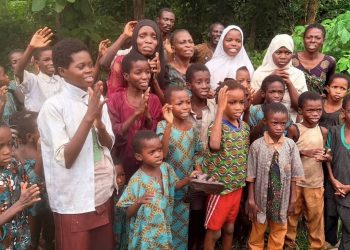
The problem of the staggering number of out-of-school children, who ought to be in school receiving the requisite education and skills to prepare them for a meaningful and productive future, is one of the most serious challenges confronting Nigeria’s beleaguered educational system. When as at 2013, the number of children in this category was estimated at 10.5 million of children aged between five and 14, this figure was regarded as one of the highest in the world. However, in April, 2018, the Universal Basic Education Commission (UBEC) stated that the number of out-of-school- children in the country had risen to 13.2 million.
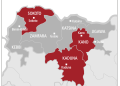
This problem is a nationwide challenge generated and worsened by the protracted economic crisis of the last two decades, which has negatively affected the provision of basic social services, particularly education. However, the statistics of out-of-school children is even far graver in the northern states of the country for understandable reasons. For one, as a result of socio-cultural and religious factors, a sizeable number of children in the North-East and North-West, ranging from 29% to 35%, receive Quranic education, which does not include acquiring basic literacy and numeracy skills. Thus, those who receive that kind of education are not regarded officially as being in school.
Furthermore, the Boko Haram insurgency and other acts of violence rampant in large swathes of the North have forced thousands of children to drop out of school. UNICEF estimates, for instance, that no less than 2.8 million children have had their schooling disrupted in Borno, Yobe and Adamawa states in the North-East, with about 802 schools shut, 497 classrooms destroyed and an additional 1,392 classrooms requiring considerable repairs after suffering severe damage.
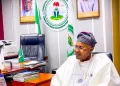
Against this background, it is commendable that the Kano State government is giving renewed attention and priority status to education as it is set to kick off its free and compulsory basic and secondary school education. Briefing the Minister of Education, Mallam Adamu Adamu, in the latter’s office in Abuja, this week, Governor Abdullahi Ganduje, said “We are having a very important time in basic education in Kano State, in which we have made a pronouncement that basic education and secondary school education would be free and compulsory”.
Emphasising that the state’s free and compulsory education scheme will go beyond the primary school level, Ganduje said, “Mind you, we are not limiting it to basic education as secondary school education would be free and compulsory. So, we are going to have a legislation to cover it. As you know, basic education is already compulsory in line with the Universal Basic Education law”.
It is noteworthy that the Kano State government, apart from the promised free and compulsory basic and secondary school education, also plans to bring those children in the Almajiri system into the orbit of modern education.
In Ganduje’s words, “What we plan to do is the integration of the Almajiri system into the western form of education. We are going to modify the curriculum so that it will tally with the national school curriculum that we are operating at the moment”.
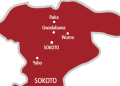
Some other northern state governors such as former governor Kashim Shettima of Borno State, Nasir ‘el-Rufai of Kaduna State and Aminu Tambuwal of Sokoto State had also made impressive efforts to boost the prospects of education in their respective states through the introduction of free feeding for school children, modernisation of school infrastructure or enhancement of the quality of teaching, among others.
This surely is the way to go if the north is to make up for lost time and groom a new generation of future leaders equipped with the knowledge and skills to help accelerate the pace of development in the region.