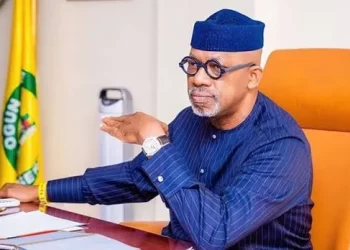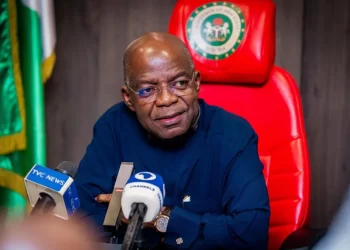
Governor Rochas Okorocha of Imo State has said he would not give any land in Imo State to the Federal Government for a cattle colony.
Okorocha also dismissed the speculation that he had adopted the proposed colonies and ceded a part of the state to herders as wicked, unfounded and untrue.
The governor who spoke on Tuesday in Owerri, the state capital, through the state Commissioner for Information, Prof. Nnamdi Obiaraeri, said there was no law, policy, decision, plan, request or intention to cede, allocate or designate any part of Imo State as a cattle colony.
The governor said, “This information that Imo has ceded a part for the proposed cattle colony is wicked, unfounded and untrue, although it represents the typical product of warped thinking of desperate mischief makers via the social media.
“Imo people and members of the public are therefore advised to disregard these baseless and laughable rumours.
“It is unfortunate that manufacturing wicked and capricious lies on an hourly basis has become the hallmark or DNA of desperate opposition politicians in our dear state.”
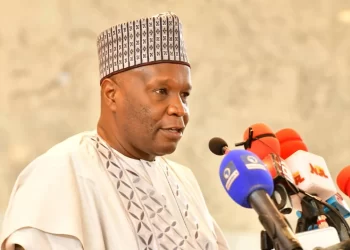
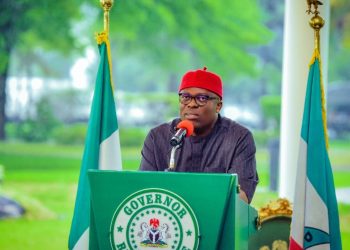
Also, the Rivers State Governor, Chief Nyesom Wike, has said the state does not have land for a cattle colony.
Wike, who also declared that his administration would not allow Rivers to be controlled by external forces, insisted that his government would not be drawn into any debate on cattle colonies.
The governor, who spoke on Tuesday when he granted audience to D-Source Connect Group at the Government House in Port Harcourt, said, “We will not allow our state to be controlled by external forces; we will not be drawn into debates on cattle colonic. We don’t have land for any cattle colony in Rivers State.”
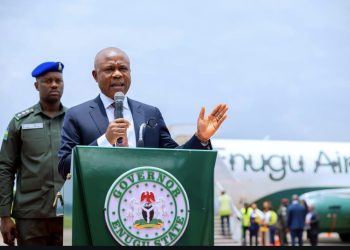
Meanwhile, Delta State Governor Ifeanyi Okowa has joined his Benue State counterpart, Samuel Ortom, in rejecting the establishment of cattle colonies in their states.
According to the governor, his state was in need of land and did not have any to be donated to government proposed for cattle colonies.
The Minister of Agriculture and Rural Development, Chief Audu Ogbeh, had last week, disclosed that everything had been put in place by the Federal Government to establish cattle colonies that would solve the repeated herdsmen-farmers conflict in parts of the country.
Okowa disclosed that his pragmatic approach in appointing a Fulani man as his Special Assistant, and the constant interaction with the Hausa community has helped in reducing tension.
Speaking in an interview in Abuja with select newsmen, the governor reiterated the need for security agencies to rise up to their responsibilities in protecting the lives and properties of Nigerians.
“Delta State is possibly half of water, half of land. So, obviously we are in dear need of land. We don’t have land for that purpose [cattle colonies]. It is a growing state and because of the very coastal areas, and most of these coastal areas are not in the best of shape because of the exploitation of oil, most of our lands are destroyed and we don’t have enough arable land; and the pressure is now coming because we are encouraging our people to go to the farm. In the past, it was a rent economy; people were actually looking for the money that comes in from oil and subsidiaries of the crude oil economy.
“But now it is not exactly the same; so we are trying to encourage people to go back to the land. We do not even have enough of it because, beyond the waters, most of the creeks and even a lot of land we have within the upland area are encumbered because of oil exploration and oil spillages that have taken place in the last several years. So, we won’t have land at all in Delta State, obviously not for cattle colonies.”
The governor called for a more proactive effort to address the situation of mass killings by Fulani herdsmen.
“I actually think that there is a lot that needs to be done because this problem has been on apparently in the last few years; it appears to have taken a new dimension.
“Because the killings you are hearing about now, because of the large numbers in Benue and Taraba States, it is coming more and more to the fore. But those killings you find them everywhere. Even as I was here [in Abuja Monday], I got a report that somebody was killed in my state by one of the herdsmen also, and I believe that we have pockets of that everywhere.
“I think that security agencies must stand up to this very very wrong approach to the issues of cattle rearing because when people come out and they carry guns, I don’t think that that was what used to happen in the past. Because in the past, we used to see herdsmen, they come in, they relate to the people in the various villages; that is not the position at the moment.
“But when you just stroll into people’s farms, stroll into peoples lands and continue to do all manner of things, it is not right. I believe that there has to be a strong statement coming out from the presidency and such strong statements will possibly spur up security agencies to take appropriate actions,” he said.
The governor added that, “Every herdsman must be totally disarmed… I don’t think that they are empowered to carry guns as they do, no Nigerian is empowered to carry such rifles except if they are members of a security agency. So, we must do that. And I think that the Federal Government itself must come up with a strong policy and that policy will be on the issue of trying to encourage cattle ranching in one manner or the other.
“I believe there is enough land within the various northern parts of the country and the suggestion by the Minister of Agriculture at the onset of this administration where he intended to import fast-growing… Yes, that could cost some money, but there is nothing that is done at this moment in terms of spending money to avert all forms of crises and all manner of unspeakable deaths that will be too expensive for us.
“I believe that if we go in that direction and put up an irrigation system, eventually the kind of land that is available in the north that is currently un-utilised and which can be used to grow some of these fast-growing grass, I think it is going to help so that they are able actually to situate them appropriately while beginning to encourage individual farmers or a co-operative group of farmers to actually own their own ranches. That is a long term process. But before then, a policy should be set out in which they are able to aggregate them in some places, then within those areas where there is a clear understanding that there is enough lands for them.
“In most parts of southern parts of the country we don’t have enough land for our farms and all the issues we are talking about now concerning agriculture is actually becoming a problem asking people to go into farming because they are not sure when their crops are going to be destroyed,” he said.