- Britain’s NHS model shows the public sector must lead the way
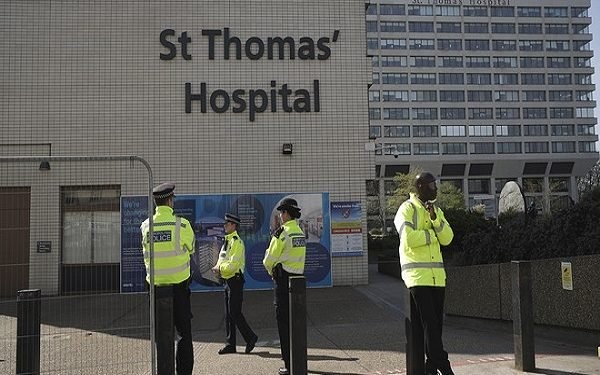
British Prime Minister, Boris Johnson, infected by Coronavirus, got admitted, treated and discharged by a British National Health Service (NHS) trust hospital, an equivalent of a public hospital affiliated to our own National Health Insurance Scheme (NHIS).
The prime minister, initially admitted into the intensive care unit (ICU), was returned to the general ward, and eventually discharged, declared free of any COVID-19 viral load. Thereafter, the impressed PM couldn’t stop serenading the quality of NHS care, and the laudable devotion of its medical professionals.
COVID-19 has thrown the world into a turmoil, with the health services of countries tested and stretched. Indeed, it has resulted in an unprecedented health nationalism, equal in impact to economic nationalism, that leads nations to war. The result is that nationals, of every country, have substantially stayed in-situ, or gone back home, to seek medical treatment. In a manner of speaking, the pandemic has become a leveller, with most countries medical services exposed to the world.
Luckily for our nation, the impact of the pandemic has been substantially muted. Except for Lagos State, most of the states and even the Federal Capital Territory (FCT), Abuja, had a knock on its door, before COVID-19, sauntered in.
For Abuja, it took a visit by the leadership of the National Assembly to the city’s abandoned isolation centre, to wake her health officials from a dangerous slumber; when the health services of other countries were already in emergency mood. In most other states, the health services where completely unprepared for any form of emergency.
So, but for the restrictions placed on foreign travels because of COVID-19, the three state governors and the chief of staff to the president, who tested positive to the virus, would probably all have travelled to the best hospitals in the world, to treat themselves. None of them would have submitted to a local hospital, if they could help it. Yet, the state governors for one, are chief executives, in positions to make hospitals in their states stand at par with any competitor across the globe.
Before the descent of our country’s social services, especially our hospitals to ‘mere consulting clinics’ some of them ranked amongst the best in the world. It is on record that in the 1970s, the University College Hospital (UCH) Ibadan, was a centre for medical tourism from all parts of the world. Tragically, arguably, UCH and similar tertiary hospitals today are probably not as good as general hospitals, back in those good old days. Yet, since the discovery of oil in Nigeria, the country had earned trillions of dollars, without much to show for it.
With COVID-19 forcing nationals of every country to stay home for medical attention, we see it as a wake-up call to our officials to fix our public health system. The NHIS provides our country such an opportunity, because while it can drive down the cost of medical services for an individual, it can muster the capital to train personnel and provide the necessary equipment.
The British NHS is a model our country can emulate. That model has been able to muster enough resources for investment in public hospitals, to make them compete with the best of private hospitals.
So, not only for the pride and security of getting the best treatment from our local hospitals, COVID-19 has shown that a time could come, when there can be no opportunity to assess foreign medical services, in a matter of life and death.
Our government officials must therefore rise up, to gift our country robust national health services, driven mainly by public hospitals.