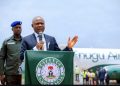
The 90-page document of achievements rolled out by the media team of the President, Major General Muhammadu Buhari (retd.), includes an impressive list of policies, reforms, ordinances, and institutions initiated or upgraded on his watch, all committed to fighting corruption. Alas, it is one of the ironies of his eight-year tenure that a major promise that propelled him to power and raised hopes at home and abroad of a better Nigeria was not met.
Instead, graft eventually triumphed under Buhari. His supporters swear that corruption personally offends Buhari; but just as inescapably evident, he failed to effectively translate his intentions, promises and policies to crush sleaze into successful outcomes.
While Buhari and his team claim success and “significant progress in the eradication of deeply entrenched corruption,” the reality is that corruption remains bullish. Ratings by domestic and global agencies capture the country’s persistent descent into state capture and rent-taking.
As he claimed in October 2022, Buhari insists that he has “strengthened the institutions for tackling corruption and cultivated international support, which aided the repatriation of huge sums of money illegally kept outside the country. The increasing number of prosecutions and convictions, with associated refunds of large sums of money, is still ongoing.” True, but the flipside is that the regime eventually undermined its own anti-corruption war.
The unravelling is a study in self-subversion, leadership incapacity, lethargy, and compromise. In the anti-corruption war, Buhari scored an A in intention, rhetoric, and grand gestures: in the practical essentials needed to win; political will, coordination, impartiality, and strict enforcement of laws, he did rather poorly.
In the 2022 Corruption Perception Index of Transparency International, Nigeria ranked 150 out of 180 countries; in 2021 it ranked 154, after slight improvements in 2015 and 2016. The 2022 Basel Anti-Money Laundering Index scored Nigeria 6.77 out of 10, finishing a poor 17th out of 128 countries.
It is neither for lack of intention, nor of laws, and policies. The regime inherited a country mired in what The Economist of London described as “industrial scale corruption.” His 2015 electioneering mantra was, “If we don’t kill corruption, corruption will kill Nigeria.” Vice-President Yemi Osinbajo highlighted the “grand corruption” dimension where people would cart away public funds without the pretence of formal procurement documents.
In the beginning, Buhari looked set for action. He tapped the vigorous operations director of the Economic and Financial Crimes Commission, Ibrahim Magu, to head the agency; and empanelled a seven-member Presidential Advisory Committee against Corruption, headed by the eminent law professor, Itse Sagay, and other aides to drive the campaign.
Two inherited plans, the Treasury Single Account, and the IPPIS–the first to ensure remittance of government revenues directly and in real-time, and the second to digitise salary payment of public workers and eliminate the scourge of “ghost workers,”—were actualised to initial acclaim.
He initiated new ordinances and strengthened others. The Asset Management Corporation Act was amended in 2019 and 2021; he sought to streamline asset recovery and disposal, culminating with the Proceeds of Crime (Recovery and Management) Act 2022. Presidential Executive Orders to improve the ease of doing business at the ports and other trade facilitation agencies won some praise. The United States Commerce Department in response, removed its negative advisory on Nigeria’s ports and enabled the country to briefly improve its anti-corruption rating.
There has also been enthusiastic interdiction, arrests, trials, and convictions, as well as seizures by the EFCC, the Corrupt Practices and Other Related Offences Commission. The sealing of agreements with global agencies and other countries on money laundering and corruption were also undertaken.
Undaunted by institutional constraints, the EFCC and ICPC struggled bravely to fulfil their mandate. The EFCC secured 3,785 convictions of fraudsters and treasury looters in 2022 alone, shattering its own record of 2,220 convictions in 2021, continuing a pattern of increased convictions; from 103 in 2015, it rose to 195 in 2016, 312 in 2018, spiking to 1,280 in 2019. Over $121 million was also recovered in the 10 months to October 2021, said Abdulrasheed Bawa, EFCC’s youthful chairman.
For the full year, recoveries of stolen funds were N152 billion and $386 million and smaller sums on other currencies apart from fixed and movable properties seized in Nigeria and abroad.
Between 2019 and 2022, the ICPC said it “recovered, forfeited and restrained” assets valued at N450.99 billion from corrupt persons. Of the 4,705 investigations and 309 prosecutions it undertook in the three years, it secured 85 convictions. TransparencIT, a civic tech organisation, noted that like EFCC, conviction rates by ICPC saw minor increases from 2017, and that in its 20 years of existence, the agency had secured 180 convictions.
There are shortcomings and operational flaws, but Bawa, his predecessor, Magu and ICPC Chairman, Bolaji Owasanoye, and their operatives, consistently demonstrated enthusiasm in prosecuting the war.
For these, Buhari deserves the credit and was named the first African Union Anti-Corruption Champion in 2018. But despite this recognition, his stated personal aversion for graft, speeches and the slew of policies, and the valiant efforts of the anti-corruption agencies, the war faltered.
As he leaves office, corruption is ascendant. A report by Deutsche Welle in 2022 labelled the war as “hopeless,” insisting that the country was “sinking deeper into the mire of corruption.” A 2019 survey led by the UNODC found that most Nigerians believed that corruption had increased.
What went wrong? The reasons are varied. One is that corruption will always fight back. But decisively, the regime’s anti-corruption war was defeated by its own internal contradictions, and self-subversion, and by Buhari’s lack of firm leadership.
To begin with, he had no overall coherent strategy. The disparate policies, measures, regulations, laws, and agencies lacked cohesive coordination, a central clearing house or effective command and control centre. Buhari neither took direct charge nor appointed, or empowered an overall coordinator backed by the full weight of his office.
In the event, inter-agency rivalry reigned. The State Security Service effectively prevented Magu from being confirmed by the Senate. He was eventually forced out by an alliance of regime insiders including the Attorney-General of the Federation, Abubakar Malami. Once, a shoot-out was only just averted when secret police agents thwarted an attempt by EFCC operatives to arrest a former security chief.
Every war needs an overall strategy, commander and adaptable tactics shaped by battlefield realities. This one did not.
Fatal to the enterprise also was the failure to headhunt an AGF with a known passion to crush corruption. Malami never demonstrated this ardour. Buhari also kept some tainted company; many of those with whom he formed the All Progressives Congress and won power, have corruption allegations hanging around them. A former APC chairman, Adams Oshiomhole, once publicly invited opponents to join them promising that promptly their “sins would be forgiven.”
The Centre for Democracy and Development noted that Buhari “consistently turned a blind eye to malfeasance by some of his own appointees and resisted independent oversight of Nigeria’s most scandal-ridden agencies.” Lapses have surfaced in IPPIS, and some agencies flout the TSA without facing strong sanctions.
A former state governor had his N5 billion fraud trial discontinued after he stepped down from the contest for the Senate presidency in favour of Ahmad Lawan, the regime’s choice. Abdulrasheed Maina, who was accused in 2012 of diverting pension funds running into billions of naira and declared wanted by the police and the EFCC, was in 2017 secretly reabsorbed into service and promoted – a move later found to have been orchestrated by some regime figures.
His eventual arrest and conviction could not erase the credibility deficit. Overwhelmingly, those convicted are mostly common fraudsters and few officials; institutional weakness enables most politically exposed persons to walk free.
In 2022, Buhari granted pardon to two convicted PEPs, Joshua Dariye and Jolly Nyame, ex-governors of Plateau and Taraba states respectively.
The NNPC, the Nigerian Ports Authority, the Nigerian Police Force and other graft-prone agencies were not thoroughly cleansed. A suspended Accountant-General of the Federation allegedly was able to steal N109 billion out of which he has returned N30 billion, according to the EFCC.
The US Department of State, in its 2021 Country Reports on Human Rights accused the Nigerian government of deliberately underfunding the judiciary to make it ineffective in prosecuting corruption cases. “Many of the corruption cases, particularly the high-profile ones, remained pending before the courts due to administrative or procedural delays,” the report said.
Buhari’s promise to dump the corruption-enhancing “envelope” budgeting system that facilitates massive looting by public servants and federal legislators did not materialise. The ICPC revealed that MDAs ‘padded’ the 2021 budget to the tune of N300 billion. They allegedly ‘padded’ the 2022 budget with duplicated projects worth N100 billion. Yet there were no publicly-known consequences for the complicit lawmakers and civil servants.
In 2021, an NGO compiled a list of 25 top corruption cases linked with stolen or mismanaged funds worth N900 billion, which the government was investigating but were left dormant.
In the years ahead, analysts reviewing how the war floundered will cite Buhari’s customary inattentiveness, his lack of hands-on supervision, other leadership lapses, cronyism, and failure to rein in members of his inner circle and heads of key agencies, and the influence of the corrupt political elite among others.
All these and institutional weakness played their part. But perhaps the most decisive is this: Buhari did not realise that in a diverse, polarised polity like Nigeria, sectionalism in appointments and policies, nepotism and exclusionary practices are also enablers of corruption that were bound eventually to weaken and subvert the war.
From the start, therefore, the war was doomed.