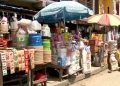
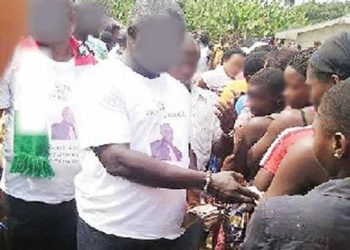
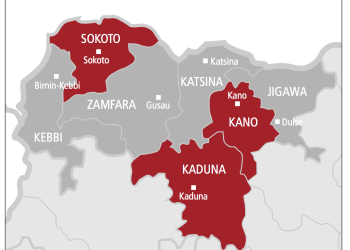
Less than a week after the gruesome killing of Methodus Emmanuel, a 24-year-old Igbo trader in Pandogari in Rafi Local Government Area of Niger State by a mob of Muslim fanatics for posting an allegedly blasphemous statement about Prophet Muhammad (SAW) on the social media, 75-year-old Bridget Agbahime, another trader, was stoned to death for the same reason. In the former case, four other persons including a personnel of the Nigeria Security and Civil Defense Corps (NSCDC), reportedly lost their lives in the ensuing fracas. In the latter case, eye witness reports indicated that the deceased had not even committed the said offence, and that the fellow trader at Kofar Wambai textile market in Kano who incited the mob that lynched her had deliberately told the mob a lie in the aftermath of the heated argument that ensued after he had sought to provoke her by performing ablution in front of her shop. The extremists quickly found her guilty of blasphemy without trial and delivered swift judgement, right in the presence of her husband, who miraculously survived the ordeal. Worse still, another Christian, Francis Emmanuel, narrowly escaped death on Wednesday when a gang of six Muslim fanatics stabbed him repeatedly at a restaurant in Kakuri, Kaduna State, accusing him of failing to observe the ongoing Ramadan fast.
Naturally, the latest incidents orchestrated by miscreants hiding under the cloak of religion have been received with outrage from across the country, provoking a downpour of condemnations from the federal and state governments, high ranking Islamic and Christian leaders, members of the academia and the general public, among others. It is indeed heart-warming that President Muhammadu Buhari swiftly swung into action by condemning the Kano incident, condoling with the husband of the deceased and giving assurances that justice would be done. That action no doubt doused the festering tension in the polity.
Again, the apex Igbo sociocultural organisation, Ohanaeze Ndigbo, called on the authorities to take every necessary step to investigate the incident and hold those responsible accountable for their actions. In a similar vein, the Sultan of Sokoto, who is also President of the Jama’atu Nasril Islam (JNI), through a statement issued by the Secretary-General of the group, Dr Khalid Abubakar-Aliyu, described the killing as ugly, criminal and unIslamic, while the Christian Association of Nigeria (CAN) warned that that the trial of the killers must not be done in secret. Also, Dr. Joe Okei-Odumakin, President of Women Arise, described the cold-blooded murder of the octogenarian Bridget as barbaric, calling for the prosecution of the perpetrators of the dastardly act. Happily, the Nigeria Police acted swiftly in apprehending suspects.
Indeed, brutal murders robed in the guise of religious fervor are not alien to the Northern part of the country and, sadly, may happen again. Not many Nigerians have forgotten the historical precursors of the latest incidents, most notably the beheading in Kano, in 1995, of an Igbo trader, Gideon Akaluka, for allegedly desecrating the Qur’an. In 2007, a secondary school teacher, Christianah Oluwasesin, was lynched by her students in Gombe State for allegedly desecrating the Qur’an. However, she had simply seized some notes smuggled into the examination hall and hidden in the holy book. And in 2009, Grace Ushang, a member of the National Youth Service Corps (NYSC), was raped and murdered in 2009 in Maiduguri, Borno State, charged with wearing the khaki trousers issued to her by the Federal Government. The universal condemnation of the latest incidents across the country is therefore most gratifying, especially given the perception that Nigeria has become, in recent times, more divided than it has ever been.
Disturbingly, statistics by Open Doors, an organisation that monitors religiously motivated violence and discrimination, indicate that there has been a 62 per cent increase in the violent killings of Christians in Northern Nigeria in the last one year. The organisation’s annual league table of the worst countries in which to be a Christian showed that Nigeria has the largest number of Christians killed for their faith, recording more than half of the over 7,000 killings around the globe. This is disturbing, especially because Nigeria is officially a secular state with a constitutional guarantee of freedom of religion.
Indeed, that Nigeria is a nation drunken on an overdose of religion devoid of morality may be an understatement. Those who carried out the recent killings cannot, in good conscience, claim that their lives are truly reflective of the teachings of Prophet Mohammad, yet they wasted no time in terminating the lives of people of other faiths who they claimed blasphemed the prophet. The Nigerian society, in general, would thus need a revaluation of the essence of religion, and religious institutions and the security agencies have more than a passing role to play in this regard. In particular, teachings that legitimize religious superiority and barbarism must be assailed by counter narratives, while the security agencies must tackle hate preaching and preachers under the extant laws.
One reason incidents such as the current ones have festered over the years is the seeming tardiness of security agencies in pursuing the cases to a logical conclusion, a factor that has made many Nigerians to lose faith in the justice system. In this connection, the police would need to demonstrate thorough professionalism in the instant case and send a powerful message to those who trifle with human life on the altar of self righteousness, intolerance, or pure mischief.
When the full weight of the law is brought to bear on perpetrators of violent crimes, those minded to pursue such a course of action in future will be fully apprised of the fate that awaits them. We hope that the murderers of Methodus Emmanuel, Bridget Agbahime and others will pay for their crimes and that these cases will not swell the ranks of unresolved killings in the country.


These barbaric killings must stop

Related Posts


Leave a Reply














GLOBAL NEWS

Plugin Install : Widget Tab Post needs JNews - View Counter to be installed
- Trending
- Comments
- Latest