Boko Haram jihadists killed 11 people on Friday in a raid on a camp for civilians displaced by the Islamist group’s violent insurgency, military and vigilante sources told AFP.
The Boko Haram fighters penetrated the camp in Banki on Nigeria’s border with Cameroon which houses 45,000 internally displaced people (IDP), using knives to kill their victims silently.
“At around 12:30 am (2330 GMT Thursday) this morning some Boko Haram terrorists broke the barricade securing the IDP camp from the rear towards the Cameroon border and entered to seize food from IDPs,” a senior military officer in the town told AFP.
“They killed 11 IDPs and wounded two in the attack,” said the military officer who declined to be named.
Boko Haram is waging an insurgency in a bid to establish a hardline Islamist state in Nigeria’s mainly Muslim north.
At least 20,000 people have been killed in violence since 2009 and more than 2.6 million people have been left homeless.
More than five million people are starving as the fighting has devastated farmland, leaving farmers unable to sow or cultivate crops for several years.
Adamu Ahmad, a member of a civilian militia charged with protecting the Banki camp, confirmed the incident.
The jihadists used knives to kill their victims instead of firearms to avoiding alerting soldiers at a military base adjacent to the camp, Ahmad said.
Soldiers expelled the attackers from the camp after the informal militia raised the alarm.
The raiders also stole food aid rations given to those living in the camp, said the military officer.
Boko Haram is reported to be running desperately low on supplies after Nigerian security forces successfully cut off supply lines to the group’s bases.
“We have reason to believe they most likely acted on a tip-off from insiders,” said the officer who suggested that wives or children of Boko Haram fighters may have infiltrated the camp disguised as displaced people to conduct reconnaissance.
Banki, which is 130 kilometres (80 miles) southeast of Borno state capital Maiduguri, was initially an area of relative safety for those fleeing Boko Haram since the camp opened in March 2015.
But it has been repeatedly targeted by Boko Haram suicide attacks.
In April last year, at least seven people were killed at the camp in a suicide bomb attack carried out by two women.
In January, a girl thought to be 10-years-old died in a botched suicide attack after the explosive vest she was wearing detonated outside the camp.
Meanwhile, the Minister of Information and Culture, Alhaji Lai Mohammed, says there is no resurgence of Boko Haram contrary to insinuation in some circles.
Mohammed debunked the insinuation of resurgence of Boko Haram in a remark to the media during the Eid-el-Kabir celebrations in his country home, Oro, near Ilorin.
He said that some recent tragic events, including suicide bombings and the abduction of some staff of the University of Maiduguri, were antics by the insurgents.
“The truth is that there is no resurgence of Boko Haram. Cowardly bombings and kidnappings are some of the hallmarks of an asymmetric warfare that insurgencies are.
“And like I say all the time, such wars do not end by the signing of any truce. They taper off with time, as this one surely will,” he said.
The minister said that to ensure that the insurgency tapered off quickly, the Nigerian troops were daily living up to their constitutional responsibility of maintaining the nation’s territorial integrity and securing its borders.
“They are ensuring that never again will Boko Haram take control of our territories, attack our major cities, including Abuja, at will and fly their flag anywhere in the country.
“Therefore, as we celebrate this Festival of Sacrifice, we owe the marked improvement in the security situation in our country in general and the North-East in particular to the men and women in uniform.
“They have sacrificed so much to make our country safer than at any other time since the Boko Haram insurgency started in 2009.
“Yes, we are not totally out of the woods yet, but we are much better today than we were in 2015, when this administration assumed office,” he said.
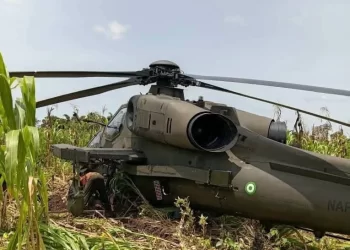
While commending the entire military for the feat of “largely defeating Boko Haram”, he identified certain roles played by the Nigerian Air Force (NAF) in the successes recorded.
He said that with the support and the enabling environment provided by President Muhammadu Buhari, young and well-trained pilots were those flying the aircraft in the inventory of the NAF.
Mohammed said unlike what was obtainable in the past, officers below 30 years of age, were Flight Lieutenants flying the planes, including the C-130s and serving as Instructor Pilots.
He said after over 32 years, the NAF recently graduated 16 instructors from its primary flying school in Kaduna.
“This is possible because the NAF has moved from just two trainer aircraft when this administration came into office to 14 trainer aircraft presently.
“The number continues to grow, in addition to other logistical issues like availability of spare parts and aviation fuel being squarely addressed.
“This has also ensured that pilots can conclude their initial flying training within four months.
“I can tell you that from December last year to June/July this year, the Air force has ‘winged’ 32 pilots, who are now fully qualified to fly the air force’s aircraft,” he said.
The minister noted that, in terms of building capacity through training and re-training of personnel, the NAF had also ratcheted up its capability.
He called on Nigerians to keep praying and supporting the troops rather than dwelling on the Boko Haram resurgence that never was.
He also called on the media to deny the insurgents publicity, which he described as “the oxygen they desperately crave to survive”