By Bola D. Adeyeye
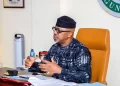
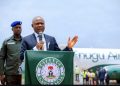
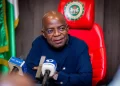
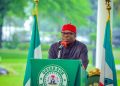
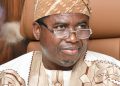
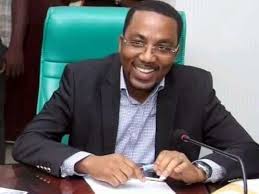
The first thing that strikes you about Mohammed Bello-Koko, the recently-appointed Managing Director of the Nigeria Ports Authority (NPA) is his humility and approachability. The 53-year-old is a man who likes to get things done without too much ceremony and drama. He prefers to let his actions and accomplishments do the talking.
Yes, Bello-Koko, a blue blood from Kebbi exudes confidence which is no surprise given his antecedents as a high performing banker and entrepreneur prior to joining the management team at NPA. He is also very articulate and has a talent for simplifying complex issues and concepts. But he is, more than anything else, a technocrat who just wants to get things done; the faster the better.
Since his confirmation as NPA Managing Director by President Muhammadu Buhari after a short stint in an acting capacity, his constant focus has been on achieving results. It is not surprising his elevation to the position has witnessed a lower “noise” level within the top maritime agency and a greater focus on tackling key challenges.
Those familiar with the antecedents of Bello-Koko, a high performing banker and entrepreneur prior to his initial appointment as NPA’s Director of Finance and Administration, would not be surprised. He is, first and foremost, a results-focused manager. And it is this mindset that has permeated his first steps within the period he has been at the helm.
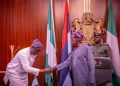
In fact, his solid performance as acting Managing Director prior to confirmation was notable. It witnessed the successful plugging of income leakages, significant revenue growth and and higher operational efficiencies that had a positive knock-on effect on container traffic to Onne Port. During the period, NPA made strong progress in plans to open up the Eastern Ports of Warri, Calabar and Rivers. Industry watchers were therefore not surprised by President Muhammadu Buhari’s decision to confirm Koko as Managing Director on the 15th of February, 2022.
Bello-Koko is guided by NPA’s corporate mission which is simple and straightforward: “to deliver efficient port services in a safe, secure and customer-friendly environment”. He is also inspired by the agency’s vision: “to be the maritime logistics hub for sustainable port services in Africa”.
NPA’s mandate captures key operational and systemic anchors of the nation’s maritime system. It includes ownership and administration of land and water within ports limits, planning and development of port operational infrastructure and leasing and concession of port infrastructure and setting bench mark for tariff structure. The agency also has responsibility for marine incidents and pollution; maintainance of safety and security at the common user areas and day to day monitoring of operations and enforcement of relevant sections of respective agreements, among others.
The challenges confronting the agency under Bello-Koko are massive. Despite efforts made in recent years, Nigerian seaports continue to underperform at the expense of sectoral contribution and the overall economy. Decades of neglect and disrepair have taken their toll. Issues that hamper the performance of the ports include:
● Excessive Delays in Import and export processes.
● Lack of capacity of the ports to accommodate increased economic activities (Some of the ports need to be upgraded to allow passage of larger vessels into Nigerian waters).
● Bureaucratic redtape.
● Insecurity around the Eastern & Southern Ports.
● Delays along port corridors owing to multiple/ illegal checkpoints
● Lack of mechaninized process.
Bello-Koko is approaching these challenges with a strong sense of urgency. Some cannot be confronted immediately but the NPA management under his leadership is focusing on the most easily achievable and impactful priorities. Immediate plans include: reducing the congestion at the Ports (Tin-can corridor); completing digitization of port-related activities by 2025; liminating corruption along the corridor by tackling multiple ad-hoc/ illegal checkpoints; expanding and reconstructing existing ports; providing incentives for use of ports outside Lagos.
Bello-Koko is quite clear about the corruption challenge. As he said in a recent interview: “we accept that there is massive issue of extortion and corruption along that corridor”, adding that the problem needs to be tackled in the interest of port users and businesses in order to achieve greater efficiencies and benefits for all players.
Also a top priority is active collaboration with stakeholders such as security operatives and state governments to support and develop new ports.
He summarized some of the key challenges confronting eastern ports compared to the Lagos which have to be tackled: “All the ports in the East have two major issues. First is the geographical disadvantage and then security issues. In Lagos you can move vessels in and out of the port any time of the day, anytime of the night. In the Eastern ports there is a window between a certain time in the morning and afternoon…after that our pilots cannot go for security reasons.”
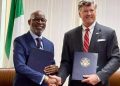
Within the short period he has been at the helm, NPA has taken steps to support the activities of Lagos traffic management to ease the gridlock along the port corridors. The Lilypond Container Terminal in Ijora, Lagos has also been designated as a specialized processing and handling facility for the exportation of locally made agricultural goods. He has also met with top representatives of international development and financial institutions including the World Bank and International Finance Corporation (IFC) to discuss new investments in Nigerian ports.
The challenges are significant but based on his initial steps, NPA under Bello-Koko will witness improvements in critical areas.
*Adeyeye is a Lagos based public policy analyst