At a time when Nigeria is already grappling with terrorism, banditry, and kidnapping, a surge in armed robbery is compounding a growing sense of fear and helplessness among citizens. A recent daylight attack in the Ojo area of Lagos underscores the scale of the problem. The police should halt the robbers’ onslaught.
About 15 armed men reportedly stormed the LASU–Isheri Road, robbing commuters, traders, and passersby at gunpoint and with machetes in broad daylight! The operation went on without resistance — even though a police station was only minutes away.
The proximity of the Lagos State University further heightens concern. This incident was not isolated; it reflects a broader breakdown in security.
Across the country, insecurity has reached alarming levels. Vice-President Kashim Shettima recently stated that Boko Haram has killed at least 100,000 Nigerians since 2009. More than 2.2 million people have been kidnapped, with over N2 trillion paid in ransom between 2024 and 2035 alone. Millions remain displaced, living in camps under harsh conditions.
No space feels safe anymore. Schools, worship centres, and highways have all become targets. Travellers are routinely abducted; some never return.
Armed robbery, in particular, is becoming more audacious. Recent data indicate that violent crimes remain a significant security challenge in Nigeria, with increased incidents and fatalities reported in early 2026.
Lagos, Oyo, Kwara, Enugu, and the FCT are among the hardest hit.
Lagos, the country’s commercial hub, has witnessed repeated incidents.
On August 18, 2025, a businessman was shot in broad daylight on Allen Avenue, Ikeja, and robbed of his gold necklace.
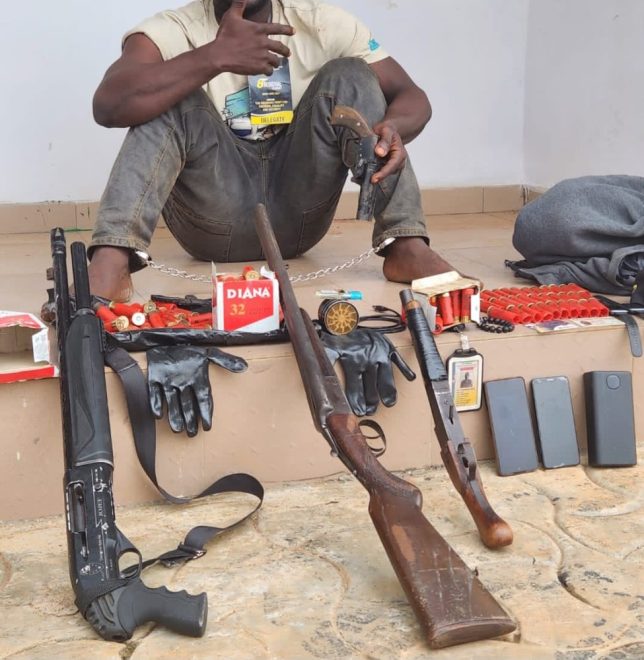
In April, police arrested 118 suspected armed robbers, kidnappers, and cultists, recovering a cache of weapons.
But the explanation that the Ojo attack stemmed from a clash between rival transporter groups later hijacked by hoodlums raises more questions than answers. Fifteen armed men do not assemble and operate so brazenly without serious lapses in deterrence, intelligence, and response.
The consequences of this insecurity are severe. Lives are lost, and many others are permanently altered. Families are displaced, businesses shut down, and savings wiped out in minutes.
The psychological toll is just as damaging: fear limits movement, discourages investment, and erodes trust in public institutions. When people organise their lives around avoiding danger rather than pursuing opportunity, national development suffers.
Data reinforce these concerns. Nigeria is ranked 13th globally and third in Africa in the Numbeo 2026 crime index.
Accra and Kigali tend to record lower crime perception, supported by stronger community policing and visible enforcement. Nairobi and Johannesburg, while facing similar challenges, have invested in surveillance systems, rapid response mechanisms, and structured reforms.
Lagos, by contrast, often relies on sporadic crackdowns and reactive policing—approaches that have proven insufficient.
What is required now is a coordinated, multi-layered response.
So, Nigeria’s commercial capital should deepen the operations of the Lagos State Security Trust Fund.
The economic roots of crime must be addressed. Rising youth unemployment continues to feed criminal activity. Job creation, vocational training, and targeted social programmes are not just economic policies—they are security imperatives.
The visible presence of law enforcement must increase. Communities need consistent patrols, rapid-response units, and officers who are accessible and accountable. Policing must be proactive and community-based, not distant and reactive.
Capacity and equipment must improve. Security forces cannot confront well-armed criminals with outdated tools. Investment in modern equipment, training, surveillance systems, and communication technology is essential for effective coverage and coordination.
Intelligence gathering is equally critical.
The self-styled DSS must play a stronger role in anticipating and disrupting criminal networks before they strike.
Security is not only about response—it is about prevention, which depends on actionable intelligence, inter-agency collaboration, and accountability.
The justice system must also function effectively. Arrests without prosecution—or weak sentencing—undermine deterrence.
Criminals must face clear and consistent consequences through thorough investigations, diligent prosecution, and appropriate penalties.
The debate over state policing must move from rhetoric to action. Nigeria’s centralised policing system has struggled to address localised threats. Properly regulated state police could provide the responsiveness and local knowledge that federal forces often lack. Continued delays only prolong citizens’ exposure to danger.
The message from the streets is clear: enough is enough. When armed robbers operate with impunity, even near law enforcement facilities, it signals a dangerous erosion of state authority. Restoring that authority will require urgency, seriousness, and sustained commitment, not excuses.
Nigeria cannot afford to normalise fear. The safety of its citizens is not optional; it is fundamental.
Ultimately, Nigeria should decentralise its archaic, single policing architecture.