Lawlessness was at the heart of the killing on September 6 of Dimgba Igwe, a well-regarded journalist, by a hit-and-run driver. But it is a familiar form of tragedy. Across the country, impunity has run riot on the highways and families are paying a heavy price for the failure of the government to modernise traffic management and scrupulously enforce existing laws.
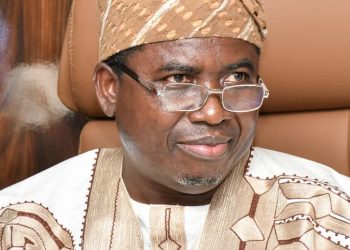
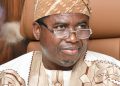
As a celebrated media personality and vice-chairman of the The Sun Newspapers, his death at the hands of a hit-and-run driver has once more focused attention on reckless driving and impunity on the roads in Lagos in particular and the nation at large.
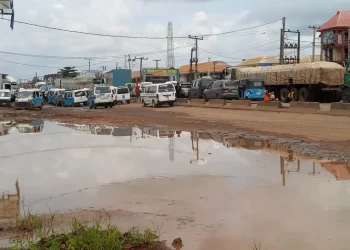
These negative traits were at work that Saturday morning. The Okota-Ago Place way link road in Isolo is usually packed with joggers every morning. Anyone driving at that hour in that area is bound to see the platoons of joggers and people exercising on both sides of the road. Common sense dictated a sedate speed, especially as a portion of the road going towards Cele Bus Stop on the Oshodi-Mile Two Expressway, is bad. Eye-witnesses said the driver however drove at a high speed and that it was in trying to avoid a pothole that he swerved and ran into the late journalist.
The killer compounded his lawlessness by bolting, not even stopping to help his battered and bleeding victim. Similar callousness was repeated two days later in the metropolis when another undisciplined driver knocked down two female highway cleaners at Iyana Oworonshoki, killing one instantly. He also fled the scene pronto.
The driving culture in Lagos is simply horrid. Anything goes: driving against traffic (one-way); reckless overtaking; speeding, even on narrow, poor roads; complete disregard for road signs such as zebra crossings and streetlights; indiscriminate parking, and tail-gaiting. The worst offenders are often (but not exclusively) commercial vehicle operators and government drivers. According to the World Health Organisation’s Global Status Report on Road Safety 2013, though Africa contributes only 2 per cent of the world’s vehicles, it contributes 16 per cent of global traffic deaths. Nigeria, at 33.7 deaths per 100,000 persons, has the highest.
It was in a desperate bid to end the carnage that the Lagos State Government in 2012 enacted the Lagos State Traffic Law, encoding offences and spelling out stiff penalties for infractions.
The law also banned commercial motorcycles, the ubiquitous and terrifying okada, from plying 475 out of the 9,100 roads in the state. An unprecedented public enlightenment campaign, including the establishment of the nation’s first traffic radio station, and involving multiple state agencies, has accompanied the law. According to Kayode Opeifa, the Commissioner for Transportation, motorcycle-related deaths fell from an average 16 persons per month prior to the law to “one to two” by March this year, just as the number of persons injured dropped from 646 to less than 100.
Despite the state’s brave efforts, however, lawlessness persists on Lagos roads as it does nationwide, as many states have never taken road traffic seriously except to raise revenue through multiple fees and penalties. One reason, also identified by WHO, is poor or feeble enforcement of laws. Lagos, for instance, now prioritises traffic management and education. But the police that should enforce laws often simply selectively target a few offenders to extort bribes.
The roads easily go bad, while most drivers do not go through the formal driving schools and are, therefore, ignorant of the traffic code. Stricter enforcement is essential to save lives and limbs.
Public officials, including ministers, legislators and police, set bad examples by routinely breaking traffic laws. A number of Nigerians have died as a result of the reckless driving of official vehicle convoys. In more civilized climes, the political career of Governor Idris Wada, would have crashed after some persons, including a leading academic and activist, Festus Iyayi, died in two separate accidents involving his convoy.
But the greatest failing of the federal and state governments is the absence of Closed Circuit Television cameras at major roads. A scheme by the Lagos State government has achieved only limited coverage so far. Repeated attempts by Abuja have collapsed under the weight of monumental corruption, including a $476 million contract with a Chinese firm that installed a few devices that don’t work.
Had Lagos been well dotted with CCTV cameras, the drivers who felled Igwe and the road sweepers would easily have been identified and brought to justice. Governor Raji Fashola should now accelerate the plan for CCTV cameras, not only to stem traffic offences, but also to check crimes. It was CCTV that enabled investigators to quickly identify and apprehend the Boston Marathon terrorists as there are 233 cameras in the city’s financial district alone. There are more than 91,000 CCTV cameras deployed in London and a total of 4.25 million nationwide, according to Big Brother Watch, an NGO. Corporate bodies as well as all public institutions should also be made to deploy more CCTV cameras. Our cities should have wide and efficient CCTV coverage.
Federal and state agencies need to strengthen their traffic and highway operations and shift emphasis away from revenue generation to safety. In its 2014 half-year summary, the Federal Road Safety Commission reported 5,255 road crashes, with 3,254 persons killed, including 227 children and 15,587 injured. When it is remembered that many other accidents go unreported, the magnitude of the carnage on the highways becomes unbearable.
The police should track down the two latest hit-and-run drivers while prosecutors seek the maximum punishment to deter other maniacal drivers.