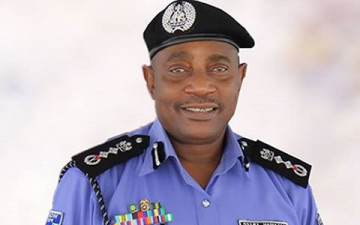
Policing is in a shambolic state and the Inspector-General of Police, Solomon Arase, should rise to the challenge. After a series of half-hearted reforms by past governments, President Muhammadu Buhari has given an indication that his administration will implement new policies that will aim to transform the Nigeria Police Force. In the first measure, Buhari has approved the recruitment of 10,000 police personnel, a tactical move, which will boost the numerical strength of the force, which Arase puts at 305,000.
Closely related to the recruitment drive is Buhari’s directive to Arase to reduce the large number of policemen attached to Very Important Personalities, many of whom, by law, are not entitled to enjoy police protection. The President, with an insider’s knowledge of security operations, warned the IG and the Police Service Commission to be transparent in the recruitment process of the new officers. “Those who will conduct the recruitment must be above board. It should not be heard that they receive gratification or extort money from those who want to enlist in the police,” Buhari warned. These avowals resonate with Nigerians, who are hard hit by robbery, gang wars, kidnapping, cattle rustling, inter-ethnic clashes, Islamic terrorism, and extra-judicial killings.
Past IGs like Ogbonna Onovo and Mohammed Abubakar had put the number of policemen on illegal duties at between 100,000 and 120,000. But at a time the country needs all its police personnel to be on the alert, this lopsided arrangement has exacerbated. Arase said the security details of the 36 governors (150 per governor) and those with VIPs have left the police with only about 150,000 for their core operations. For a nation of about 165 million people, this is grossly inadequate. The United Nations recommends 222 policemen per 100,000 people.
This is just one example in a litany of shocking cases of the rot in the police. The unwholesome practice is grounded in corruption, considerably weakening the operations of the police as too high a number of officers are engaged in protecting just a tiny band of Nigerians. Previous police chiefs usually assumed power with a pledge to withdraw the officers on illegal attachment duties, but all failed abjectly in the implementation of the measure.
Although they are critical to safeguarding the citizens by impartially enforcing the rule of law, there is widespread distrust of the police among Nigerians. The citizens fear them as much as they do criminals. The force is seen as corrupt, inefficient, and filled with poorly-trained officers. Virtually every police station in the country is a cesspool of corruption where policing is conducted in the most sadistic manner. They are often outgunned by criminals, which is tragic. In the past month, gangland (cult) wars have spread to states like Edo, Benue, Kogi, Kwara and Ogun. The challenge is for the police to map out strategies to curtail the spread.
Amnesty International, a global non-governmental agency, said last year that the police in Nigeria were the fourth most corrupt in the world. Arase has admitted there is impunity in the corps. Last July, he lamented that as a result of court judgements, the force had been forced “to pay over N1 billion to the victims of human rights abuses by the police in the past three years.” An efficient oversight measure, especially against officers who are consistently fingered in abuses, has worked in other jurisdictions.
To grow and stabilise our democracy, having an effective, independent and professionalised police force is a must. Buhari has to reboot the police through holistic reforms. It is a daunting project. The police are at their nadir, decimated by rot, corruption, poor welfare and loss of lives in the line of duty. A culture of non-accountability means several murders and crimes go unpunished. Corrupt police officers must be rooted out of the system.
With crime gangs fast acquiring notoriety for maiming and killings in our major cities and campuses, the need for action is pressing. There is a compelling argument for the rearming of the police with modern technology. The utilisation of forensics, DNA sampling and CCTVs are vital to modern police operations. Officers could be equipped with body cameras to discourage impunity, extortion, extra-legal killings, abuse and bribe-taking, a measure 42 state governments have ratified by law in the United States. Two of those states – Cincinnati and Colorado – have boosted citizen rights by passing laws that allow them to take videos of police operations.
There is no single, fool-proof formula for remaking a police institution, but the recommendation of John Eck, a professor of criminal justice at the University of Cincinnati, could be considered. Eck proffers the concept of problem-oriented policing, which has been successfully employed in that US state. Akin to the community policing often mooted in Nigeria, it is a strategy that puts the police and the community leaders together to figure out specific crimes. The model “enhances the status of the police officer, who no longer is just a foot soldier who could be purchased by the dozen, but is rather a person who understands how to address community problems.”
Other countries are also using community policing to stem crime at the root. The model in Sweden, developed in 1972, includes a strong agency with the duty of oversight, and was adopted by the European Union for its member states in 2001. Germany, a federal system like Nigeria, saw its high crime rates of the 1980s decline sharply after a majority of its states inaugurated the Crime Prevention Councils (community policing). Between 1992 and 2002, crime rate dropped considerably and, by 2004, there were just 820 homicides in a nation of 82 million people, with Germans crediting their “unique” state and local police with the low rate of violent crime.
The consequences of not acting will be too great in the years ahead. So, Buhari should proceed with urgency and institutionalise the reform of the police. Compelling Arase to implement his recent directive to the letter will be a laudable starting point.