The Niger-Delta region, the nation’s petro-dollars cash cow, is in flames again. A new militant group – Niger Delta Avengers (NDA) – which says its mission is to ‘cripple Nigeria’s economy’ had last February, declared its ‘Operation Red Economy’ campaign against the nation. It has seized the destructive, violent initiative of its repentant predecessors and has truly been inflicting unimaginable harm on the Nigerian economy.
A recent report revealed, for example, that militancy in the Niger-Delta denied the country revenues amounting to N58.5 billion ($295 million) as a result of the loss of 6.5 million barrels of crude in the early days this month (May) alone. Last February, the Clough Creek Tebidaba Agip Pipeline Manifold in Bayelsa State was blown up by NDA, followed in May by the group’s destruction of Nigerian National Petroleum Corporation’s (NNPC) crude and gas pipelines that fed the Warri and Kaduna refineries, which crippled not just the supply of crude to Warri and Kaduna refineries, but the feeding of gas to Lagos and Abuja for electric power supply.
The NDA also claimed it blew up Well D25, a major gas facility belonging to Chevron Nigeria Limited in Abiteye, Warri South-West Local Government Area and home to the Swamp Headquarters of Chevron. Also ruined were other major pipelines in Abiteye, Alero, Dibi, Otunana and Makaraba flow stations that fed Chevron’s tank farm, thus putting the latter out of operation.
Reports say Nigeria’s crude oil production slumped to a 22-year low after Royal Dutch Shell PLC declared a force majeure on Bonny Light (crude brand) as a result of pipeline vandalism. Last February, the oil multinational stopped oil shipments after it suffered attacks on a key pipeline that supplied 250,000 barrels of crude per day to a terminal; and was forced to evacuate a major oil field following subsequent attack threats by militants. Finance Minister, Kemi Adeosun, says Nigeria’s oil production has now dropped to 1.65 million barrels per day (mb/d), the lowest production in 22 years as a result of renewed activities of the militants, whereas the Federal Government premised the 2016 Budget on 2.2 mb/d. With the NDA threat still lingering, recriminations on the group’s source of strength are also rife.
Some allege NDA wants to make Nigeria ungovernable for President Muhammadu Buhari, perhaps as a pay-back for the North-East driven Boko Haram insurgency that routed former President Goodluck Jonathan’s government and contributed to his loss of last year’s presidential election. Others say members of the NDA are common criminals that hitherto survived on kidnapping expatriates, bombing oil installations and collecting ransom.
Accusing fingers are also being pointed at former President Jonathan as a possible sponsor of the group believed to be embittered by Buhari’s defeat of Jonathan in last year’s presidential poll. A purportedly repentant ex- Niger-Delta militant leader, Chief Government Ekpemupolo (aka Tompolo), docked by the Federal Government for over allegations of fraud under the Jonathan administration; and who is widely believed to be supportive of the attacks on pipelines and oil facilities in the Niger-Delta, has dissociated himself from the activities of the NDA.
Tompolo says the nation’s security agencies should investigate the activities of oil companies in the Niger-Delta region, alleging that oil servicing companies angling for (pipeline) repair contracts were responsible for the attacks. Indeed, so much suspicion is now dogging the renewed wave of militancy in the Niger-Delta region. Five suspected NDA members were arrested lately after they bombed another Chevron pipeline in Warri South-West LGA, according to reports.
Perhaps through the suspects, tangible information on the sponsorship of NDA will be distilled. Our thinking, however, is that these are no times the Buhari government should rely on the whimsical show of state power alone in containing the renewed Niger– Delta militancy. The government, in order to save the nation from economic collapse and imminent disintegration, should take a penetrating look at the terms of the amnesty programme for ex-militants from the Niger-Delta axis, determine which areas had been undermined and reinvigorate them. That way, the government will be in a better stead to look eye-ball-to-eye-ball at the new faces of militancy in the axis and have the moral audacity to fully deploy the coercive forces of state to confront and possibly eliminate them.
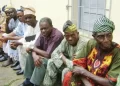
The government should, in addition, talk with Niger-Delta political and traditional leaders, especially, to unravel the sources of the re-awakened hostilities and how best to plug them. For, a nation or community stripped of leaders and elders capable of reining in the excesses of its straying youths