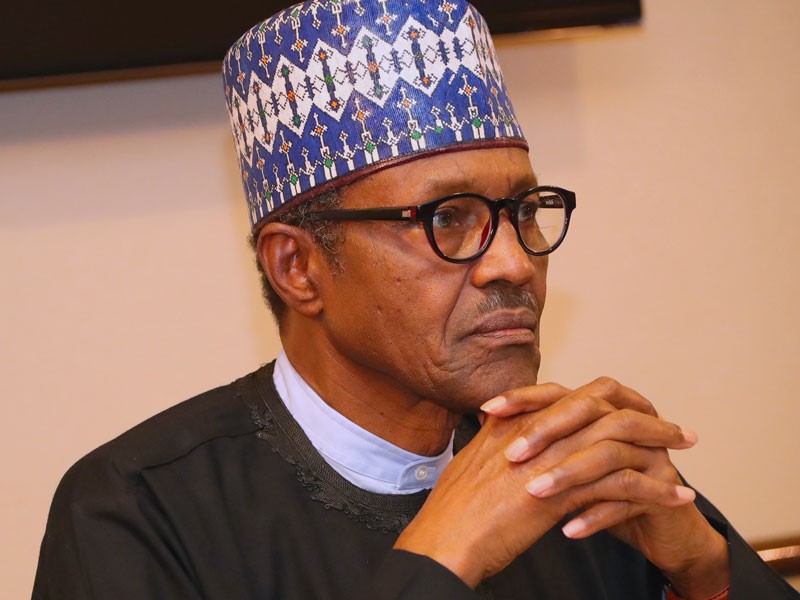
- This may be worrisome. But there won’t be regrets if we use the money judiciously
THE borrowing plan contained in the medium term expenditure framework (MTEF) submitted to the National Assembly by President Muhammadu Buhari has, understandably, stoked fresh anxieties. Understandably because the N12tn debt the administration inherited when it took off in May 2015 has not only more than doubled to N24.95tn, there is a fresh plan to raise additional N4.6 trillion over the next three years, to take it to an unprecedented N29.55tn by 2022.
Details of the new plan shows the Federal Government seeking to borrow N1.7tn in the 2020 fiscal period, of which N850bn would be sourced locally, with the balance of N850bn to be raised from foreign creditors; another N1.6tn the following year to be sourced in equal proportion of N800bn each from domestic and foreign sources, and finally in 2022, N1.3tn to be made up of foreign borrowing of N650bn and domestic borrowing of N650bn.
The debt trajectory over the course of the last six years apart, Nigerians increasingly wonder whether the country is actually getting value for every kobo of the humongous sums being contracted. This is against what is generally perceived as the rather slow pace of infrastructure delivery at a time of unprecedented deterioration.
Some 13 years after Nigeria exited the claws of the London and Paris Club of creditors, it would appear that the very issues that led us to that sorry pass are very much with us still, with corruption, profligacy and waste remaining an intrinsic feature of our public finance architecture.
For the Federal Government, the argument has been a familiar one: the nation’s stock of public debt is relatively low vis-à-vis our Gross Domestic Product (GDP). The government, it is further argued, needs to borrow heavily to maintain the current growth trajectory. And with the infrastructural deficit now at an unprecedented level ever, not only are current revenue outlays inadequate, even the recurring fiscal gaps have to be debt-financed.
The government’s position is most certainly unassailable. For, quite contrary to what most Nigerians would rather see as the nation’s boundless wealth, the fact of the matter is that the so-called wealth is more apparent than real. A measure of this is our current revenue profile which is preponderantly based on how much we earn from oil – subject to vagaries of production and prices – and this at a time when taxation still largely plays second fiddle. In any case, both combined amounts to a tiny droplet in the ocean of the nation’s yawning infrastructure needs.
Moreover, that our budgets, as earlier stated, are also partly debt-financed from year to year would also underscore this gripping reality. The option of debt to finance critical infrastructure would, in the circumstance, be more than justifiable if only to fast track the pace of development that Nigerians truly crave. Worthy examples are the on-going railway modernisation, the upgrade of critical facilities in the power sector, especially the on-going Mambilla power projects.
Nigerians are not necessarily averse to seeking loans to finance critical projects. What they deplore is the endless junketing for loans even when their imperatives have neither been established nor a true business case made for them. Though not rich; it needs to be stated also that Nigeria is certainly not poor. Much has been said about our tax to GDP ratio of 4.8% as being among the most terrible in the world. The government obviously needs to improve on that as the average for 21 African countries was about 18.2% in 2016. There is also the debt service burden said to gulp some 50% of revenue even when the sub regional average is 17%. These are areas the government needs to focus upon.
In all, it is certainly not sufficient to merely seek to convince that our low debt-to-GDP ratio puts us in good stead to take up more debts. Only a demonstrable diligence and fidelity to the cause of the country in debt negotiations, coupled with a disciplined and judicious utilisation of the proceeds, would rest citizens’ anxieties.