The Inter-Governmental Action against Money Laundering in West Africa (GIABA), some weeks back, indicated its intention to install additional scanning machines in Nigeria’s borders for the purpose of detecting terrorism financiers. A specialised institution of the Economic Community of West Africa States (ECOWAS) that facilitates the adoption and implementation of Anti-Money Laundering (AML) and Counter-Financing of Terrorism in West Africa, the body’s Information Manager, Mr. Timothy Melaye, was quoted as saying that the initiative was part of GIABA’s efforts to strengthen the organisation’s monitoring and tracking of terrorism financing.
“So far… there is reduction in the volume of money laundering and terrorism financing taking place in Nigeria and other ECOWAS states, but we are not there yet. GIABA’s aim is to ensure that Nigeria and other ECOWAS countries are rid of money laundering and financing of terrorists’ activities… We strongly believe that with the installation of this equipment, it will become much easier for the law enforcement agencies to detect illegal movement of cash from and into Nigeria”, Melaye said.
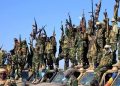
Whereas the effectiveness of such machines so far deployed in the border areas may not be easily ascertained, the report credited to GIABA is cheering, considering the determined and largely unhindered access terrorists now have to the nation through the border areas. Nigerians now live with gory reports of the onslaughts of the militant Boko Haram Islamist sect in parts of the North on daily basis, particularly in the North-East states of Adamawa, Borno and Yobe, where insurgency has claimed large swathes of territories and still counting. And whereas many believe that the insurgents are enjoying the patronage and financial support of mainly local financiers, it is not unlikely the funders of terrorism against Nigeria are really taking advantage of the nation’s porous borders to ply their trade.
As has been rightly pointed out, it may please the international community to unanimously condemn corruption and freeze the proceeds of corrupt African leaders and looters; a lot of thinking Africans strongly believe western financial institutions serve as sanctuaries for Africa’s looted funds, part of which may in turn be deployed in funding terrorist activities. It is also quite probable that some serving or past leaders not comfortable with the administrations in power and/ or their policies, but who had laundered enough funds to foreign lands, could rely on such funds to unleash mayhem in their home countries, with the aim of making such countries ungovernable. Painfully, too, reports point to billions of stolen dollars as having been ‘recovered’ or frozen by foreign banks, but handing them over to the nations whose coffers were devoured have proved a herculean task.
Besides, one critic aptly captured the trend this way: “Behind the kleptocrat’s (are) insatiable quest for a life of aggrandizement in expensive shopping trips to Paris, fast cars, women, yachts, mansions and private jets (but) without the banks and the controlling authorities – it (money laundering) would not be possible. It does take two to tango”.
Therefore, as good as the plan by GIABA to put in place additional scanning machines in Nigeria’s borders may sound, the body should also task itself on how best to exorcise the ghosts of greed, profiteering, fraud and endemic corruption thriving in most local ECOWAS member-states’ banks, particularly in Nigeria, as well as complicity by government agencies and officials. Indeed, the GIABA scanning machines project is a reminder, in Nigeria, of Federal Government’s bungled $430 million surveillance camera contract initiated in 2009. While the contract, which was supposed to be completed in two years as at 2013, was far from competition, 2,000 of the cameras purportedly installed were not functioning, some were vandalised and others damaged; all the handiwork of a pathologically corrupt public sector; and most puzzling, perhaps, in a country facing dumbfounding security challenges. There comes a time when a floundering nation should stand firm and say no to grave public sector ineptitude and corruption.