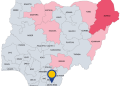
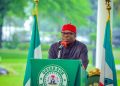
In Nigeria, elections are often won and lost by shedding the blood of innocent people. This cold reality marked the January 9 supplementary governorship election in Bayelsa State, where polling in the Southern Ijaw Local Government Area and 101 other units elsewhere was characterised by bloodshed. The gruesome spectacle claimed about 14 lives, and tempered the victory of Governor Seriake Dickson of the Peoples Democratic Party, who won a second term of four years. The Federal Government should instil sanity into our politics by demonstrating the will to bring election offenders to justice, no matter their political leanings.
It is unacceptable that a rerun in just one out of eight LGAs in a state would provoke so much hostility and the government would appear helpless in reining in the felons. About four policemen, eight civilians and soldiers were reportedly killed on Election Day in Southern Ijaw, while the monarch of Peremabiri, Progress Neverdie, was shot point-blank in the head by hoodlums. The police, however, insist that only six people died.
Although it was an election, it seemed more like a war. Intimidation, ballot box-snatching and shooting were rampant. A coalition of 60 Civil Society Organisations condemned the PDP and the All Progressives Congress for their actions and statements in the run-up to balloting. It beggars belief that these criminal acts occurred in spite of the fact that Solomon Arase, the Inspector-General of Police, deployed 5,000 officers, boats and helicopters for the polls. There were also military and 4,000 Nigerian Security and Civil Defence Corps personnel on duty. Yet, on January 7, hoodlums were able to bomb the country home of the Speaker, Bayelsa House of Assembly, Konbowei Benson, destroying part of the property in Korokorosie, Southern Ijaw. A former speaker of the state legislature, Boyelayefa Debekeme, the Chairman of Ekeremor LG, Billy Tobiye, and the traditional ruler, Agbodo Gbaseimo, were attacked on the eve of the election.
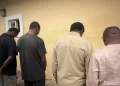
The security agencies allowed thugs to succeed because they didn’t utilise intelligence ahead of the polls. Southern Ijaw is said to be home to notable ex-Niger Delta militants and warlords. Indeed, the Independent National Electoral Commission, which conducts elections in Nigeria, had declared the original ballot on December 5, 2015 inconclusive because of the violence that marred voting in Southern Ijaw, Ekeremor, Brass and Nembe. Five people were reportedly killed then, and the police arrested 45 suspects.
Consequently, INEC extended the voting to December 6 and 7, but had to suspend it entirely in Southern Ijaw because of alleged rigging of the poll and the tense atmosphere thereof. But between then and the new date of January 9, the security agencies could still not stem the tide of violence. Their default was costly. Violence spiralled to the extent that on December 19, Nancy Dickson, the governor’s sister, was abducted in Yenagoa, the state capital.
About 12 hours later, the state’s Commissioner for Local Government, Serefina Otazi, a cousin to former President Goodluck Jonathan, was abducted by gunmen in Otuoke, Ogbia LG. Equally significant is the mayhem that defined the APC primaries last September. It was so serious that Edo State Governor, Adams Oshiomhole, the chairman of the electoral committee, had to be smuggled out of the Samson Siasia Stadium, Yenagoa, by soldiers.
But violence hurts democracy. It presents an artificial facade of the true situation. As the experience in Southern Ijaw vividly showed last week, many voters fled their homes days to the ballot in fear. This invariably led to disenfranchisement; it allowed hoodlums to usurp the process. This is not how democracy operates in other countries.
Nigeria and the United Kingdom both held elections early in 2015, but there were different results. While there were no reports of ballot box snatching or violence in Britain, the National Human Rights Commission stated that 58 people died and 100 were injured in the build-up to the Nigerian polls. Yet, no offender has been prosecuted. A situation in which politicians have scant disregard for the rule of law and render peaceful elections anomalous has to be corrected by bringing offenders swiftly to book.
The situation was so tense that the United Kingdom, the United States and United Nations diplomats had to wade in and coerced Buhari and Jonathan to sign a five-point pact for a peaceful election. The pact hardly worked. In the aftermath of the polls in March/April, INEC said it was investigating 66 acts of violence in 19 states. The European Union estimated that 160 Nigerians were killed by the time the polls were concluded.
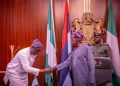
To stabilise the Fourth Republic, we need to start holding peaceful ballots and reduce the high rate of deaths associated with elections. For example, in 2011, post-election violence claimed 800 lives. It is time for President Muhammadu Buhari, who is known to brook no nonsense, to fulfil his pledge to investigate and prosecute offenders. He made the pledge last November when he inaugurated Mahmood Yakubu as the INEC chairman.
The crusade for peaceful polls and the integrity of our elections should start with the prosecution of the offenders in the Bayelsa poll. And it is a step in the right direction that Arase has vowed to prosecute all those who committed criminal acts in the Bayelsa election. They must not get away with their savagery. The President should compel Arase to enforce the provisions against violent conduct, murder and criminality as enshrined in the Electoral Act 2010 and the 1999 Constitution. This move will serve as a good lesson to sponsors of violence and hired hands ahead of the 2019 general election.