TheCitizen - It's all about you
  • Home
  • Headlines
  • Latest News
  • Governance
  • Business
  • Financial Crimes
  • Opinion
  • Editorials
No Result
View All Result
TheCitizen - It's all about you
  • Home
  • Headlines
  • Latest News
  • Governance
  • Business
  • Financial Crimes
  • Opinion
  • Editorials
No Result
View All Result
TheCitizen - It's all about you
No Result
View All Result

Toxic influence of money on Nigerian elections – Punch

The Citizen by The Citizen
February 20 2017
in Public Affairs, Uncategorized
A A
0

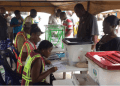
Nigeria faces tremendous pressure to scale down the toxic influence of money on her electoral system, after it emerged the 2015 elections that ushered in the current President, Muhammadu Buhari, and effectively ended 16 years of the Peoples Democratic Party’s dominance of the country’s politics were the most expensive in the country’s history. The exercise, according to the Independent National Electoral Commission, gulped between $1.5 billion and $2 billion, a huge sum which tends to project the notion of the preeminent role of money, above anything else, in the electoral process. It should not be so.

Most Nigerians will probably flinch at the sheer quantum of money that goes into electing political office holders in the country, as revealed recently by Bolanle Eyinla, the INEC’s Chairman Technical Adviser. Presenting a breakdown of the cost of the last elections at a two-day conference on Regional Cost of Politics, Eyinla said, while INEC spent $547 million on what he described as “the most expensive elections that we have ever seen,” the political parties and their candidates brought the overall expenditure to “between $1.5 billion and $2 billion.”

This is quite a fortune to invest in a process that has so far failed to deliver the required dividends to the Nigerian citizenry. Eighteen years after the enthronement of civil rule, good governance remains a mirage. As a matter of fact, it has always been the habit here to make the contest of elections as prohibitive as possible, which explains why politics has become the preoccupation, primarily, of moneybags and their hirelings.

Quite often, people of dubious character, with questionable sources of wealth, have managed to emerge as the front-runners in Nigerian politics. They either stand for elections themselves or pose as godfathers who determine who vies for what post or who gets what. In effect, they take charge of decision-making even when they are not directly in government. In the end, the choice of the electorate matters less; it is the choice of the moneybags that gets “elected.”

But this is an aberration that should be bucked if Nigerians are desirous of getting quality representation and deriving value from democracy. As the French philosopher and writer, Joseph de Maistre, once said, “Every nation gets the government it deserves.” But, with moneybags running the show here, the electorate only ends up with the government that is imposed, not elected.

Many Nigerians will readily recall the bizarre situation in Anambra State, where the then governor, Chris Ngige, had to fight for his dear life after he was kidnapped and forced to resign his position for failing to do the bidding of his benefactor, Chris Uba. A similar ugly scenario was reenacted in Oyo State, where Rasheed Ladoja was removed as the governor for failing to share his security vote with his godfather, Lamidi Adedibu.

Such ugly incidents, without doubt, partly account for why democracy in Nigeria has not always come with all the intended benefits. It is easy to align with the position of Anthonia Simbine, a professor of Political Science and International Relations, who believes that the poor quality of governance in the country is a direct product of the commercialisation of the political process. “If you make an investment, you would want to reap from that,” said Simbine, also an INEC commissioner.

Commercialisation of politics has been fingered in the high incidence of political assassination in the country. The reward for victory is so mouth-watering that people are ready to kill to occupy public office.

In advanced democracies, election spending is strictly regulated to ensure that it is not abused. Since the essence of contesting is to offer service, the system ensures that competent candidates are not shut out by the high cost of vying for an office. For example, compared to the $547 million it cost INEC to organise the 2015 elections, it reportedly cost the United Kingdom £113.2 million of public money to conduct elections in 2010.

While donations are allowed – and only from credible sources – and there is no cap to what could be donated, there is however a limit to what political parties can spend. Grants are also received from the electoral commission, just as loans and credit facilities could be taken. At the end of the elections, parties are also entitled to some money for each seat won.

In the United States, candidates are entitled to state sponsorship, which has a ceiling, or they could opt for private funding for their campaign. The then Senator Barack Obama was the first candidate of a major political party to forgo public financing for his election bid in 2008, insisting that the system, created in 1976, had collapsed. But there are also rules and regulations to moderate donations. Following a 2014 Supreme Court ruling, the CNN reported that the limit on how much an individual could donate in a single election was lifted but the ceiling of a maximum of $5,200 to a single candidate remained.

For Nigeria to bring sanity back to the electoral process and prevent it from being tainted with excess money, there is the need to ensure a strict enforcement of the rules for campaign spending as contained in the Electoral Act 2010. For instance, Section 91 (2) of the Act stipulates N1 billion as the maximum a presidential candidate could spend on election. A governorship candidate under the Act is not permitted to spend more than N200 million, while candidates for the Senate and House of Representatives are allowed N40 million and N20 million respectively. Except there is an amendment to the law, the existing provisions should be enforced.

Given past experiences, it is to be expected that future elections will be even more expensive if something urgent is not done. For example, Debowale Olorunmola, the Country Representative of Westminster Foundation for Democracy, noted that it cost all the opposition parties about N2.04 billion to participate in the elections of 2011, but the PDP alone spent N5.01 billion, sums some pundits say may be grossly understated. “In 2015, all the opposition parties spent N2.91 billion while the PDP spent N8.74 billion,” he said.

For a country currently mired in recession and faced with huge infrastructural gap, the show of profligacy in elections should not be allowed to continue.
Previous Post

CBN and the campaign against naira abuse – The Sun

Next Post

Averting the next bailout – The Nation

Related Posts

EFCC recoveries: The good, the bad and the ugly – Punch
Public Affairs

EFCC recoveries: The good, the bad and the ugly – Punch

September 11 2026
Football’s house of failure – Punch
Public Affairs

Football’s house of failure – Punch

September 8 2026
FAAC shares N2.09tr to FG, states, local councils as October revenue
Public Affairs

FAAC bonanza: Nigeria’s fiscal paradox – Punch

September 3 2026
Interstate highways of agony, hollow excuses – Punch
Public Affairs

Interstate highways of agony, hollow excuses – Punch

September 1 2026
Mass presence of governors in off-cycle elections – Punch
Public Affairs

Mass presence of governors in off-cycle elections – Punch

August 27 2026
Clerics must preach peace, not division – Punch
Public Affairs

Clerics must preach peace, not division – Punch

August 25 2026
Next Post

Averting the next bailout – The Nation

Boko Haram: UN Security Council to visit Nigeria in March

Leave a Reply Cancel reply

Your email address will not be published. Required fields are marked *
FROM THE GRASSROOTS

Lagos demolishes shanties after four die in community clash

Lagos demolishes shanties after four die in community clash

by The Editor
August 30 2026
0

...

Kano, Sokoto, others spend N53.2bn on scholarships abroad

INEC fixes Sept 19 for Kano Assembly by-election

by The Editor
August 27 2026
0

...

Awujale: Ruling House sues Ogun, kingmakers

Awujale: Ruling House sues Ogun, kingmakers

by The Editor
August 25 2026
0

...

Umahi’s son wins Ohaozara chairmanship as APC sweeps all Ebonyi LGAs

Umahi’s son wins Ohaozara chairmanship as APC sweeps all Ebonyi LGAs

by The Editor
August 24 2026
0

...

APPOINTMENTS

Gov. Yahaya swears in 19 new Gombe permanent secretaries

Gov. Yahaya swears in 19 new Gombe permanent secretaries

by The Editor
September 11 2026
0

...

Niger State governor appoints six commissioners-designate, four aides

Niger State governor appoints six commissioners-designate, four aides

by The Editor
September 8 2026
0

...

Tinubu swears in Enitan as new Head of Service

Tinubu swears in Enitan as new Head of Service

by The Editor
August 28 2026
0

...

Tinubu names new Head of Service

Tinubu names new Head of Service

by The Editor
August 19 2026
0

...

ODDITIES

Palliatives: Sokoto residents feared dead in stampede at Wammako’s residence

Police Inspector slumps, dies after fitness exercise

by The Editor
September 3 2026
0

How friend deceived me to sell my kidney, bought phones with payment — Victim

How friend deceived me to sell my kidney, bought phones with payment — Victim

by The Editor
August 30 2026
0

Umahi files N2.5b defamation lawsuit against bloggers

Umahi files N2.5b defamation lawsuit against bloggers

by The Editor
August 26 2026
0

GLOBAL NEWS

US, Israel, Iran agree to 2-week ceasefire as Trump pulls back on threats

US Appeal Court affirms block on Trump bid to curb mail-in ballots

by The Editor
September 11 2026
0

...

Trump promises Americans $5,000 if Republicans win Congress

Trump promises Americans $5,000 if Republicans win Congress

by The Editor
September 11 2026
0

...

UK bans trade in goods from Israeli settlements in occupied West Bank

UK bans trade in goods from Israeli settlements in occupied West Bank

by The Editor
September 8 2026
0

...

Iran President thanks Putin for Russia’s stance in war with US

Iran President thanks Putin for Russia’s stance in war with US

by The Editor
September 1 2026
0

...

Saudi Arabia halts multiple visas for Nigeria, 13 others as U.S. suspends visa dropbox

US outlines two family visa options for permanent residence

by The Editor
September 1 2026
0

...

State of the States

Fubara orders fresh LG elections in Rivers State

Fubara signs N1.84tt Rivers 2026 budget into law

by The Editor
September 3 2026
0

...

Lagos empowers 6,190 residents with free vocational, entrepreneurial skills

Lagos empowers 6,190 residents with free vocational, entrepreneurial skills

by The Editor
September 2 2026
0

...

Gov. Mutfwang convenes security council over Plateau attacks

Gov. Mutfwang convenes security council over Plateau attacks

by The Editor
September 2 2026
0

...

Enugu govt gets commendation for successful hosting of 2nd City Marathon

Enugu govt gets commendation for successful hosting of 2nd City Marathon

by The Editor
September 1 2026
0

...

Plugin Install : Widget Tab Post needs JNews - View Counter to be installed
  • Trending
  • Comments
  • Latest
EFCC recoveries: The good, the bad and the ugly – Punch

EFCC recoveries: The good, the bad and the ugly – Punch

September 11 2026
NCDC takes over Nasarawa office, plans N400m remodeling

NCDC takes over Nasarawa office, plans N400m remodeling

September 11 2026
Ondo LG shuts schools over security concerns

24 die after consuming herbal drinks in Ondo

September 11 2026
Gunmen kill Polaris Bank manager in Imo kidnapping attack

Gunmen kill Polaris Bank manager in Imo kidnapping attack

September 11 2026

EDITORIAL REVIEW

EFCC recoveries: The good, the bad and the ugly – Punch

EFCC recoveries: The good, the bad and the ugly – Punch

by The Editor
September 11 2026
0

Football’s house of failure – Punch

Football’s house of failure – Punch

by The Editor
September 8 2026
0

FAAC shares N2.09tr to FG, states, local councils as October revenue

FAAC bonanza: Nigeria’s fiscal paradox – Punch

by The Editor
September 3 2026
0

Interstate highways of agony, hollow excuses – Punch

Interstate highways of agony, hollow excuses – Punch

by The Editor
September 1 2026
0

Mass presence of governors in off-cycle elections – Punch

Mass presence of governors in off-cycle elections – Punch

by The Editor
August 27 2026
0

Opinion

 Akpakomiza and other stories

by The Editor
September 1 2026
0

...

‘Fake’ Agency: Adeyemi insists DG appointment genuine

Fake agencies: Why Nigeria still needs Oronsaye report

by The Editor
August 25 2026
0

...

How Adeleke danced back from the dead

How Adeleke danced back from the dead

by The Editor
August 19 2026
0

...

Adeleke’s win and the cost of winning at all costs

Adeleke’s win and the cost of winning at all costs

by The Editor
August 18 2026
0

...

Plugin Install : Popular Post Widget need JNews - View Counter to be installed
  • Home
  • Headlines
  • Latest News
  • Governance
  • Business
  • Financial Crimes
  • Opinion
  • Editorials

© 2026 TheCitizen Ng. All Rights Reserved.

No Result
View All Result
  • Home
  • Headlines
  • Latest News
  • Governance
  • Business
  • Financial Crimes
  • Opinion
  • Editorials

© 2026 TheCitizen Ng. All Rights Reserved.