Democracy is shaking badly in Nigeria. Indeed, President Bola Tinubu rode to power as a defender of democratic ideals. Today, his government appears increasingly intolerant of scrutiny, with the media squarely in its crosshairs. This must not stand.
In a bizarre intervention, the National Broadcasting Commission issued a warning to broadcasters ahead of the 2027 elections, cautioning presenters against “bias,” “bullying” guests, and breaching the Nigerian Broadcasting Code.
It accused some anchors of passing off opinions as facts, denying fair representation to opposing views, intimidating interviewees, and permitting inflammatory or divisive content.
The commission threatened “strict and uncompromising” enforcement of the code, dangling sanctions over any broadcast it deems offensive or insufficiently balanced. In any genuine democracy, such language is not regulation; it is intimidation.
What the NBC either ignores or deliberately sidesteps is that freedom of expression is not a privilege it dispenses at will; it is a constitutional right. The media is not an extension of government; it is a check on it.
This heavy-handed posture is an escalation of the hostility first weaponised under Lai Mohammed during the administration of Muhammadu Buhari, when repeated attempts were made to cow the press into submission.
At one point, the government even orchestrated the suspension of Twitter, a globally condemned act of digital censorship.
The current climate is disturbingly reminiscent of Nigeria’s military past, when journalists were harassed, detained without trial, murdered, and media houses shut down. That dark history should serve as a warning, not a template.
The politics of 2027 appear to be driving NBC’s latest missteps. A political class allergic to accountability is seeking, once again, to silence the very institutions designed to question it. The media, by its nature, is inconvenient to power. That is precisely its value.
It is absurd for a regulatory agency to presume it can dictate how journalists ask questions or conduct interviews.
The NBC has no business scripting journalism. Guests who appear on television do so voluntarily; they are not conscripts. If the questions are tough, it is because the issues are serious.
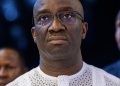
This episode is a damning reflection on the leadership of the NBC under Charles Ebuebu. It suggests a regulator captured by political interests, where competence is subordinated to expediency.
Journalists are not stenographers. They are entitled, indeed obligated, to form and express informed opinions. A government that fears a vibrant press is a government that fears accountability. Such a government cannot deliver good governance.
The media’s duty is not to power, but to the people. As the fourth estate, it must ask uncomfortable questions, expose contradictions, and demand answers.
Democracy depends on that friction.
The architecture of governance, the executive, the legislature, the judiciary, and the media, functions as an interdependent chain. Weaken one link, and the entire system falters. Muzzle the press, and you erode the very foundation of democratic oversight.
This is why global norms robustly defend press freedom. Article 19 of the United Nations Universal Declaration of Human Rights (1948), alongside the International Covenant on Civil and Political Rights and the African Charter on Human and Peoples’ Rights, affirms the right to seek, receive, and impart information without interference.
Nigeria’s own laws are equally clear. Section 22 of the 1999 Constitution mandates that the media hold the government accountable, while Section 39(1) guarantees freedom of expression. These are not decorative provisions; they are enforceable rights.
The NBC’s overreach has already been tested and rejected by the courts. In 2023, a Federal High Court in Abuja, presided over by James Omotosho, issued a perpetual injunction restraining the commission from imposing fines on broadcast stations. The ruling was unequivocal: the NBC cannot act as accuser, prosecutor, and judge in its own cause.
Yet, the commission’s record is that of habitual excess. In 2019, it fined dozens of stations N500,000 each. In 2022, it imposed N5 million penalties on broadcasters over a documentary on terrorism and banditry. In 2023, it fined Channels Television N5 million for airing an interview with Yusuf Datti Baba-Ahmed, branding it “inciting.”
Omotosho not only voided the earlier fines but also ruled that the NBC lacks the authority to impose such sanctions or conduct quasi-criminal proceedings.
The case, brought by the Media Rights Agenda, dealt a decisive blow to regulatory overreach. The commission’s appeal was dismissed on April 2, 2026, yet the impulse to intimidate persists.
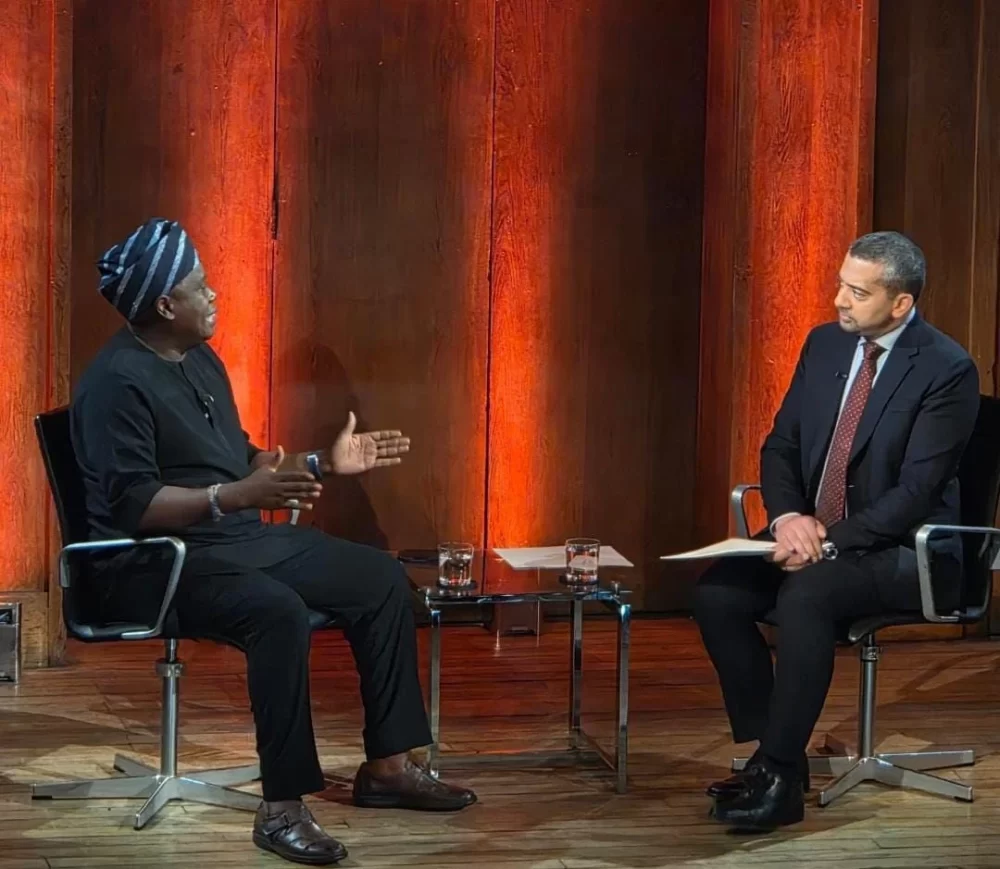
Contrast this with global best practice. When presidential aide Daniel Bwala appeared on Al Jazeera, he faced a rigorous grilling from Mehdi Hasan on Head to Head.
On BBC’s HARDtalk, anchored by Stephen Sackur, interviewees are subjected to forensic, unrelenting questioning. That is journalism doing its job, not a regulatory violation.
To equate tough questioning with misconduct is to fundamentally misunderstand or deliberately undermine the role of the press.
Muzzling the media is no different from muzzling the judiciary. Both are pillars of accountability. Undermine them, and what remains is unchecked power, a fast track to democratic decay.
Nigeria cannot afford a relapse into the authoritarian reflexes of its past. The NBC must retreat from this dangerous path.
Ebuebu’s directive is not just misguided; it is unlawful. It should be withdrawn immediately. Journalists must be allowed to work freely, fearlessly, and without intimidation.