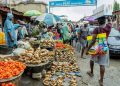
The Federal Government, on Wednesday, declared that with the strategic measures aimed at addressing the high food prices nationwide, prices of the items would crash in the next 180 days (January 2025).
It said the measures which include the suspension of duties, tariffs, and taxes for the importation of certain food commodities through land and sea borders, as well as the importation of 500,000 metric tonnes of wheat and maize, would tackle the rise in food prices.
The Minister of Agriculture and Food Security, Abubakar Kyari, who disclosed this on his official X handle on Wednesday, explained that the imported food commodities would be subjected to a recommended retail price to maintain the required and acceptable standard.
This came as the All Farmers Association of Nigeria expressed optimism that the price of staple food in Nigeria would crash should the government implement the policies adequately, stressing that in-country food production had been insufficient.
Similarly, the organised private sector commended the Federal Government for the initiative, describing it as robust, comprehensive, and all-inclusive.
In his posts on X, the agriculture minister said, “Our administration has unveiled a series of strategic measures to address the high food prices currently affecting our nation. These measures will be implemented over the next 180 days: 150-day duty-free import window for food commodities; suspension of duties, tariffs, and taxes for the importation of certain food commodities through land and sea borders. These commodities include maize, husked brown rice, wheat, and cowpeas.
“Imported food commodities will be subjected to a recommended retail price. We understand concerns about the quality of these imports, especially regarding their genetic composition. The government assures that all standards will be maintained to ensure the safety and quality of food items for consumption.
“The Federal Government will import 250,000 metric tonnes of wheat and 250,000 metric tonnes of maize. These semi-processed commodities will be supplied to small-scale processors and millers across the country; engagement with relevant stakeholders to set a GMP (good manufacturing practices) and purchase surplus food commodities to restock the National Strategic Food Reserve.”
Kyari said the government would ramp up production for the 2024/2025 farming cycle, adding that there would be continued support to smallholder farmers during the ongoing wet season farming through existing government initiatives.
He outlined other measures as “strengthening and accelerating dry season farming nationwide, embarking on aggressive agricultural mechanisation to reduce drudgery, lower production costs, and boost productivity, collaborating with sub-national entities to identify irrigable lands and increase land under cultivation.
The minister said the ministry would be “working closely with the Federal Ministry of Water Resources and Sanitation to rehabilitate and maintain irrigation facilities under river basin authorities across the federation. Developing strategic engagement for youths and women for immediate greenhouse cultivation of horticultural crops such as tomatoes and pepper to increase production volume, stabilise prices, and address food shortages.
“Fast-tracking ongoing engagements with the Nigerian military to rapidly cultivate arable lands under the Defence Farms Scheme and encouraging other para-military establishments to utilise available arable lands for cultivation.
On the Renewed Hope National Livestock Transformation Implementation Committee, the minister stated that the committee, inaugurated on Tuesday, would develop and implement policies prioritising livestock development in alignment with the National Livestock Transformation Plan, adding that a ministry of Livestock Development has been created.
Kyari said the government would enhance nutrition security by promoting the production of fortified food commodities, supporting the scale-up of the Home Garden Initiative by the Office of the First Lady of the Federal Republic of Nigeria.
“Over the next 14 days, in close collaboration with the Presidential Food Systems Coordinating Unit, and the Economic Management Team, we will convene with respective agencies to finalise the implementation frameworks. We will ensure that information is publicly available to facilitate the participation of all relevant stakeholders across the country.
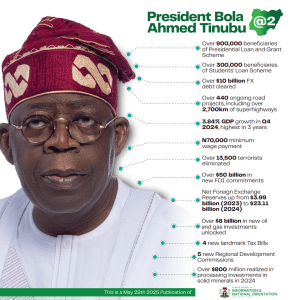
“The success of these measures hinges on the cooperation and collaboration of all relevant MDAs (ministries, departments and agencies) and stakeholders. As our nation confronts this critical food security challenge, I reiterate President Bola Tinubu’s unwavering commitment to achieving food security and ensuring that no Nigerian goes to bed hungry. My team and I will work swiftly and diligently to actualise these crucial policies, ensuring food security for everyone in the immediate term while continuing our strategies for long-term interventions to address underlying causes and ensure sustainable and resilient food systems in Nigeria. – Punch.