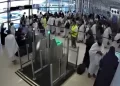
When everyone thought the end was near, the Comptroller General of Customs, Col. Hameed Ali (rtd), dashed the hope of many Nigerians recently when he reemphasised that opening Nigerian borders soon would not be possible.
This is despite the obvious pains the closure had cost Nigerians, especially business owners, who ply their trade using land borders. The main reason he gave while chatting with a group of freight forwarders bordered on the wave of smuggling and insecurity in the country.
The decision of government is in the right direction as it is long overdue. Considering frequent reports in the past of those claiming to be businessmen and women using the ‘freeway’ to smuggle arms and ammunition, rice, as well as hard drugs into the country, the import of the recent security upscaling is nothing but positive. While it remains a good decision, it is, however, disturbing that such sensitive and strategic steps are always taken without taking genuine stakeholders into confidence. As usual, the Federal Government triggered panic across the country, and even beyond with the way it suddenly ordered tighter security measures across all the land borders.
The initial impression that it was an outright closure was immediately dispelled by the Nigeria Customs Service (NSC).
This on its own is commendable considering the economic importance of some of the borders, even though they have also been used by criminal elements a number of times to intensify their underworld engagements. Although there are borders in every part of the country, the Nigeria–Benin Republic border at Seme is about the busiest and most popular arena for legitimate and non-legitimate business transactions in and out of both countries.
The closest to this is the neighbouring Idiroko border, which also connects to Benin Republic from the Ogun State axis. As important as the borders are to both countries, it is, however, on record that while Nigeria can hold its breath and survive for long with the restrictions, the same cannot be said of Benin, whose over 60 per cent of revenue generation depend mostly on activities around the border, until may be recently when the Federal Government of Nigeria trimmed it by banning importation of vehicles and rice through land borders. For record purpose, this is not the first time the Nigerian government would be closing some of its borders.
It had done so in the past the moment it was perceived that criminals were taking advantage of the free movement to perpetrate crime. Nigeria is bordered to the North by the Republics of Niger and Chad. It shares borders to the West with the Republic of Benin, while the Republic of Cameroon shares the eastern borders right down to the shores of the Atlantic Ocean which forms the southern limits of Nigerian territory. The about 800km of coastline confers on the country the potentials of a maritime power.
Today, the build-up of insecurity in the northern part of the country has been largely made possible by the near free passage enjoyed by citizens of countries like Niger and Chad Republics.
As important as it is to stem the rising tide of banditry by beefing up security at the borders, government’s failure in terms of engagement with stakeholders and genuine investors using the routes became evident just last week when it was reported that over 500 trucks laden with perishable items are currently held down at the border waiting for clearance that may not come soon.
Another faulty step to the situation is that of young Nigerians currently schooling in neighbouring countries. It was something sad not too long ago as they had to bribe and still go through bush paths before they could access their way into Benin Republic.
Unfortunately, and very disheartening as well is that our own end of security personnel positioned there are already becoming overzealous to the extent that Nigerians who were in Benin Republic before the restriction said they were subjected to all manner of humiliation either before being allowed to cross or were not allowed at all.
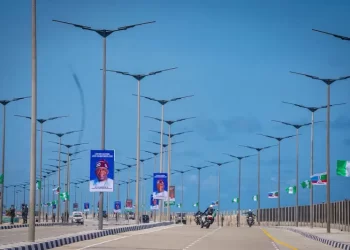
The situation also reflects some elements of surprise in the sense that the restriction order or security beef up as the case may be came just a few months after President Muhammadu Buhari and his Beninoise counterpart, Patrice Talon, unveiled a state-of-the-art complex built by both countries to ensure close monitoring of movements in and out of both countries. The question here is if the multimillion naira complex is not enough to guarantee the decorum and security needed around there, so why invest so much only to turn around to make life difficult for all.
Why we appreciate government resolve to put an end to widespread insecurity across the country, we, however, believe certain measures could be taken without necessarily disrupting a whole system like what has been done to genuine investors in and around some of these border locations. We also advise that the Federal Government, by now, should invest in high tech equipment to monitor the border instead of relying on manual policing by security agents.