The Federal Government yesterday said it has no immediate plans to increase tax rates as earlier speculated in some quarters even as it said high net worth individuals will have to pay more taxes.
The government also said the previously approved luxury taxes would be implemented fully and consumers of luxury products like private jets, and more should brace up to pay more in taxes.
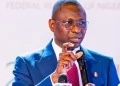
The Minister of Finance, Mrs. Zainab S. Ahmed, stated this yesterday, in Abuja at the quarterly press briefing. “We are not increasing tax rate; we are increasing tax collections by expanding the tax base,” she said, adding that the government is even likely going to reduce taxes to the lower level of businesses – the MSMES. She however noted that has to be approved by the economic management team and the National Assembly.
“But we will do everything possible for high network individuals to pay the right amount of taxes. We will also implement the special luxury taxes that were already approved but not implemented,” the minister assured.
The minister also noted that whilst revenue performance has improved, it is still not meeting set targets “thus warned revenue generating CEOs to up their game or face the consequences.
Whilst this year’s revenue performance presents an improvement from last year, with a recorded increase of 40 percent as at the end of the third quarter of 2018, this performance is unsatisfactory to our administration when compared with the targets that we set out to achieve with an overall revenue outturn of 53 percent in the same period,” she noted.
Thus she said the heads of government agencies would be held responsible for revenue set targets. “That means, there will be consequences for failure to meet revenue targets,” she warned. Mrs. Ahmed noted that in 2018, despite revenue shortfall government was been able to pay salaries and service debts 100 percent even as she warned MDAs against funding elections.
“We released seven months overhead funding, and N995bn Capital releases by 21st December 2018. We plan to perform better during the rest of the budget year by driving up revenue generation to improve the fiscal space for spending,” she promised.
“We have adopted a prudent debt management strategy that ensures that we invest what we borrow in capital projects. Although our debt of 18.4 percent of GDP as at June 2018 is at a sustainable level and particularly low when compared with our peers, the debt service to revenue ratio is unsatisfactory to our administration,” she noted. “There will be consequences if agencies leak monies to fund elections” she warned.
According to her, in 2018, despite the revenue shortfall government was “been able to pay inherited debts and liabilities which this administration received in 2015, These debt and liabilities include: Paris Club over deductions, $5.4 billion; Joint Venture (JV) Cash Call, $6.8 billion; Contractor/Export Expansion Grant (EEG), N1.9 trillion and refund to states for roads; N488 billion.”
According to the minister, as part of efforts to raise more revenues, government plans to launch “project lighthouse that seeks to use big data analytics to provide intelligence to the tax authority on eligible tax payers and their real taxable incomes and assets.”
On infrastructure, she said as a part of effort to bridge the infrastructure deficit, government embarked on infrastructure development across the country with the establishment of the Presidential Infrastructure Development Fund (PIDF) in February 2018 under the management of Nigerian Sovereign Investment Authority (NSIA).