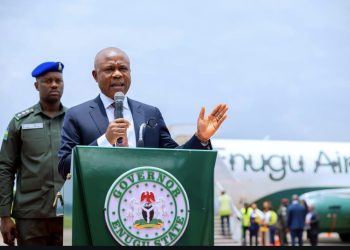
Enugu State Government has unveiled plans to build a 660MW coal-fired power plant in the state, starting from July this year, as part of Governor Peter Mbah’s administration’s strategy to actualise its vision to grow the state’s economy from $4.4 billion to $30 billion.
This was even as the Organised Private Sector Nigeria (OPSN), an umbrella body for Nigeria Employers’ Consultative Association (NECA); Manufacturers Association of Nigeria (MAN); Nigerian Association of Small-Scale Industrialists (NASSI); Nigerian Association of Small and Medium Enterprises (NASME), and the Enugu Chamber of Commerce, Industry, Mines and Agriculture (ECCIMA) endorsed the governor for a second term in office.
They said he had made them proud as a private-sector player himself through his outstanding leadership, which had “strengthened confidence in Enugu as an emerging destination for investment, commerce, enterprise development, and living.”
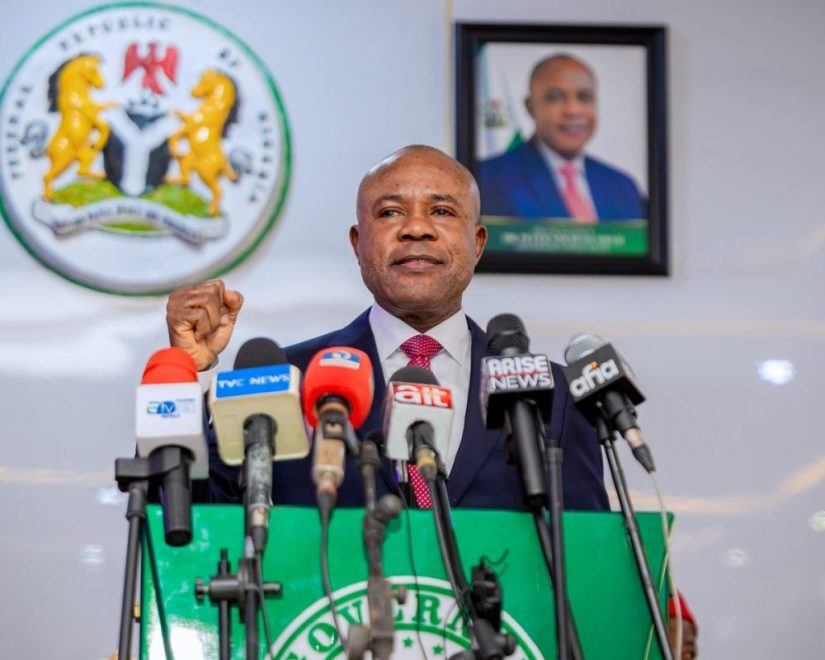
Mbah spoke during a solidarity visit by OPSN, Enugu State, to him at the Government House, Enugu, yesterday.
Mbah recalled that Enugu State, under his leadership, was the first subnational to set up an electricity market, following the Constitution and Electricity Act amendments that effectively transferred power from the Exclusive List to the Concurrent List, thus paving the way for states to participate in all the power value chain, namely generation, transmission, and distribution.
He said: “But we have gone beyond just setting up the electricity market to now producing the electricity here. I am pleased to inform you that in July, we will break ground for a 660MW coal-fired power plant.
“The outlay in terms of time for building the plant is 24 months. So, our target is to commission that power plant 24 months after the groundbreaking in July.”
The governor allayed concerns normally associated with coal, citing the low sulfur content and high calorific value of Enugu coal, standing at about 7,000 kilocalories per kilogramme.
He said the project was not a knee-jerk decision, as his administration had taken about two years to undertake the necessary studies and also secure coal assets to guarantee unhindered supplies to the plant.