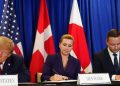
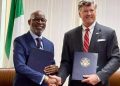
THE Federal Government’s desire to make a first degree the minimum qualification for teaching in primary schools in Nigeria is at odds with the realities on the ground. The Minister of Education, Ibrahim Shekarau, dropped this hint recently while interacting with Finland’s Ambassador to Nigeria, Pirjo Chowdhury. The ambassador had told his host that a master’s degree was the basic qualification for teaching in his country, regarded globally as one of the Disney lands of quality education.
Perhaps, in an attempt to impress his august visitor, our minister wrote off the National Certificate in Education, Nigeria’s minimum qualification for teaching. To actualise this new goal, the minister said an educational summit would be convoked soon for all the stakeholders to X-ray the idea. But Nigeria is not Finland.
Over the years, the Federal Government has been changing minimum teaching qualifications, an act ostensibly geared towards improving standards. In the 1980s, the NCE was adopted as the national minimum; thus, phasing out the Teacher’s Grade II certificate. The latter had replaced Standard Six (primary school) certificate, whose holders were employed between the 1930s and 1950s.
Ironically, it is beyond question that the quality of output was better when the Standard Six and Teacher’s Grade II certificates of old held sway. If the NCE, which sprang from the Advanced Teachers Training Colleges, pioneered by UNESCO in 1963 when it set up the Alvan Ikoku College of Education, Owerri, is now irrelevant in our system, Shekarau should then realise that the problem lies not in paper qualification, but in the systemic collapse of our educational system.
In all the states, anomalies such as dilapidated classrooms, unqualified teachers, explosion in school enrolment, poor and non-payment of teachers’ salaries and disregard for the inspectorate division beset basic education. Holders of NCE were initially programmed as middle-level manpower for secondary schools, having studied two teaching subjects taught at this level. Their sudden deployment to primary schools, therefore, was not in accord with their training and orientation. It was a policy that laid the foundation of the present rot at the basic school level.
The same dysfunction, if not greater, will continue to plague the system if degree holders take over. An education graduate teacher, like an NCE holder, studied two teaching subjects, dropped one after the second year, and was never exposed to primary school curriculum. The idea of degree holders as misfits in primary school classrooms was eloquently illustrated in the performance of 2,628 of them in Primary Four arithmetic test in 2008, conducted by the Kwara State Government. Out of this figure, only one graduate passed, while 10 scored zero in this competence exam.
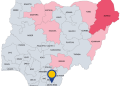
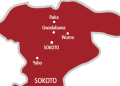
In coming out with this proposal, Shekarau may have been oblivious of a survey carried out by the Federal Government in 2010, which showed that a total of 207,818 unqualified teachers were identified in primary schools across the country. It was discovered that unqualified teachers in the North-East region constituted 57.7 per cent of the teacher population, while the North-West had 46.8 per cent, North-Central 38 per cent, South-South 19.2 per cent, South-East 16.7 per cent and South-West 6.7 per cent. These unqualified teachers are yet to obtain the NCE, which Shekarau wants replaced or without even the Teacher’s Grade II certificates. Where Sokoto State is in this huge mess puts the crisis in bold relief. According to Mohammed Moddibo, the then Executive Secretary of Universal Basic Education Commission “…more than 50 per cent of the entire teachers in the state cannot read…”
Faulting the Shekarau initiative, Olu Akeusola, a professor and Provost, Michael Otedola College of Primary Education, Epe, Lagos, said, it was bound to fail as it did in 1990s when it was first mooted. He advocated a return to the basics: training colleges producing Grade II teachers, whose products would feed colleges of education. He said, “They failed to realise that education is like a pyramid, which is wider at the bottom.” Ladipo Adamolekun, another professor, chaffed at the envisaged order and raised a poser: “Why are primary school pupils not taught by school certificate holders like we were in the 1960s who were better educated than most university graduates of today?” Our government loves chasing shadows while leaving the substance.
Now, if the government is misled by Shekarau’s idea, it means that all the 65 Colleges of Education, (federal 21 and 44 state-owned) in the country will be forced to become degree-awarding institutions. This is in addition to the 138 universities Nigeria now has with the Federal Executive Council’s recent approval of nine new privately owned ones. Instructively, most university degrees here have become a worthless piece of paper. If universities have not succeeded in closing the quality gap they have, with their failure to make each academic a PhD holder, the quality of the degree teachers to be mass-produced for primary schools is better imagined.
Sadly, UNESCO has the most awful picture for us: Nigeria has the worst education indicators globally among 37 countries that lose $129 billion annually, due to what it regards as “education without learning.” The affected countries are drawn from sub-Saharan Africa, Asia and Latin America. It gave this grim fact during the launch of Education For All, Global Monitoring Report in Abuja, in January 2014.
Since 1999, UBEC has been used as an intervention platform to ameliorate the condition of primary education in the country. Yet, many states still cannot access their share as they fail to meet due process requirements that guarantee judicious utilisation of such funds.
Altering this landscape and other identified challenges are basic to reforming basic education, not putting the cart before the horse, which the proposed plan for degree holders to take over of primary school teaching, typifies.