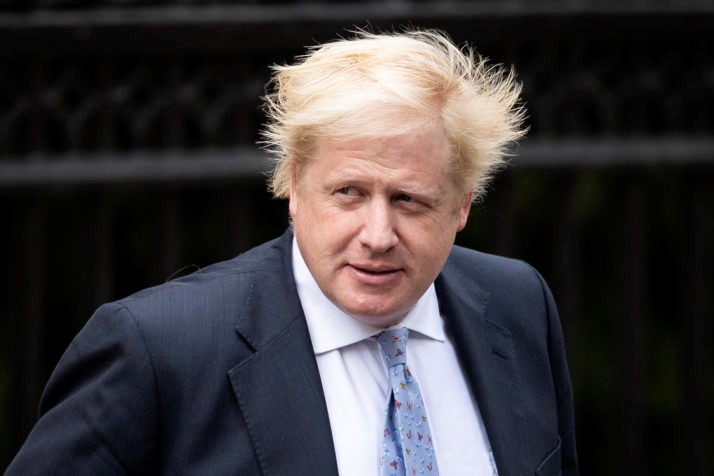
Prime Minister Boris Johnson will ask the European Union to rule out further delay of Brexit, The Times newspaper has reported. And the Irish broadcaster RTE has reported that his government plans to propose a number of customs posts on both sides of the border between the Republic of Ireland, which will remain an EU member, and Northern Ireland, which will leave the European Union with the UK as soon as October 31.
Proponents of an arrangement to keep the border open on Ireland consider it essential in order to honour the 1998 Good Friday Agreement — a fragile peace deal that put an end to a decades-long conflict in the UK territory of Northern Ireland. Border checkpoints were the frequent targets of attacks by republican groups.
Brexiteers say keeping the border open until an agreement is reached would further bind the UK to the EU in an indefinite customs arrangement. And the border has proved a key stumbling block in the negotiations between the EU and successive British governments.
Johnson would situate his proposed customs checkpoints several kilometres back from the real border, and officials would track the goods registered until they reach the other side, according to RTE. The reported proposal will not likely satisfy critics as it appears to merely move border controls rather than avoid them in a place where no such checks currently take place. Late Monday, Ireland’s foreign minister already wrote on Twitter that the idea was a no-go.
Johnson, who took over as Conservative leader and prime minister from Theresa May two months ago, has vowed that Britain will leave the European Union on the scheduled date of October 31 with or without a deal governing future relations with the bloc.
His foes in Parliament, who include some long-time members of his own party, have worked to avoid a no-deal exit, which economists say would disrupt trade with the EU and plunge Britain into recession. Legislators have already passed a law that compels the government to seek a delay to Brexit if it can’t strike a deal with the European Union by October 19. – DW.