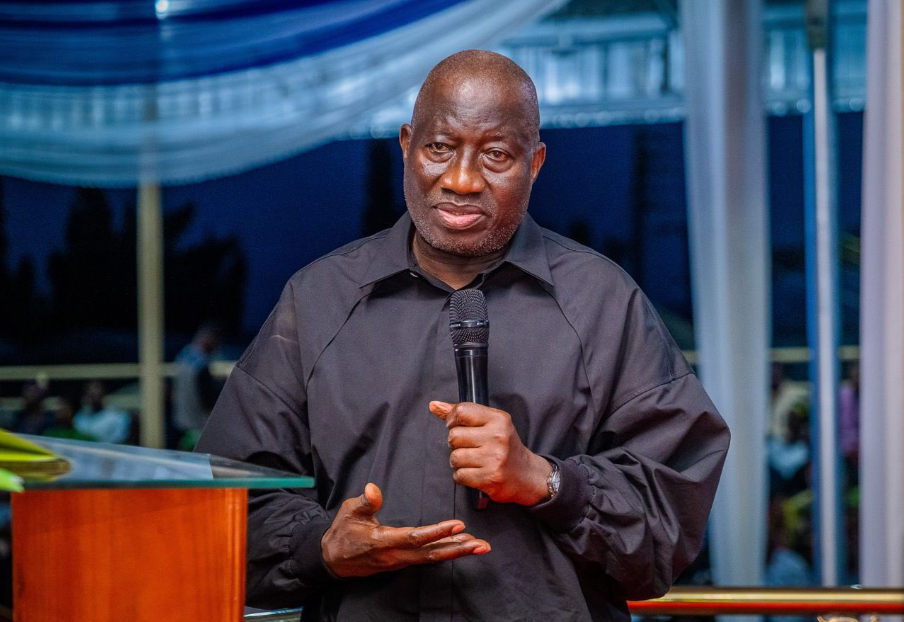
Ex-President Goodluck Jonathan on Saturday lamented what he described as the growing normalisation of insecurity, killings and violence in Nigeria, warning that the country is gradually losing its moral values and sense of humanity.
Jonathan spoke at the Anglican Diocese of Abuja’s first session of the 13th Synod in Abuja.
In his goodwill message, Jonathan called for national reflection, spiritual renewal and responsible leadership amid the country’s worsening social and security challenges.
According to him, many Nigerians have become desensitised to bloodshed and destruction, unlike in the past when tragic incidents provoked national outrage and collective grief.
He said, “As someone who has spent many years in public life and politics, I must confess that moments like this provide an opportunity for sober reflection on the state of our society.
“When we look around today, particularly at the challenges confronting our country, it is easy to become discouraged. Violence, insecurity, moral decline, and the loss of human values have become deeply troubling realities.
“What is even more painful is how society sometimes appears to normalise these tragedies as though they are ordinary occurrences. In times past, such incidents would shake the conscience of the nation.
“Today, people are killed, communities are destroyed, and life seems to continue as though nothing has happened. This ought not to be so. It is a reminder that society desperately needs moral direction, spiritual guidance, and a restoration of values.”
The former President emphasised that the Church remains crucial in shaping society and upholding moral standards, urging religious leaders to continue speaking the truth and defending righteousness.
He also warned about the growing influence of negative values through technology and modern information systems, saying many harmful behaviours are now glorified in society.
“That is why the role of the Church remains indispensable. The Church must continue to stand as the conscience of society, speaking truth, defending righteousness, and shaping lives through faith and godly example.
“The influence of modern technology and information systems, though beneficial in many ways, has also contributed to the spread of negative values where wrong is sometimes celebrated more than good. This is not the future we should desire for our children and generations yet unborn,” he added.
“Permit me to also say that leadership matters greatly in moments like this. Society progresses when men and women of integrity, courage, and vision stand in the right places and speak the truth. We must continue to pray for our leaders, encourage one another, and work collectively for peace, justice, and national renewal,” Jonathan said.
Also speaking, former Primate of the Church of Nigeria (Anglican Communion), Peter Akinola described the conference as both symbolic and strategic, particularly at a time when the global Anglican Communion is confronting what he called a “revisionist agenda.”
Akinola said the gathering had continued to leave lasting memories and impact within the Anglican community years after it was held.
He also expressed satisfaction that foreign delegates who attended the conference left Nigeria with a positive impression of the country despite what he described as negative portrayals by sections of the international media.
“It is evident that our foreign delegates departed with a far better impression of Nigeria, contrary to the negative narratives often projected by sections of the foreign media about our beloved nation.
“I remain proud of this achievement and urge you all to keep up the good fight of faith,” he stated.