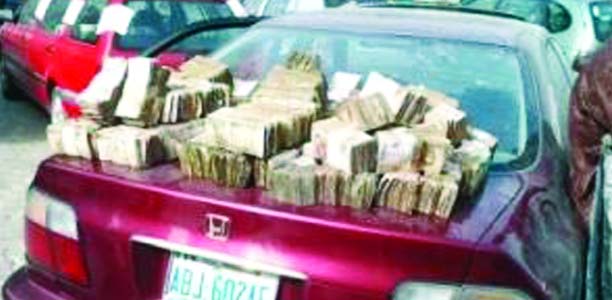
The financial relief that came the way of states last week is a well-intentioned intervention by the Federal Government to help them meet their outstanding obligations, especially arrears of workers’ salaries. President Muhammadu Buhari approved the release of $2.1 billion (N413.7bn) for sharing between the states and local governments from recent taxes and dividends paid into the Federation Account by the Nigeria Liquefied Natural Gas (NLNG). He also ordered the Central Bank to package N300 billion soft loans for the insolvent states, and the Debt Management Office (DM0), to help with the restructuring of their loans. This is with a view to spreading their debt repayment obligations, to reduce the strain on their diminishing allocations from the Federation Account. Accruals to the states from this account have been on the decline for many months now on account of the crash in the price of crude oil, which is Nigeria’s main revenue earner.
However, the objective of this financial intervention will be defeated if the lessons of the current insolvency of the states are not learnt and acted upon. These lessons include the need to check financial recklessness, which has sadly become the norm in many states. There is also the need to ensure prudent management of state resources, development of their economies and reduction of their dependence on monthly allocations from the Federation Account.
In managing these fresh funds, financial discipline is very important. We urge the state governors to use the new funds judiciously. The money should not be seen as a gift to be frittered away. At least 22 states of the Federation are in arrears of workers’ salaries, ranging from two to ten months. This necessitated last month’s emergency meeting by State Governors under the aegis of Nigeria Governors’ Forum (NGF). The forum had urged President Buhari to come to the rescue of the states. And, the President has done exactly that. The onus is now on the states to ensure that they use the relief package for the intended purpose, which is to pay the salaries owed their workers, and ensure that they stay clear of insolvency, henceforth.
Interestingly, the bailout package has unleashed a raging controversy on the propriety of the president giving bailouts to states that had likely been irresponsible in the management of their finances. The initial report that the relief package was sourced from the Excess Crude Account (ECA) also attracted flaks from the opposition Peoples Democratic Party (PDP) and other Nigerians. It is, however, now clear that the money is not from the ECA as speculated.
The planned restructuring of the N660 billion commercial debts owed by the states, which will spread their repayment tenures, is a two-edged sword. It will reduce their debt servicing expenditures, but spread the loan repayments over a longer period, thereby effectively eating into funds that will be available for the future administration of the states.
Altogether, while the bailout may not be enough to clear all the arrears of workers’ salaries, it should go a long way in reducing their distress. It is, indeed, a step in the right direction, and it is good that it did not involve any external borrowing.
It is, however, high time the state governments became more proactive and effective in generating revenue internally. They should strive for financial independence from the Federal Government. A situation in which states rely on Federal Government handouts to meet their obligations is unacceptable. It negates the argument for the creation of more states, and even the continuing existence of some of the current ones. The development of the economies of the states has become even more imperative than ever.
The argument has been made in some quarters that the Federal Government should have left the insolvent states to bail themselves out or be drowned in their debts. But, we believe that the Federal Government has a responsibility to facilitate succour for distressed Nigerians, wherever they are in the country. Non-payment of workers’ salaries had become a huge problem for workers in the affected states and the president was right to intervene on their behalf. However, the state governors should, henceforth, shun profligacy. The federal and local governments will also be wise to take the same advice.
Therefore, prudence, financial discipline, plugging of leakages, effective utilisation of resources and prioritisation of projects should be hallmarks of the administration of the states. They also need to invest in productive sectors of the economy that can yield dividends to buoy the states’ finances during periods of financial crisis such as they are currently facing.
Altogether, this is the time to reappraise Nigeria’s entire financial profile, to avoid over-borrowing and over-dependence on oil revenue. The country and its constituent parts must aim for self-sustenance and fiscal management that is consistent with current economic realities. All of these may not be achieved overnight, but this is the time to re-think the management models that brought the states to this sorry situation.