- Nigerians should rise against the law seeking to annihilate media practice and free speech now before the House of Reps
The bills to amend the Nigerian Press Council (NPC) Act, and the National Broadcasting Commission (NBC) Act sponsored by Mr. Olusegun Odebunmi, chairman, House Committee on Information and Orientation, can be mistaken for an anti-press law in a military regime. Short of recommending death sentence for offenders, the bills seek to criminalise and make free press a dangerous enterprise. For instance, the proposed Section 33(1) of the NPC Act makes it an offence to own, publish or print a newspaper, magazine or journal, without documentation with the council, and provides N5 million fine or a jail term of three years or both, as penalty.
Conversely, Section 39(1) of the 1999 Constitution (as amended) provides that: “every person shall be entitled to freedom of expression, including freedom to hold opinions and to receive and impart ideas and information without interference.” Sub-section 2 thereof provides for regulation of television or wireless broadcasting, while sub-section 3 allows for any law that is reasonably justifiable in a democratic society, for preventing information received in confidence, maintaining the independence of court, or regulating telephone, wireless broadcasting, television or cinematographs.
The further allowable restriction is upon persons holding office in government, members of the armed forces or other security agencies. So, we wonder why the proposed NPC bill seeks to appropriate the constitutionally guaranteed rights of Nigerians and hand same over to the President, the Minister in charge of information and the NPC. We join other well-meaning Nigerians to declare the bill a dangerous gambit, and urge that it be withdrawn in the interest of our constitutional democracy.
A cursory examination shows that several other proposals in the bill are in contradiction to the rights guaranteed by the Constitution. The proposed Section 3(1) seeks to give powers to the council “to regulate the print media and related media houses; to ensure truthful, genuine and quality services by print media houses and media practitioners; with the approval of the minister in charge of information, establish and disseminate a national press code and standards to guide conduct of print media, related media houses and media practitioners.”
Its sub-paragraph “d” seeks to grant powers to the council to “approve penalties and fines against violation of the press code by print media houses and media practitioners, including revocation of licences” while sub-paragraph “e” seeks powers to “receive, process and consider applications for establishment, ownership and operation of print media and other related media houses.” In sub-paragraph “f” it provides “with the approval of the minister, grant print media and other related licences to any application considered worthy of such.”
ADVERTISEMENT
In the proposed Section 9, the council is empowered to “establish a National Press and Ethical Code of Conduct for media houses and media practitioners, which shall come to effect and be disseminated after approval by the Minister.” Furthermore, in the proposed Section 16(2), a complaint against the council shall be submitted in writing to the executive secretary, who is empowered to determine the veracity of the complaint.
So, while empowering the council to become a quasi-judicial body, the bill also seeks to appropriate the powers of court provided in Section 6(6)(b) of the Constitution.
The proposed fines and penalties are draconian and mendacious. Where a publication is considered blameworthy by the council, it can ask for a suitable apology, and if ignored, it can impose a fine of one million naira on the body corporate or N250,000 on the journalist, in addition to suspending the journalist from practice for six months.
Furthermore, in Section 33(3), any person who carries a report which is established to be fake commits an offence and, upon conviction, shall pay N5 million fine or a jail term of two years, in addition to N2 million compensation to the victim. For the media house used to print the fake news, the fine upon conviction is N10 million, in addition to N20 million compensation to the victim.
From the foregoing, it appears that those behind the proposed bill are not only determined to annihilate press freedom, they also desire to kill the institution as a business. Coming from someone with no training in journalism or rich experience in business management, according to media reports, this is not surprising. Perhaps the surprise is what informed Mr. Odebunmi’s appointment as chairman of the House Committee on Information and Orientation.
If the intention is to regulate the excesses of the press, there are enough laws in our statute books to deal with bad press, which include the law of criminal and tortious libel. We also doubt if Mr. Odebunmi and his sponsors ever spared time to look at the provision of Section 22 of the Constitution.
That section provides that the press, radio, television and other agencies of the mass media should be free “and uphold the responsibility and accountability of the government to the people.” How can they do that if the proposed bill succeeds?
Indeed, we wonder why the Minister of lnformation should be involved in the affairs of the council. After all, it is not a government parastatal. The council was set up by the Nigerian Press Organisation (NPO) comprising the Newspaper Proprietors Association of Nigeria (NPAN), the Broadcasting Organisations of Nigeria (BON) and media stakeholders like the Advertising Practitioners Council of Nigeria (APCON). No attempt should therefore be made to make it an extension of any government department or ministry.
Indeed, why the sponsors of the bill seek to regulate journalism in a manner not even law and medicine are, is strange. Neither the Minister of Justice and Attorney-General of the Federation nor that of health has any role in the institution of the regulatory bodies of those professions. So, the proposal to grant the Minister of Information and Culture enormous powers in the bill at once gives it away as a government project to stifle free press. If for whatever reason the minister must have a role in the affairs of the council, it should not go beyond communicating the council’s decision to him just for his information.
Governments in the United Kingdom and the United States have little or no role in the press council. Indeed, ARTICLE 19, a global campaign for free expression says specifically: “In the United Kingdom, the print media is essentially self-regulatory. There is no statutory press council, no statutory complaints body and no requirement that journalists be registered or belong to any particular association. There is, however, a body established by newspaper bodies themselves, the Press Complaints Commission.” The only transformation that can happen to the NPC therefore has to be from within and by the professionals, not by the government.
Moreover, as business organisations, media outfits are registered by the Corporate Affairs Commission (CAC). Their trading names are equally registered by the Federal Ministry of Industry, Trade and Investment. Furthermore, the National Library of Nigeria approves a newspaper’s name by issuing it with an International Standard Serial Number (ISSN), an eight-digit serial number used to uniquely identify a serial publication. Any newspaper without an ISSN operates illegally. It is therefore an overkill to saddle the council with the duty of granting newspapers approval to operate. Just as it has no business registering journalists or granting them permit to function.
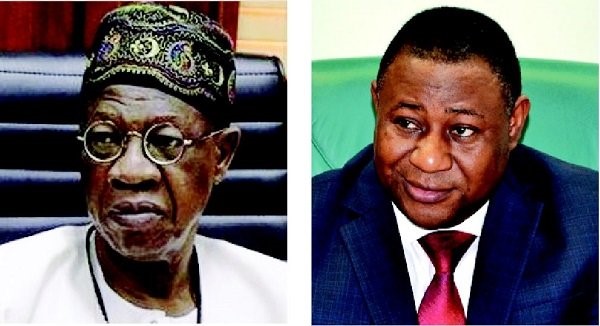
It is unfortunate that the Minister of Information and Culture, Mr. Lai Mohammed, who, as spokesperson of the All Progressives Congress (APC) while in opposition enjoyed untrammelled freedom of expression, finds nothing reprehensible in these bills. Instead, he even made a case for the inclusion of some areas not envisaged by the sponsors of the bills. Yet, the Presidency is dissociating itself from it, saying it is not its affair but that of the Federal Government, therefore, enquiries on it should be directed at the information minister! We do not see the difference between them. This is tragic indeed.
We urge the House of Representatives and Nigerians to reject these authoritarian laws. Not even in the military era did we have such a draconian law which definitely is bad for democracy and even injurious to the country’s well-being. It presupposes that those in government will always take decisions in the best interest of the country. Nothing can be more fallacious.