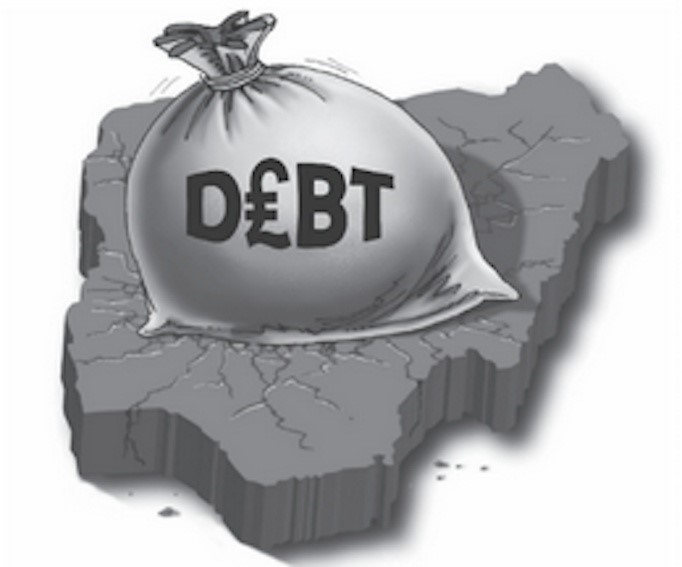
Nigeria spent a total of N13.12tn on debt servicing in 2024, representing a 68 per cent increase from the N7.8tn recorded in the previous year, according to an analysis of fresh data from the Debt Management Office.
The debt servicing costs recorded in 2024 surpassed the budgeted allocation of N12.3 tn for the year.
The higher-than-expected expenditure highlights the increasing pressure of debt obligations on the nation’s fiscal sustainability.
For the 2025 budget, the Federal Government has earmarked N16.tn for debt servicing, reflecting the government’s anticipation of continued debt-related expenses.
This development comes amid rising borrowing costs and an increasing debt burden, putting pressure on the country’s fiscal position.
It was learnt that the domestic debt service cost for 2024 stood at N5.97 tn, reflecting a 14.15 per cent rise from the N5.23 tn recorded in 2023.
The significant increase is attributed to higher interest rates and increased domestic borrowing.
On the external front, Nigeria spent $4.66bn (equivalent of N7.15tn at an exchange rate of N1,535.32/$1), marking a sharp increase of 167 per cent from N2.57tn recorded in 2023.
The surge in external debt servicing costs is linked to rising global interest rates and the depreciation of the naira, which has made dollar-denominated debt more expensive to service.
The breakdown of the data indicates that domestic debt continues to account for a significant portion of the country’s debt servicing expenses, despite the steep increase in external debt service costs.
Nigeria’s domestic debt service for 2024 rose by 36.27 per cent to approximately N5.97 tn, compared to N4.38 tn in 2023.
This represents a significant increase of about N1.59 N1.59tn, highlighting the growing burden of debt servicing on the country’s fiscal position.
Data from the Debt Management Office showed that the bulk of the domestic debt service in 2024 was attributable to Federal Government Bonds, which accounted for N4.69 tn, representing about 78.59 per cent of the total debt service.
This marks an increase from N3.66 tn in 2023, indicating a rise of about N1.03 tn or 28.2 per cent.
The dominance of FGN Bonds in the domestic debt service profile highlights the government’s reliance on long-term debt instruments to finance its budgetary obligations.
Nigeria Treasury Bills contributed N747.15bn to the total domestic debt service in 2024, compared to N326.12bn in 2023.
This represents an increase of about 129 per cent, signifying a substantial rise in the interest burden from short-term borrowing instruments.
Other notable contributions to the debt service included the Federal Government Savings Bonds and FGN SUKUK Bonds, which recorded interest payments of N6.38bn and rentals of N158.43bn, respectively.
The FGN Green Bonds recorded a debt service of N2.18bn, consistent with the previous year.
Promissory note principal repayments also grew significantly, with N265.86bn recorded in 2024 compared to N277.16bn in 2023.
This represents a marginal decline of 4.08 per cent, indicating a reduction in the redemption of promissory notes.
Domestic bondholders emerged as the biggest beneficiaries of debt servicing payments, reflecting the government’s commitment to honouring obligations on long-term securities.
Analysis further showed that Nigeria’s external debt service for 2024 rose significantly to $4.66bn, compared to $3.50bn in 2023.
This represents a year-on-year increase of approximately 33 per cent or $1.16bn. The increase reflects a rising debt burden amid Nigeria’s ongoing efforts to manage its external obligations.
Data from the Debt Management Office shows that the bulk of the external debt service in 2024 was paid to commercial creditors, with a total of $1.47bn.
This category includes Eurobonds, which alone accounted for $1.15bn, representing about 78.5 per cent of the total commercial debt service.
The second-largest category was multilateral creditors, amounting to $2.62bn.
The largest chunk within this category went to the International Monetary Fund, which received $1.63bn, representing about 62.2 per cent of the total multilateral debt service.
The International Development Association of the World Bank followed, with payments totalling $663.23m.
Other multilateral creditors, including the African Development Bank and the International Bank for Reconstruction and Development of the World Bank, also featured prominently.
Bilateral creditors were the third-largest group, with a total debt service of $570.67m. The Exim Bank of China received the most in this category, amounting to $362.60m, representing about 63.5 per cent of the bilateral payments.
Other bilateral creditors included France’s Agence Française de Développement with $66.45m and Germany’s Kreditanstalt für Wiederaufbau with $35.91m.
An analysis of the year-on-year movement reveals that commercial debt service payments surged by 23.7 per cent from $1.93bn in 2023 to $1.47bn in 2024.
Multilateral debt service, however, saw a more substantial increase of 112.4 per cent from $1.23 bn in 2023 to $2.62 bn in 2024.
Bilateral debt service remained relatively stable, increasing marginally from $344.57m in 2023 to $570.67m in 2024.
Commercial creditors, particularly those holding Eurobonds, emerged as the biggest beneficiaries of Nigeria’s external debt service payments, reflecting the high cost of servicing commercial loans.
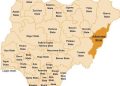
The external debt stock of the 36 states and the Federal Capital Territory fell to $4.80 bn as of December 31, 2024, from $4.61 bn recorded at the end of 2023, indicating a decrease of $0.19 bn or 4.12 per cent year-on-year.
This reduction highlights subnational efforts to manage external debt obligations amid rising global interest rates and economic uncertainties.
Data from the DMO shows that Lagos State, despite a reduction in its external debt, remains the highest debtor among the states.
The state’s debt fell from $1.24bn in 2023 to $1.17bn in 2024, a decrease of $0.07bn or 5.99 per cent.
Lagos accounts for approximately 24.37 per cent of the total subnational external debt, maintaining its position as the most indebted state.
Kaduna State follows as the second-highest debtor, with its external debt increasing from $0.59bn in 2023 to $0.63bn in 2024, reflecting a rise of $0.04bn or 6.48 per cent.
Edo State recorded the third-highest external debt among the states, with an increase from $0.31bn in 2023 to $0.38bn in 2024, representing a rise of $0.07bn or 21.85 per cent.
In contrast, Jigawa State reported the lowest external debt, dropping from $25.80m in 2023 to $23.34m in 2024, a decrease of $2.46m or 9.53 per cent.
Yobe State also recorded one of the lowest external debts, declining marginally from $21.49m to $19.73m, indicating a decrease of $1.76m or 8.19 per cent.
Other states that recorded notable reductions include Enugu, whose external debt fell from $120.45m to $87.05m, a decline of $33.4m or 27.74 per cent.
Akwa Ibom also saw its debt decrease from $42.61m to $35.56m, reflecting a reduction of $7.05m or 16.55 per cent.
However, Rivers State’s external debt stock increased significantly from $80.94m in 2023 to $199.58m in 2024, indicating a rise of $118.64m or 146.62 per cent.
With debt servicing now consuming a significant portion of the national budget, experts have called for more aggressive revenue mobilisation and strategic debt management to mitigate the fiscal risks associated with rising debt obligations.
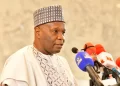
However, despite the increase in the country’s debt, Vice President Kashim Shettima has assured Nigerians that the Federal Government is borrowing less than it used to.
Shettima made this assertion over the weekend in Abuja during an event organised by the Association of National Accountants of Nigeria and the Chartered Institute of Taxation of Nigeria.
The Vice President, who was represented by the Special Adviser to President Bola Tinubu on Economic Affairs (Office of the Vice President), Dr Tope Fasua, stated that the government’s borrowing strategy is gradually being restructured to reduce the debt burden.
He noted that despite recent borrowings that stirred controversy, Nigeria is now on the path of borrowing less while aiming to reduce the budget deficit progressively.
Addressing stakeholders at the Joint National Budget Workshop 2025, Shettima emphasised that the N13trn budget deficit in the N55trn national budget for 2025 represents 23.6 per cent, the lowest in years.
He said the current administration is focused on working down deficits and moving away from low-value, unproductive borrowings.
Shettima explained that although borrowing remains a necessary tool for financing critical infrastructure, the government is keen on exploring other financing options, including public-private partnerships and organic revenue generation.
According to him, the government’s plan is to gradually take Nigeria off unsustainable borrowing, particularly those with low returns on investment.
He acknowledged that the government cannot suddenly cut off borrowings due to existing financial commitments and infrastructural needs.
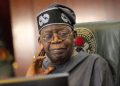
However, he stressed that recent reforms initiated by President Bola Tinubu are yielding positive outcomes, particularly in reducing waste and ensuring that borrowed funds are directed toward productive ventures.
He said, “Despite the hoopla generated in the media around recent borrowings, some of which had been in the works for years, the reality is that Nigeria is borrowing less and less, and the Coordinating Minister of the Economy, Mr Wale Edun, did say recently that Nigeria would be looking at reducing the debt burden in a structured fashion.
“That is the thinking of the government, even though we cannot suddenly wean the country off the different combinations of financing options for obvious reasons.”
Shettima also highlighted that the Tinubu administration’s reforms have encouraged states to adopt more responsible fiscal policies, with many states deciding not to borrow to fund their 2025 budgets.
He said, “Because of the major reforms embarked upon by President Bola Ahmed Tinubu, all of our states have stated unequivocally that they shall not be borrowing to fund their budgets this year, and more than 15 have doubled their budgets year on year from 2024 to 2025.”
Shettima expressed optimism that maintaining the current trajectory for the next few years would result in improved macroeconomic indices, including lower poverty rates, a stronger industrial sector, reduced inflation, and robust economic growth.
While acknowledging the challenges, Shettima reiterated the government’s commitment to prudent fiscal management, adding that Nigeria’s budget must continue to deliver for the people by reducing leakages and wastages. He called for continued dialogue among stakeholders to achieve a more efficient budgeting process that aligns with national development goals.