All suspects should be taken through the due process of law
Increasingly, many Nigerians are taking the law into their hands and delivering ‘instant’ and brutal justice without recourse to the law. What compounds the problem is that even those who are meant to ensure consequences for those who engage in jungle justice are also involved in perpetrating this sordid act. Last Sunday, mene Ogidi, 28, was executed by a police officer in Effurun, Delta State. The incident, which later went viral, showed a police officer named Nuhu Usman, an ASP, shooting Ogidi in the public glare, despite explanations and plea. Ogidi, an artiste, whose junior brother also died in police custody in the past, was allegedly delivering a waybill package containing a weapon.
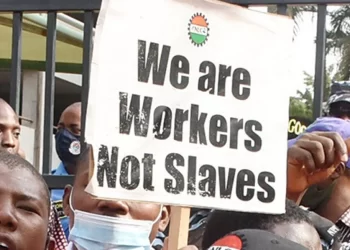
Expectedly, the killing triggered a public outrage across the country, with residents staging protests and calling for justice. Head of Protocol and Public Affairs for the Chairman, Police Service Commission, Torty Njoku Kalu, said the act violated Nigerian laws and international humanitarian standards. “Let me be clear: this action was criminal, it was unprofessional, and it has no place in the Nigeria Police Force,” the Inspector-General of Police (IGP), Olatunji Disu, affirmed. The police officer has accordingly been dismissed and is awaiting prosecution.
Meanwhile, the killing of Ogidi came a day after a serving member of the National Youth Service Corps (NYSC) Abdulsamad Jamiu was brutally murdered by troops of the Guards Brigade Quick Response Group “in a crossfire.” They were reportedly responding to a distress call over an armed robbery incident at Shagari Estate in Dei-Dei, an Abuja suburb. The military personnel involved were to admit later that the fatal shooting was a mistake. That was a very costly mistake. Section 33(1) of the Constitution provides that every person has a right to life, and no one shall be deprived intentionally of his life, “save in execution of the sentence of a court in respect of a criminal offence of which he has been found guilty in Nigeria”.
The greater focus, of course, is on the police with fresh debates regarding the brutality of some of their personnel and the need for reform. Five years after the ‘EndSARS’ protests and the forced disbandment of the notorious Special Anti-Robbery Squad (SARS), not much has changed within the nation’s police force. Reports of extortion, brutality, arbitrary arrest and detentions, and violation of human rights are still rife. Many accused persons are routinely executed by the police at their stations, and beyond. Within a spate of short time, the Amnesty International in Nigeria documented the unlawful killing of some people by law enforcement officers across the country. Onyeka Ike was allegedly killed for refusing to pay N100 bribe in Delta State; Faiz Abdullahi died in police custody reportedly following torture during interrogation, and a 17-year-old-student Abdullahi Abba died in hospital after allegedly being tortured in police custody in Yola, Adamawa State.
Due largely to lack of trust in the justice delivery system and the perceived failings of the Nigerian police force, many people have become judge and jury in many situations. Indeed, the frequency of mob killings demonstrates that we are teetering towards a lawless society, with all the frightening implications for peace and security. People can be set ablaze for any reason – from stealing to being a “witch”. What is most worrying is that a lot of times, innocent citizens are often the victims of this brand of mob justice.
The rule of law, as opposed to that of the jungle, presupposes that whatever the situation may be, everybody is entitled to a fair trial before punishment can be meted. But as more and more Nigerians shun the instrumentality of the law in the settlement of disputes, many innocent citizens are getting maimed and killed. It is therefore important that Nigerians rein in all impulses to violence, self-help, or any other form of extrajudicial killings in the settlement of disputes. Under the rule of law, it is the sacred duty of the judiciary to safeguard the rights and liberty of citizens. And the right to life is the ultimate measure of all rights.