Some days have gone past the 4th anniversary of the release by the United Nations Environment Programme (UNEP), on August 4, 2011, of its independent assessment of the environment and public health impacts of oil contamination in Ogoniland, Rivers State. The UN agency undertook the job on the request of the Nigerian government, ostensibly as a first step in the country’s search for remediation of the grave damages done to Ogoniland by decades of oil exploration. Former President Goodluck Jonathan was barely two months and some days in office as the country’s elected president when the report was turned in, but it was obvious his government gave UNEP the nod for the job. Unfortunately, however, the cleanup exercise which was to take off from Bodo-Ogoni, in the Gokana Local Government Area of Rivers State, is yet to commence over four years after.
Sometime last year, reports indicated that two reputable international firms had been contracted for the work. The necessary Memorandum of Understanding (MoU) between representatives of Shell Petroleum Development Company of Nigeria Limited (SPDC), the major oil multinational operating in Ogoniland; and Bodo community/ other stakeholders was said to have been signed, too. Financial support was expected from the Embassy of Netherlands in Nigeria, Rivers State Ministry of Environment, Rivers State Sustainable Development Agency (RSSDA) and UNEP, with the Nigerian Oil Spill Detection and Response Agency (NOSDRA) and the National Petroleum Investment Management Services (NAPIMS) providing support and guidance.
Quite disappointing, however, is the fact that since August 2011, the UNEP report has remained a paper tiger. The Director-General of NOSDRA, Mr. Peter Idabor, in February 2014, claimed the Federal Government had commenced the implementation of the report by addressing some emergency measures, such as the provision of a Hydrocarbon Pollution Remediation Project (HPRP) to provide alternative facilities for Ogoni communities. However, a halfmeasure approach to the environmental remediation challenge in Ogoniland is unacceptable.
The report produced by UNEP was sufficiently broad and penetrating. It projects, for example, that restoring Ogoniland to its old environmental glory might take as much as 30 years because of over 50 years of oil spillage. Ibrahim Thiaw, UNEP’s Director, when he presented the report to ex-President Jonathan in 2011, did say that the assessment jointly carried out by his agency and a ‘Presidential Implementation Committee’ for 14 months involved the examination of more than 200 locations, survey of 122 kilometres of pipeline rights of way, review of more than 5,000 medical records and the engagement of over 23,000 people at local community meetings. Thiaw said detailed investigation on soil and groundwater contamination in 69 sites spanning hectares of land across local government areas in Ogoniland was equally undertaken. In all, over 4,000 samples were analysed, including water taken from 142 groundwater monitoring wells drilled specifically for the study; and soil extracted from 780 boreholes. A proposed Ogoniland Environmental Restoration Authority (OGERA) was to oversee the implementation of the recommendations; while the Environmental Restoration Fund for Ogoniland was to raise an initial $1 billion, to be contributed by the oil industry and the government, with which to kick-start the work.
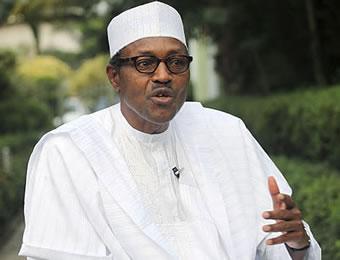
However, no tangible implementation steps were taken to translate word to action between 2011 and 2014. It must have, therefore, stricken a pleasant surprise, particularly to Ogoniland and environmental rights’ groups, when President Muhammadu Buhari recently approved some actions for the implementation of the UNEP report. They included the amendment of the Official Gazette establishing the Hydrocarbon Pollution Restoration Project (HYPREP) to reflect a new governance framework comprising a Governing Council, a Board of Trustees and Project Management; a directive that stakeholders of the HYPREP Board of Trustees Trust Fund should raise at least $10 million within 30 days of appointment of members of the board; and approval of membership of the HYPREP Governing Council and the Board of Trustees for its Trust Fund, among others. Public expectation is that anytime soon, President Buhari would inaugurate the HYPREP Governing Council and the Board of Trustees for the Trust Fund to herald full commencement of clean-up work in Ogoniland. We commend the Buhari-led FG for these bold steps and implore it not to relent until Ogoni environment is confirmed free from its degraded past.