The relative peace in the Niger Delta region initiated by the administration of Umaru Yar’Adua and which was sustained by the regime of Goodluck Jonathan would appear to have been shattered. At the last count, three militant groups, the Niger Delta Avengers (NDA), Egbesu Red Water Lions and Concerned Militant Leaders (CML) have sprung up and have already done collateral damage to oil and gas facilities in the region. While it is believed in the official circles that these groups have links with the Movement for the Emancipation of Niger Delta (MEND), the umbrella body of militant associations that were thought to have become moribund sequel to the successful commencement and implementation of the Amnesty Programme, MEND has dissociated itself from them and condemned their activities.
The nascent groups have set some conditions precedent to a ceasefire, including the release of Nnamdi Kanu, currently facing charges in the law court for illegal operation of Radio Biafra and promoting secession of the South East from the Nigerian state; and the freedom from incarceration of Sambo Dasuki, a former National Security Adviser under the Jonathan administration who is being accused of monumental fraud and misallocation of fund in the procurement of arms to fight Boko Haram insurgency in the North East. They also want a fair deal for indigenes of the region in the allocation of oil blocks, which, of course, is quite legitimate.
The activities of the militants, notably bombing of oil and gas pipelines, have led to unacceptable cuts in oil production and power supply. The cut in power supply has meant that the average Nigerian, who is currently agonizing under the yoke of the hike in petrol price, also has to contend with the hardship associated with grossly inadequate power supply. And, of course, a reduction in daily production of oil by almost a third has grave implications for the 2016 budget which already has substantial deficit component. Obviously, the situation should not have got to this sorry pass before official action. Sadly, there is even a sense in which it can be said that there has been no credible official action or response.
On the whole, the Niger Delta situation has, since 1999, hardly been bettered by governance at the state level. The state governors have failed to significantly address the core challenges of life in the zone, with monumental corruption virtually defeating the modest efforts of the Federal Government to develop the zone. Thus, while the government initially succeeded in stemming the tide of militancy in the zone, the tide of abject poverty and despair continue unabated. The oil companies continue to deploy technology that is manifestly unfavourable to the environment, making life nasty and brutish for the majority of the populace, and the various intervention agencies set up by the Federal Government have been less than stellar in the discharge of their duties to the long-suffering people of the zone.
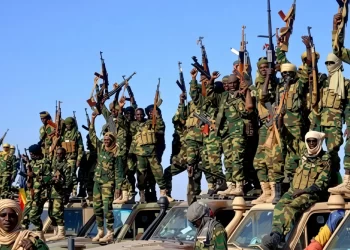
Worse still, by its pronouncement and the body language of its key officials, the current Federal Government has yet to recognize that there is a Niger Delta situation demanding deft political craftsmanship to resolve. Otherwise, it would not have ordered military action where sincere and effective dialogue promises to be the veritable solution. The Federal Government’s over-hyped language of engagement, “kill, destroy and crush the militants,” is unlikely to help. Pray, how often has military action proved effective in combating ethnic militancy and economic sabotage in Nigeria? Should the country engage the militants in what promises to be a protracted military confrontation that may benefit neither party?
For an administration that is understandably hamstrung to fully match its electoral promises with action owing to the many socio-economic challenges besetting the country, a Niger Delta distraction could be incensing. But it must be noted that, through their nefarious and highly condemnable activities, the militant groups were actually trying to make a statement. And regardless of the half-hearted condemnation of the groups’ activities by very few leaders from the region, the militants have the sympathy of many citizens in that enclave.
Many people in the region have the notion that the Buhari administration has alienated them. While nothing can be done about the loss of the presidency by the region in the 2015 general election, something can be done to address any injustices that may exist in the region which is a vital component of the federation. It is time the government began to review the intervention programmes in the region such as the 13 per cent derivation from oil receipt, the Niger Delta Development Commission ( NDDC), the Ministry of Niger Delta and, more importantly, the Amnesty Programme. How have these programmes impacted the lives of the ordinary people in the region? Should the programmes be re-jigged so that they become more impactful?
The truth is that in spite of the seeming multifarious intervention programmes that tend to channel additional national resources exclusively to the region, the majority of the people still live in abject poverty. Thus, whether it is in the quantum or application of resources, wherever the challenge lies, it should be tackled head-on. Again, we strongly counsel against any military action that may worsen the situation.


The Niger Delta situation – Tribune
Related Posts




Leave a Reply
















GLOBAL NEWS



Plugin Install : Widget Tab Post needs JNews - View Counter to be installed
- Trending
- Comments
- Latest