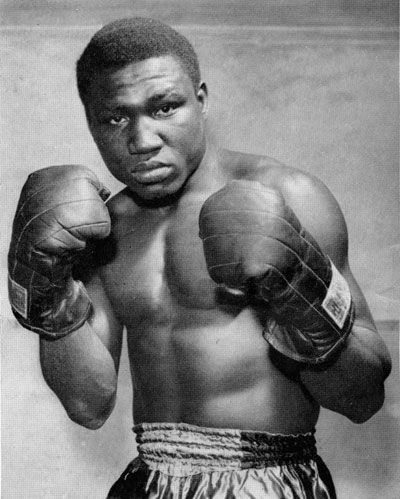
After wailing and waiting endlessly for her husband, Richard Ihetu, to be recognised for the honour he brought to the country, Dame Abigail Nwaubani, died a sad woman in 2008. The man ,better known as Dick Tiger, was the first Nigerian to be world boxing champion in two weight categories. Dick Tiger became world middleweight champion in 1962 after defeating Gene Fulmer of the United States ,in Candlestick Park, San Francisco. In 1966, he moved up the ladder, capturing the Light Heavyweight belt in New York’s Madison Square Garden, at the expense of Jose Torres of Costa Rica. Recently, the Federal Capital Territory Administration[FCTA], named a street in Abuja after the legendary pugilist.
The street naming also accommodated other sporting greats like Chioma Ajunwa, Power Mike Okpala, Rashidi Yekini, Sam Okwaraji and Daniel Amokachi. It was not restricted to sports heroes, though. Past ministers, entertainers, educators and industrialists were not left out. Walter Ofonagoro, Baba Gana Kingibe, Barnabas Gemade, Chika ‘Zebrudaya’ Okpala, Osita Osadebe, Dan Maraya Jos, Tekena Tamuno, Aliko Dangote, Femi Otedola and Innocent Chukwuma, now have streets in their names. Naming a street after Dick Tiger outside his home state ,Imo may just be part of the recognition his family has been craving for . In Owerri, there is a Road in his honour around the Aladinma area. In his Amaigbo home town, the Dick Tiger Memorial school which he built, still stands.
But for a Nigerian who was a world hero, confining him to his state smacks of insincerity. Dick Tiger won most of his titles as a Nigerian. Right from 1958, when he floored home boy, Pat McAteer of Scotland , at the Liverpool Stadium, Birkinhead, to grab the British Empire Midddleweight belt, to the second time, seventh round pounding of Fulmer at the Liberty Stadium, Ibadan in August 1963, the boxer was a proud Nigerian. If there was a boxer of the Decade in the 1960s, it was the Nigerian. Voted Boxer of the Year twice [1962, 1965], by the authoritative Ring Magazine, no other boxer including Mohammed Ali[Cassius Clay] and Sony Liston was so recognized. And to crown it all, Dick Tiger was inducted into the World Boxing Hall of Fame, on November 11, 1982, eleven years after his death. Abigail had cause to berate the Nigerian government for forgetting her husband’s achievements. She blamed the Yakubu Gowon regime for not inviting her to the Second All Africa Games, Lagos ’73. All alone , she trained their eight children, many of them found their way back to the United States.
The belief then was that because Dick Tiger supported Biafra and even wore Biafran Army battle rig, the Nigerian government did not deem it fit to honour an enemy. That is an irony, for Gowon preached no victor, no vanquished, at the end of hostilities. The argument did not fly because many of the career soldiers who fought on the Biafran side, later became generals in the Nigerian Armed Forces. One man who brought Mrs Ihetu close to the corridors of power, was Chief Michael Okpala, Power Mike , the one –time undefeated world Heavyweight wrestling champion. In 1986, he organized the Dick Tiger Memorial Boxing Tournament. President Ibrahim Babangida graced the occasion, with his son, Mohammed. Babangida was a boxer as a young officer.
One of Dick Tiger’s contemporaries, Abraham Tonica, claimed to have taught Babangida the rudiments of the game at Ibadan. Mrs. Ihetu sat close to the military leader in Lagos and that was the last time she got close to those who should honour her man. Dick Tiger was not just an ordinary Nigerian whose wife should seek government attention. A man who brought so much honour to the country deserves some pat on the back even in death. It was no easy task to have defeated some of the best boxers of his time, like Ace Armstrong, Joey Giardello, Holly Mims, Nino Benvenutti, Andy Kendall, Frank De Paula and Roger Rouse. His title defence against Fulmer in Ibadan, brought a lot of goodwill to the country.
That was the first time, West Africa would host a world title fight. It took the efforts of government to make it possible. The Nnamdi Azikiwe/Tafawa Balewa government put in 20,000 pounds while each of the three regions of Eastern, Northern and Western, released 15,000 pounds. That also earned a lot of foreign exchange for the host nation Dick Tiger’s defeat of Mcateer in far away United Kingdom was sweet victory for many of his kinsmen. Sweet revenge, it was. For British colonial masters had deposed and banished King Jaja of Opobo, in the 19th Century. The King was originally from Amaigbo, before being sold into slavery. We commend the FCTA for doing what the Federal government has been unable to do .
If those who played active roles in the Civil War, later became national heroes, there is no logic in denying Dick Tiger deserved national recognition. No monument outside his village stands in the name of this great boxer who made Nigeria proud. The FCTA move again reminds us that those who fail to honour their heroes, may never get recognition in whatever they strive to do. A man who brought honour and foreign earnings to his country, cannot be forgotten. We salute the FCTA for taking a bold and wise step. This honour is well deserved