Amid some doubts and scepticisms in the polity, most Nigerians joined the military, and indeed the government in celebrating the announced fall of the remaining stronghold of the terrorist organisation, Boko Haram, in the Sambisa Forest. It was a year-end gift of some sort.
The celebrations were not so much as a belief that the government has finally won the war, but a realisation that the extremists had lost their staging post, from which they could further launch deadly raids on the North-East and other outposts across the country.
And it was also in the comprehension that the coast may have been cleared for the millions of internally displaced persons (IDPs) to return to their homes and begin life anew.
Actually, the military, though savouring all the accolades, left no opportunity to explain that the next most important strategy in the fight against Boko Haram was to win the peace aftermath of the Sambisa rout.
And that means safeguarding soft targets, which had seen more deaths than from the theatres of the military-Boko Haram clashes.
The military also alerted the public to the terrorists’ new strategy of sending suicide bombers to knock at the doors of their potential victims, and detonating their bomb-laden vests when the doors were opened.
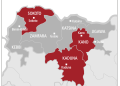
The authorities had continued the sensitisation of the populace to these new realities when, out of the blues, came a report of bombing at the University of Maiduguri (UNIMAID), the highest citadel of learning and a Centre of Excellence in the capital city of Borno State.
According to the National Emergency Management Agency (NEMA), five people lost their lives in the attack that was claimed by the Abubakar Shekau faction of the Boko Haram terrorists in the country.
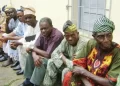
As if the explosion in the university, the first of its kind in the wave of murderous attacks, was not unsettling enough, the news broke that the Nigerian Air Force accidentally bombed an IDPs’ camp in the state, killing scores of the inmates.
All these happened at a time the government and the military were trying to rebuild confidence in the Bring Back Our Girls (BBOGs) group: that no effort had been spared in the commitment to rescuing the remaining Chibok schoolgirls that the Boko Haram seized from their dormitories over two years ago.
In this regard, the military had to fly some of the BBOG members on a tour of the operational theatres in the Sambisa Forest that was almost home to the terrorists.
The Boko Haram bombing at UNIMAID and the Air Force strike at an IDPs’ camp are one incident too many in a matter of days for a nation already reeling on so many fronts. They underscore the military’s insistence that winning the war was easier than winning the peace.
This is especially disconcerting in the knowledge, as stated by the military and other security agencies, that fleeing Boko Haram members have found abodes in other parts of the country.
That’s recipe for further chaos, and blood-letting of innocent Nigerians in a vast land with a burgeoning population and uncountable soft targets, both day and night.
The military and other security agencies need to urgently develop high-capacity intelligence, to monitor and arrest the fleeing Boko Haram members before they spread their deadly tentacles beyond the North-East.
Government must enlist the people, to be security conscious, and to report to the nearest authorities any suspicious movements and strange faces in their localities. As the slogan goes, “When you see something, say something.”
Therefore, the people must say something when they see something. While we join the government and the military in condoling with the families of the victims of the Air Force strike at the IDPs’ camp, we call for a thorough investigation into the tragic killing of displaced and dehumanised people that the military itself has been fighting to protect, and ensure a seamless resettlement to their communities ravaged by Boko Haram.
The investigation is to ascertain whether the Air Force strike was truly an accident, as claimed, or the terrorists used the camp as a decor for their nefarious operations, thus giving it away as belonging to Boko Haram, and presented as a target for bombing by the Air Force.
Even at this unavoidable tragic moment, we must not let up on the fight against Boko Haram and other extremists in our midst; we must not let down our guard; and we must win the peace, no matter how long it takes.