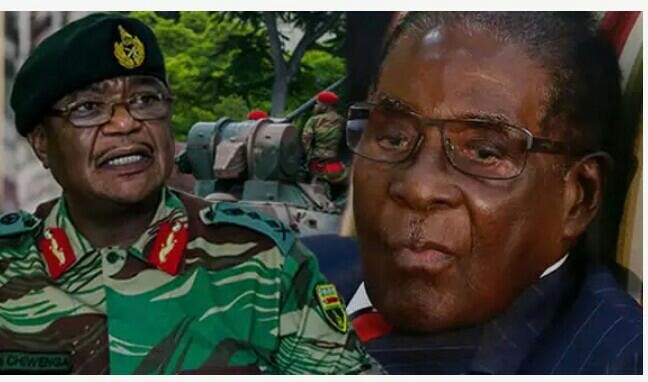
The African Union has expressed concern about the ongoing political crisis in Zimbabwe, calling on the country’s military to halt their actions in what “seems like a coup” against President Robert Mugabe.
Alpha Conde, the head of the AU, said Wednesday that the bloc condemned the actions of military commanders in the southern African nation as “clearly soldiers trying to take power by force.”
“The African Union expresses its serious concern regarding the situation unfolding in Zimbabwe,” he said in a statement sent to AFP, expressing support for Zimbabwe’s “legal institutions.”
Conde said the African body wanted “constitutional order to be restored immediately and calls on all stakeholders to show responsibility and restraint,” it added.
The AU Commission also addressed the situation in a statement later in the day, saying it was crucial that the crisis be resolved in a way that promotes democracy and human rights.
AU Commission Chairperson Moussa Faki Mahamat said in a statement that the commission was closely following the developments.
Earlier, United Nations Secretary General Antonio Guterres called for “calm and non-violence” in Zimbabwe, a spokesman for the UN chief said.
Guterres also called for the fundamental rights of Zimbabwean citizens to be preserved.
Zimbabwe’s military forces took control earlier in the day, after soldiers and armored vehicles began blocking roads to the main government offices, the parliament, and the courts in central Harare.
Mugabe and his military forces, who had long helped him stay in power, have recently been at odds over the 93-year-old president’s successor. The power clash has culminated in the sacking of the vice president, Emmerson Mnangagwa.
The military, which insists it is only going after “criminals” and is not planning to take power, has also detained Finance Minister Ignatius Chombo, a leading member of the so-called ‘G40’ faction of the ruling ZANU-PF party, run by the president’s wife, Grace Mugabe.
Mugabe and his wife have been on the EU’s sanctions list along with other key figures in Zimbabwe’s ruling elite, facing travel bans and asset freezes abroad.
ZANU-PF said in a statement earlier that Mugabe’s decades-long grip on power was coming to an end in a “bloodless transition.”
The embattled president “indicated that he was confined to his home but said that he was fine,” according to a statement by the South African government.
Mugabe had remained in detention last night at his home in Harare, after the military declared on national television that it had temporarily taken control of the country.
The move by the armed forces appeared to have resolved a bitter battle to succeed the 93-year-old president, which had pitted his former vice-president Emmerson Mnangagwa, against Mugabe’s wife Grace.
Mnangagwa was reported to have returned to Zimbabwe on Tuesday evening from South Africa, where he fled last week in an apparent attempt to clear Grace Mugabe’s path to power.
The military takeover came two days after the army chief said he wanted to end turmoil in the ruling Zanu-PF party.
It is likely to signal the departure from power of the world’s oldest leader within days, weeks or at most months.