The logistics challenges which the electoral umpire, the Independent National Electoral Commission (INEC), tried to tackle by postponing the presidential and National Assembly elections by a week still manifested during the exercise.
Despite assurances that the commission had made adequate preparations, the February 23 elections held across the country were still marred by series of logistics problems too glaring to ignore.
Hence, the shift in date as announced by the chairman of the commission, Prof. Mahmood Yakubu, in the early hours of Saturday February 16, when the elections were initially billed to hold, was inconsequential, or so it seems.
This newspaper recalled that Prof. Yakubu had said the postponement was inevitable following a careful review of the implementation of its logistics and operational plan and the determination to conduct free, fair and credible elections. He also alluded to the fact that its operations may have subject to the activities of saboteurs who were bent on undermining the electoral system.
Having been postponed for one week due to logistic reasons, it was expected that the commission and the security agencies would have taken a thorough look at the identified challenges before the new date and done everything possible to fill in the gaps and deliver the free, fair and credible elections the commission had promised on numerous occasions. These promises raised both awareness and enthusiasm among Nigerians who were determined to exercise their franchise and play their part in deciding who would pilot their affairs in the next dispensation, especially given the robust campaigns by the two main political parties, the ruling All Progressives Congress and the opposition Peoples Democratic Party, as well as the other contenders who vied for to the nation’s top political jobs.
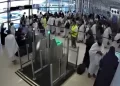
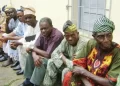
However, as the rescheduled date of the elections arrived, millions of voters trooped out, some even before the break of day, to cast their votes only for the system to frustrate and fail them yet again.
With the stories coming out of the just concluded elections, Nigeria lost the opportunity to consolidate on the electoral success of 2015 general elections. There were reports of delay in deployment of election materials, issues relating to ballot box snatching, attacks on polling officials, destruction of election materials, and malfunctioning of the card readers used for accreditation, among others.
By noon on Election Day, at least 110 critical incidents were recorded across the country bordering mainly on late arrival of election materials to polling units.
While electoral officials were expected to be at polling units by 7:30am to set up shop ahead of the 8am commencement of simultaneous accreditation and voting, only 31 per cent of INEC officials were at their duty posts at the stated time.
Furthermore, statistical reports indicate that by 10am, only 41 per cent of polling units had opened across the country, while even close to 12pm, INEC had not achieved 100 percent logistics deployment as statistics had recorded that 74 per cent of polling units had opened across the country.
This is beside the fact that in seven per cent of the polling units the card reader was not used for accreditation either due to non-availability, malfunctioning or deliberate violation of the electoral guidelines.
Consequently, elections went into the night in a handful of polling units with apparently no prior preparation for a conducive environment. This did not give credit to the credibility of the process.
The ad-hoc staff engaged for the exercise, a majority of who are members of the National Youth Service Corps, were not properly catered for. Many of them slept in the open, exposing them to danger and to possible threat and manipulation by desperate political actors.
President Muhammadu Buhari should use his second tenure to reorganise and unbundle the INEC against the backdrop of its multi-tasking structure.
The commission, as presently constituted, has too many tasks ranging from voter registration, monitoring of political activities to printing of materials and conducting elections. The lapses which occurred during the elections are avoidable if the commission has fewer tasks.
There is need for the establishment of other commissions to perform those different tasks in such manner that they would ensure effectiveness and efficiency, thus, leaving INEC to function optimally.
It is our considered opinion that the time has come to revisit and implement the Justice Mohammed Uwais Report on the reform of INEC and the electoral system. That report proffered solutions to many of the challenges confronting the nation’s electoral system.
That is for later, but in the interim, with another round of elections a few days away, the commission needs to do what it can to check the avoidable lapses noticed in the February 23 elections.