The Federal Government has commenced moves aimed at ensuring that mathematics and science subjects are taught using local languages in schools across the country.
To achieve this, it constituted an inter-ministerial committee on Tuesday, on the use of local languages to teach science subjects and mathematics in primary and secondary schools in Nigeria.
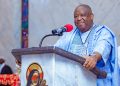
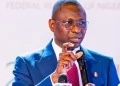
The Minister of Science and Technology, Dr. Ogbonnaya Onu, while inaugurating the committee in Abuja, said the nations that had done well in the world used their indigenous languages in teaching their children mathematics and science subjects at primary and secondary school levels.
Citing the cases of some countries such as China and India, the minister said that technological advancement in those countries was fast because mathematics and science subjects were taught in their indigenous languages.
He said, “For us to build the country of our dreams, for us to make Nigeria a truly great nation, a nation that is able to feed and house its citizens, a nation with a stable currency, we must embrace science and technology. Nigeria will remain a dependent nation if the citizens do not embrace science and technology because no nation can become great without science and technology.”
Onu said his ministry was determined to work closely with the Federal Ministry of Education to achieve this target.
He said, “Nigeria has produced a Nobel Laureate in Literature, we have not yet produced one in science and we are anxious to produce a Nobel Laureate in science. The only way we can do it is to make sure our children are interested in pursuing careers in the areas of science, technology and engineering.
Onu said his ministry would work hard to ensure that local languages were developed to a level where they could be used effectively to teach mathematics and science.
He said, “We have to write textbooks in these languages which will be developed to enable us teach mathematics and science and also to train teachers who will now use the developed languages to teach the children in the primary and secondary school levels.”
In his address, the Minister of Education, Mallam Adamu Adamu, said the move was an important and key innovation.
Adamu, who was represented by the director overseeing the office of the Permanent Secretary, Dr. Hussein Adamu, said the use of local languages in teaching would go a long way in facilitating the breakthrough of the nation in the area of science and technology.
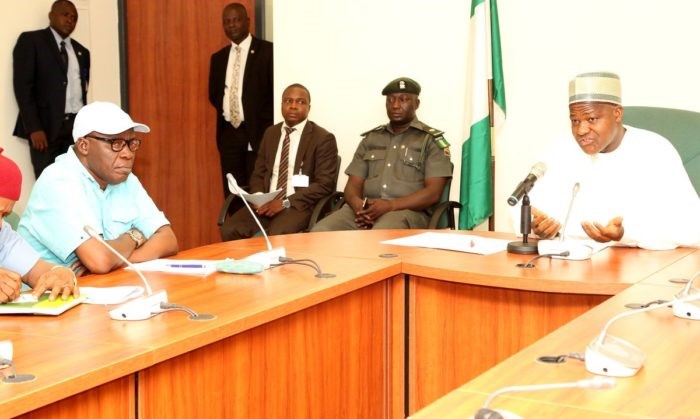
Meanwhile, the Speaker of the House of Representatives, Mr Yakubu Dogara, has assured Nigerian teachers that the National Assembly will increase their retirement age from 60 to 65 years to retain more experienced teachers in public schools.
Dogara disclosed this when he received a delegation from the Nigeria Union of Teachers (NUT) who paid him a courtesy visit on Wednesday in Abuja. The NUT was led by Comrade Michael Alogba Olukoya.
The speaker said that the house would support an upward review of teachers’ retirement age to benefit Nigerian children.
“We have done it for the Tertiary institutions and the Judiciary, so nothing should stop us from taking the bull by the horns.
“They say that wine gets better with age. It was the same consideration that motivated us to raise that of university lecturers, raised that of judges. So this is something we can pursue.
“Thankfully, it doesn’t require constitutional amendment, it is something we can achieve by amending the existing law.
“That is the responsibility of the parliament and we assure you that we will do something about that so that the benefit that comes with experience and wisdom will not be lost,” he said
Dogara said that the welfare and working condition of teachers must also be upgraded to enable Nigerian citizens compete with the global world and produce citizens that can achieve development that the country seeks.
“If we don’t have people who will sacrifice their time and energy to impact knowledge on our children, then like I said, we have lost the future.
“This government which is a government of change must be prepared to change the narrative by ensuring that teachers are motivated and the condition in which they work are conducive at all levels, so that they can deliver on their professional calling,” he said.
The speaker also advised the union to channel their request for salaries of teachers to be handed over to state governments or paid from first-line charge from the federation account through the Universal Basic Education Commission to the Constitution Review of the House of Representatives for consideration.
Comrade Alogba Olukoya, the National President of NUT,said the union preferred that payment of teachers’ salaries be handed over to State governments. He also canvassed for an increase in the retirement age of teachers from 60 to 65 years.
The teachers union also demanded that teachers’ salaries be paid from first-line charge from the federation account through the Universal Basic Education Commission.
“We want the responsibilities of paying the salaries of Teachers be handed over to State Governments in which case the salaries component of the revenue allocation of the Local Governments will have to be transferred to the states and restructure the fiscal allocation of our national resources in favour of the states to guarantee uninterrupted and unfettered primary education in Nigeria.
“We teachers of Nigeria in primary and secondary schools do seek and demand that our retirement age be raised to 65 years to increase the teacher retention rate in our schools.
“This will help to check the rate at which experienced teachers are being lost in the school system whereas younger and prospective teachers are not recruited to take their places,” Olukoya said.